
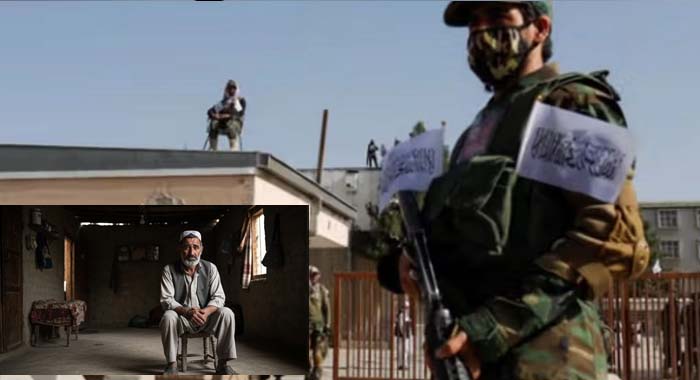
The documented treatment of former Afghan government officials and members of the Afghan National Defense and Security Forces (ANDSF) following the Taliban’s takeover of Afghanistan has raised serious concerns over the implementation of the general amnesty announced by the Taliban and the continuing vulnerability of those who served under the previous government.
According to research and documentation by the United Nations Assistance Mission in Afghanistan (UNAMA), at least 218 former Afghan government officials and ANDSF members were subjected to extrajudicial killings between the Taliban takeover in August 2021 and June 2023.
The findings are particularly significant because the Taliban had publicly announced a general amnesty for former government officials and security personnel following its return to power in August 2021. Despite that commitment, UNAMA documented not only extrajudicial killings but also a wider pattern of serious human rights violations against former members of the government and security forces.
These included arbitrary arrests and detentions, enforced disappearances, torture and other forms of ill-treatment.
The UN documentation therefore raises a fundamental question: How effectively has the promised general amnesty been implemented, and what mechanisms exist to protect former government personnel from violations and hold perpetrators accountable?
UNAMA’s findings indicate that the largest concentration of documented violations occurred during the first four months after the Taliban seized control of Afghanistan, between August and December 2021. The period immediately following the takeover was marked by profound political and security uncertainty. Former officials and members of Afghanistan’s security forces were particularly vulnerable because of their previous roles within the former government and security institutions.
While the Taliban announced an amnesty intended to reassure former government personnel, the UN documentation indicates that serious violations nevertheless occurred. The scale and nature of the documented cases are significant because they extend beyond isolated incidents. The findings point to a broader pattern in which former government officials and security personnel faced killings, detention, disappearance, threats and physical abuse after the change of power.
The documented violations were not confined to the immediate aftermath of the Taliban takeover. UNAMA recorded 70 extrajudicial killings during 2022 alone, demonstrating that the danger faced by former government officials and ANDSF personnel continued well beyond the initial months following the change in government.
This continued pattern raises concerns about whether sufficient safeguards were established to ensure that the general amnesty was respected throughout the country. It also highlights the importance of determining who was responsible for the documented violations, whether perpetrators were acting individually or as part of organized structures, and whether meaningful investigations and accountability mechanisms were put in place.
Behind every documented case is an individual whose life was placed at risk because of his or her previous service to the Afghan state. Former soldiers, police officers, intelligence personnel, civil servants and government officials reportedly found themselves facing an uncertain future after the Taliban takeover. For many, their former positions became a source of vulnerability rather than protection.
UNAMA’s documentation of arbitrary detention, enforced disappearance, torture and ill-treatment demonstrates that the problem cannot be measured solely through the number of deaths. A person who disappears into detention, is subjected to torture, or is arbitrarily imprisoned also represents a serious human rights concern. The broader pattern is therefore essential to understanding the scale of the issue.
The Taliban’s declaration of a general amnesty was intended to provide assurances to individuals who had served under the former Afghan government. The UN findings, however, raise questions about the gap between the announced policy and the treatment experienced by some former officials and security personnel.
A general amnesty has little practical meaning if individuals covered by it continue to face arbitrary detention, enforced disappearance, torture, threats or extrajudicial killing. The issue of accountability is consequently central. Where violations have been documented, credible investigations are necessary to establish the circumstances surrounding each case, identify those responsible and determine whether perpetrators have been held accountable. Without effective accountability, assurances of protection risk losing credibility among former government personnel and the wider Afghan population.
The documented cases also underline the continuing vulnerability of former members of the ANDSF. These personnel served in Afghanistan’s previous security institutions and were responsible for policing, military operations, intelligence and national security before the Taliban takeover. Following the change of power, many faced a dramatically altered security environment.
Reports of detention, threats, disappearances and other forms of abuse have generated concerns about whether former security personnel can safely remain in Afghanistan and whether adequate mechanisms exist to protect them. The issue also has implications beyond Afghanistan itself. The treatment of former security personnel can influence decisions regarding future peace processes, reconciliation initiatives and international engagement. If former combatants and government personnel believe that assurances of amnesty cannot guarantee their safety, confidence in future political settlements may be severely weakened.
The documented violations are not only an Afghan domestic issue. They have wider implications for regional stability, governance and international security. A stable Afghanistan requires more than the absence of conventional warfare. It also requires respect for basic human rights, credible institutions, accountability and confidence that political transition will not result in systematic retaliation against individuals associated with a previous government.
The treatment of former security personnel is particularly important because security institutions are essential to any country’s long-term stability. If trained personnel are subjected to persecution, detention or violence, the consequences can include displacement, loss of institutional expertise and deeper mistrust between communities and governing authorities.
Such conditions can also contribute to broader instability in an already fragile regional security environment.



