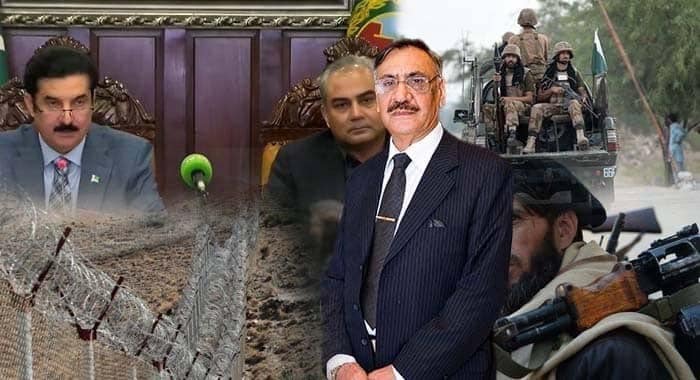
Khyber Pakhtunkhwa stands at a critical crossroads. For years, the province has endured the devastating consequences of terrorism, political uncertainty, institutional weaknesses and the growing challenge of militancy operating across the Pakistan-Afghanistan border. Police officers have lost their lives defending vulnerable police stations, civilians have suffered from insecurity, and communities in the former tribal districts have continued to live under the shadow of violence. Against this backdrop, the imposition of Governor’s Rule has reopened a fundamental question: can a change in political administration produce a meaningful improvement in the province’s security situation?
The immediate impact of Governor’s Rule should not be exaggerated. There has not yet been a dramatic transformation in the security situation, and terrorist operations continue. Nevertheless, the change presents an opportunity to improve coordination between the federal government, the provincial administration, the army and the police. Whether this opportunity translates into lasting peace will depend on the government’s willingness to move beyond political calculations and address the institutional, financial and strategic weaknesses that have allowed terrorism to persist.
The central question is not simply whether Governor’s Rule has changed the political landscape. It is whether the new arrangement can convert political coordination into operational effectiveness, strengthen the state’s authority and restore public confidence in the institutions responsible for protecting citizens.
One of the most significant arguments surrounding Governor’s Rule concerns the relationship between political leadership and counterterrorism policy. Critics of the previous provincial administration have questioned whether its approach was sufficiently firm in confronting militant organisations. Concerns have also been raised about political sympathies, fear of retaliation and the reluctance of some political actors to openly challenge the Taliban.
These are serious questions that should be evaluated through verifiable policy decisions, administrative conduct and security outcomes rather than political rhetoric alone. Nevertheless, the broader challenge is undeniable: counterterrorism becomes more difficult when political institutions communicate contradictory positions or fail to support the agencies responsible for implementing security policy.
A unified approach between the federal and provincial governments could help eliminate these weaknesses. Better coordination could facilitate intelligence-sharing, accelerate financial decisions, strengthen police operations and ensure that security institutions receive consistent political support. It could also improve coordination between settled districts and the former Federally Administered Tribal Areas, where geography, militant mobility and the legacy of prolonged conflict create particular operational challenges.
However, political alignment must not be confused with operational success. A government may issue strong statements against terrorism while failing to protect vulnerable police stations, disrupt militant financing or prevent attacks on civilians. The real measure of change will be whether attacks decline, law-enforcement personnel become safer, terrorist networks lose their operational capacity and ordinary citizens regain their freedom of movement.
Governor’s Rule should therefore be treated as an opportunity to correct institutional weaknesses, not as evidence that those weaknesses have already been overcome.
The debate surrounding Governor’s Rule has also exposed longstanding rivalries among political parties in Khyber Pakhtunkhwa. The role of Maulana Fazlur Rehman and his party, Jamiat Ulema-e-Islam (JUI-F), has become part of this wider discussion.
Political interpretations suggest that the change in administration may have disappointed expectations of a greater role in provincial governance. Speculation has also surrounded the possibility that the party hoped to secure an influential position, potentially including the governorship for its leadership or a family member. Such interpretations should not be treated as established facts about the party’s motives. Nevertheless, they illustrate how political negotiations and disagreements over representation can become entangled with debates about security policy.
The wider problem is the uneven engagement of major national parties in Khyber Pakhtunkhwa. The Pakistan Muslim League-Nawaz (PML-N) and Pakistan Peoples Party (PPP) have historically played important roles in federal politics, but their political presence in the province has often been less dominant than that of the Pakistan Tehreek-e-Insaf (PTI) and JUI-F. Meanwhile, the Awami National Party (ANP), which has suffered devastating losses at the hands of militants, has faced particular difficulties in maintaining its political activities in an environment of insecurity.
When violence weakens political participation, the resulting imbalance can leave governance and security debates dominated by a narrower group of political actors. That is harmful to democracy and potentially dangerous for counterterrorism because the fight against militancy requires broad political agreement.
No party should be excluded from legitimate political participation simply because it criticises the government. Equally, no party should expect privileged access to public office without democratic justification. Political representation should be determined through constitutional processes, electoral performance and transparent negotiations not through pressure or an expectation of entitlement.
The principle must be straightforward: every political party has the right to criticise government policy, but every political actor also has a responsibility to oppose terrorism consistently and unequivocally. A sustainable security policy cannot depend on which party holds office. It must remain a national commitment that survives changes in governments, political alliances and electoral fortunes.
Perhaps the most practical challenge facing the new administration is the financial and physical condition of the police force. For years, Khyber Pakhtunkhwa’s police have operated under exceptionally dangerous circumstances. Police stations, checkpoints and other law-enforcement installations have repeatedly faced attacks involving powerful explosives and vehicle-borne improvised explosive devices. Weak structures can collapse under such blasts, causing heavy casualties among personnel who are already exposed to considerable risks.
The problem is not simply the determination of individual officers. It is whether the state has equipped them with the infrastructure, weapons, communications systems, vehicles and protective facilities necessary to survive and respond effectively. A central issue raised in the security debate is the reported demand for approximately Rs40 billion to strengthen police capabilities. The previous administration was criticised for failing to provide the requested amount, reportedly citing financial constraints. This figure should be understood as the funding demand discussed in the interview, rather than an independently verified account of an approved or disbursed allocation.
Nevertheless, the underlying concern deserves urgent attention. If the police are expected to confront heavily armed terrorist networks, they cannot be left operating from inadequately protected buildings, using insufficient equipment and depending on uncertain funding. The new administration must establish the precise requirements of the police, determine the costs of essential upgrades and make funding decisions based on operational priorities. If the reported Rs40 billion requirement reflects assessed needs, it should be examined transparently, with clear estimates, procurement plans and measurable security objectives.
The objective should not be to spend money merely to demonstrate action. It should be to ensure that every rupee strengthens the state’s ability to prevent attacks, protect personnel and respond rapidly when violence occurs.
The physical protection of police installations should be among the first priorities. Vulnerable police stations require structural assessments, reinforced walls, blast-resistant improvements where feasible, protected entry points and secure accommodation for personnel. Critical installations should also have reliable backup power, emergency medical supplies, firefighting equipment and procedures for evacuating the wounded. The threat posed by vehicle-borne explosives makes protective barriers, access controls and adequate stand-off distances particularly important. Such measures must be designed professionally and adapted to the circumstances of individual installations rather than implemented as a uniform exercise.
Weapons and ammunition are another essential requirement. Police personnel need equipment appropriate to the threats they face, together with regular training, maintenance and effective command arrangements. Modernisation must include defensive capabilities, not merely the acquisition of additional firearms. Communications equipment is equally important. Terrorist attacks often create confusion and disrupt coordination among nearby police stations, emergency responders and other security agencies. Reliable radios, secure communications networks, interoperable systems and effective command-and-control arrangements can help officers share information and request assistance without unnecessary delays.
Protected vehicles can also improve the safety and mobility of police personnel, particularly in areas where officers face ambushes or attacks while travelling between installations. Their deployment should be based on assessed threats and operational requirements. These improvements must be accompanied by training in emergency response, first aid, explosive-threat awareness and the preservation of evidence. A better-equipped police force is not simply one that possesses more weapons. It is one that can anticipate threats, protect its personnel, coordinate with other agencies and act professionally under pressure.
The fight against terrorism requires coordination between the army and police, but the responsibilities of the two institutions must remain clear. The army possesses capabilities relevant to large-scale security operations, difficult terrain and threats that exceed the capacity of ordinary law-enforcement units. The police, meanwhile, have an essential role in maintaining public order, investigating crimes, collecting evidence, developing relationships with local communities and bringing suspects through the criminal justice system.
When these functions are coordinated effectively, security operations can be followed by sustained policing and civilian governance. When coordination is weak, temporary gains can be lost as militant networks reorganise, local intimidation returns or gaps emerge in the state’s presence. Intelligence-sharing should therefore be timely and actionable. Police officers should have access to relevant threat information, while investigators must be able to follow financial, logistical and criminal connections associated with terrorist activity. Joint planning should also ensure that the transition from security operations to normal civilian administration is not neglected.
At the same time, counterterrorism must respect the law. Arrests, searches, investigations and prosecutions should follow lawful procedures. Accountability is not an obstacle to effective security; it is essential to maintaining public cooperation and preventing grievances from being exploited by militant organisations. The ultimate aim should be to build a province in which ordinary policing and functioning courts not permanent emergency measures provide the foundation of public safety.
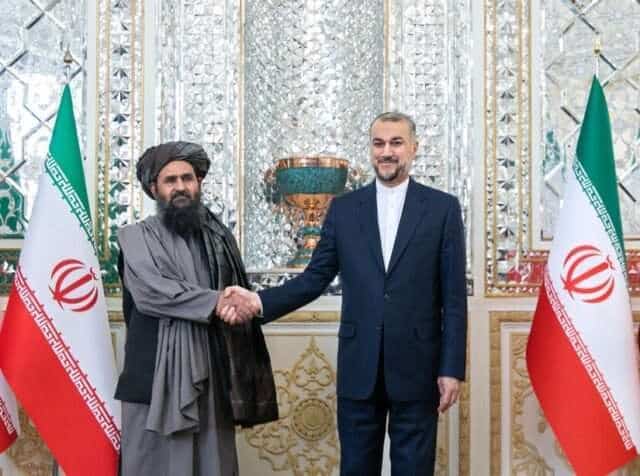
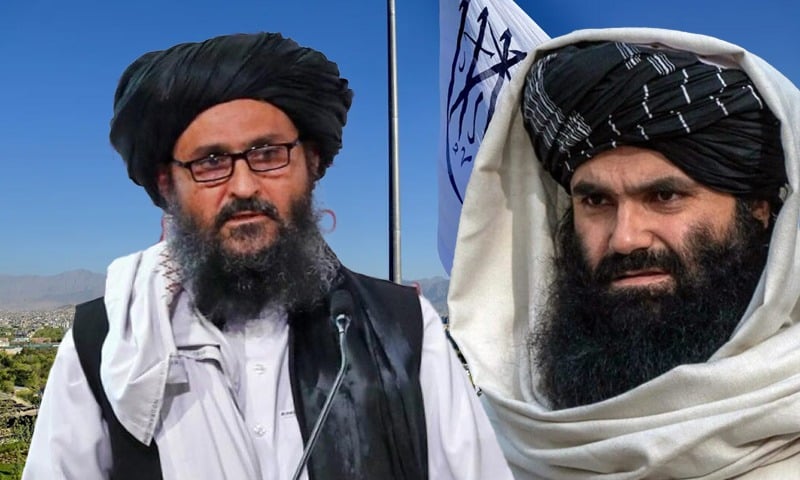
No serious discussion of terrorism in Khyber Pakhtunkhwa can ignore Afghanistan. The relationship between Pakistan and the Afghan Taliban authorities has deteriorated amid allegations that militant groups, particularly Tehreek-e-Taliban Pakistan (TTP), have benefited from their presence across the border. Pakistan has repeatedly called on the Afghan authorities to prevent their territory from being used for attacks against Pakistan. The Afghan Taliban’s response to these concerns, and the degree to which they can or will act against militant organisations, remain central questions in the regional security environment.
The security argument presented in the debate is that militant networks operating from Afghanistan have become an important source of instability inside Pakistan. The TTP has been associated with attacks against Pakistani security forces and civilians, while the Balochistan Liberation Army (BLA) has pursued a separate insurgency in Balochistan. These organisations have different origins, objectives and organisational structures. Their activities should not be treated as evidence that they constitute a single organisation or operate under one unified command. Nevertheless, their presence illustrates the complexity of Pakistan’s security challenges and the importance of disrupting the movement of militants, weapons, money and operational support across borders.
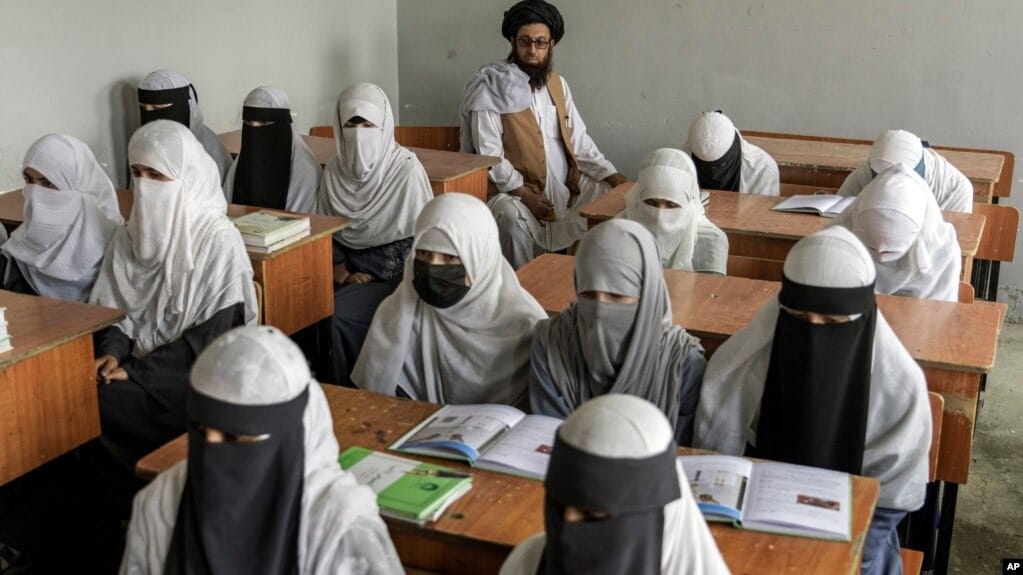
Concerns have also been raised about the Afghan Taliban’s ideological outlook and political legitimacy. The movement returned to power in Afghanistan in 2021 after the collapse of the previous Afghan government. Its authorities have not established an inclusive political system based on competitive national elections of the kind previously envisaged by many Afghans and international observers. Restrictions on women’s education, employment and participation in public life have attracted widespread international criticism. These policies have contributed to Afghanistan’s isolation and complicated efforts to build constructive relations with other countries.
For Pakistan, however, regional security must be pursued through a combination of diplomatic pressure, credible intelligence, effective border management and domestic law enforcement. Pakistan cannot afford to rely solely on assurances from Kabul, nor can it assume that every security challenge can be resolved through military action. A durable strategy must make it more difficult for militant organisations to use Afghan territory to plan, support or launch attacks against Pakistan.
Diplomatic engagement should therefore be tied to verifiable security commitments. Where credible evidence identifies cross-border threats, the government should pursue coordinated action, effective border controls and appropriate diplomatic measures, while avoiding unnecessary escalation that could further destabilise the region.
The security debate has also included claims about links among militant organisations and the movement of resources between them. One allegation concerns a meeting in which a BLA figure identified as Bashir Zaib reportedly complained about declining recruitment and financial difficulties. The account further alleges that an Al-Qaeda representative offered money and recruits. These claims have not been independently established by the information available here and should not be presented as confirmed intelligence.
Nevertheless, the broader issue of terrorist financing and recruitment deserves serious attention. Militant organisations require resources to maintain personnel, acquire equipment, communicate, travel and sustain their operations. When recruitment declines or funding becomes more difficult, their ability to conduct sustained attacks may weaken.
Governments should therefore investigate suspected financing networks, money laundering, illicit transfers and material support through lawful intelligence and financial-investigation mechanisms. International cooperation can help trace funds that cross borders or move through informal channels.
The state must also address the social conditions that make recruitment possible. Young people facing unemployment, insecurity, exclusion or a lack of educational opportunities can become vulnerable to extremist propaganda, although poverty alone does not explain terrorism. Prevention requires credible education, economic opportunity, community engagement and the rejection of violent ideologies.
The long-term objective should be to reduce both the operational capabilities of militant organisations and their ability to attract new recruits.
There is reason to believe that sustained pressure on militant organisations can weaken their ability to operate. However, predictions that terrorism will soon end in Khyber Pakhtunkhwa and Balochistan should be approached with caution.
Militant groups may face recruitment shortages, financial difficulties and pressure from security operations. These constraints can reduce their capacity to organise attacks. Yet organisations can adapt, change tactics, exploit local grievances or seek support from other networks.
Balochistan presents its own distinct challenges. The BLA and other insurgent organisations operate in a political and security environment shaped by longstanding grievances, geographical conditions and questions surrounding governance and development. Their activities cannot be reduced to the same dynamics that drive TTP violence in Khyber Pakhtunkhwa.
In both provinces, military and police pressure must be combined with better governance, economic development, access to justice and public participation. Residents need to see that the state offers more than security checkpoints and enforcement operations. They need reliable public services, educational opportunities, fair treatment and confidence that their complaints will be heard.
A decline in attacks is an important objective, but it is not the only measure of success. The state must also prevent the re-emergence of militant networks, strengthen local institutions and reduce the conditions in which violent organisations can establish influence.
The political future of Khyber Pakhtunkhwa remains inseparable from the question of democratic legitimacy.
The view expressed in the interview was that the existing provincial political cycle had already run for approximately three and a half years and that elections might take place within another year or year and a half. This was a forecast offered in the discussion, not a confirmed election schedule. The actual timing of elections must be determined by the applicable constitutional and legal framework and official announcements.
Whatever the timeline, Governor’s Rule should not become a substitute for representative government beyond what the Constitution permits. Extraordinary administrative arrangements may be justified under specific circumstances, but their legitimacy depends on constitutional compliance, transparency and accountability.
Security policy also benefits from democratic participation. Local representatives can help identify vulnerable communities, communicate public concerns and monitor whether security spending is delivering results. Political parties can compete over development priorities while maintaining a shared commitment to preventing terrorism.
The appropriate standard for political representation is electoral performance and the democratic process. No party should be rewarded merely for demanding a greater share of power, and no party should be excluded simply because it challenges the administration.
If elections are expected within the coming period, the authorities should use the intervening time to strengthen institutions, improve security and create conditions in which political participation can take place without intimidation.
Governor’s Rule has created an opportunity for a political and administrative reset in Khyber Pakhtunkhwa, but the security situation has not changed dramatically merely because the provincial leadership has changed. Terrorist operations continue, police personnel remain exposed to serious risks, and cross-border militancy continues to complicate Pakistan’s security environment.
The potential benefits lie in closer coordination between the federal government and provincial administration, stronger cooperation between the army and police, improved funding for vulnerable police installations, better weapons and communications equipment, more capable counterterrorism investigations and a firmer, more consistent approach to security policy.
The challenges are equally substantial. Political rivalry must not overshadow public safety. Refugee enforcement must distinguish genuine security threats from vulnerable populations. Relations with Afghanistan must combine diplomatic engagement with credible demands for action against militant organisations. Counterterrorism operations must be accompanied by effective governance, economic opportunity and respect for the law.
Most importantly, the new administration must demonstrate that its priorities are different not merely in rhetoric but in measurable results. Police stations should become safer. Officers should receive the equipment and training they need. Intelligence should translate into effective investigations. Terrorist financing and recruitment should become more difficult. Citizens should be able to travel, work, study and participate in political life without living under constant fear.
The success of Governor’s Rule will not be determined by the number of political opponents criticised, the offices distributed among allies or the strength of official statements. It will be determined by whether the state can protect its citizens and establish the conditions for durable peace.
Khyber Pakhtunkhwa has already paid an enormous price for years of insecurity. Its people deserve more than another political experiment or a temporary improvement in official coordination. They deserve a coherent security policy, capable institutions, accountable leadership and a future in which terrorism no longer dictates the boundaries of everyday life.
The ultimate test of Governor’s Rule is simple: not whether the government has changed, but whether the lives of the people have become safer.