Pakistan’s struggle against terrorism has reached a critical stage, where cross-border militancy, local insecurity, weak governance, and socioeconomic deprivation are increasingly interconnected. Reports of explosive materials being prepared inside residential settings in Afghanistan, the persistent threat posed by the Tehreek-e-Taliban Pakistan (TTP), and the urgent need to improve governance in the deprived districts of Khyber Pakhtunkhwa all point towards a challenge that cannot be resolved through security operations alone.
These developments raise fundamental questions about the future of regional security. Are militant organizations operating with sufficient freedom to establish networks and threaten neighboring countries? Are the authorities in Afghanistan taking meaningful action against these groups, or is the security environment allowing them to continue their activities? And, equally importantly, can Pakistan overcome terrorism without addressing the poverty, unemployment, and administrative failures that leave vulnerable communities exposed to militant recruitment?
The answers require a comprehensive approach that combines national security with institutional reform and socioeconomic development. Pakistan’s strength must be measured not only by its defensive capabilities but also by its ability to protect ordinary citizens, deliver public services, and ensure that no region is abandoned to insecurity and neglect.
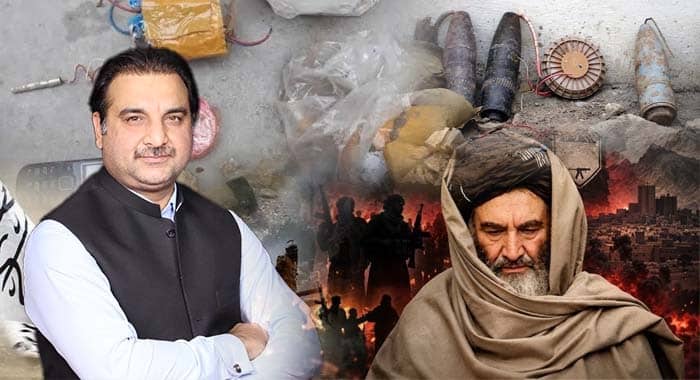
Reports that explosive materials are being prepared inside homes in Afghanistan have renewed concerns about the operational methods of militant organizations and the extent of their activities. The practice of manufacturing explosives locally is not new. In areas affected by militancy, such methods may be employed when illicit networks cannot obtain sufficient materials through other channels.
Similar concerns have emerged in Khyber Pakhtunkhwa, particularly in the former tribal districts, where improvised explosive devices have been associated with attacks in different settings, including fields, markets, roads, and locations frequented by ordinary people.
The underlying concern is straightforward: militant groups may attempt to manufacture explosive devices locally, transport them to intended targets, and use them against security personnel or civilians. Such attacks can result in fatalities, injuries, destruction of property, and widespread fear among communities already struggling with instability.
It would be a serious mistake to dismiss this development merely because the reported activity is limited in scale. The danger of an improvised explosive device cannot be measured exclusively by the quantity of material involved or the size of the operation that produced it. Even a relatively small device can cause devastating harm when used against a crowded marketplace, a public gathering, a security patrol, or a civilian vehicle.
The appropriate response is neither panic nor complacency. It is a professional assessment of the threat, stronger intelligence cooperation, effective border monitoring, and measures to prevent the illicit acquisition of explosive precursors. Investigations must establish the extent of such activity, identify the networks involved, and determine whether the individuals responsible have connections with organized militant groups.
The issue also demonstrates why counterterrorism requires more than conventional military preparedness. Security institutions must be able to identify threats before they materialize, disrupt financing and supply networks, and protect vulnerable communities without imposing unnecessary hardships on ordinary citizens.
The presence and activities of the TTP constitute one of the most consequential security challenges facing Pakistan. The organization’s ability to threaten Pakistani security forces and civilians has made its activities a central concern in the relationship between Islamabad and Kabul.
The issue is particularly sensitive because Afghanistan’s territory must not become a sanctuary for organizations that conduct attacks across international borders. Pakistan has repeatedly expressed concerns about militant networks operating from Afghan territory. These allegations require serious attention, credible investigation, and practical action to prevent the region from becoming a battleground for competing militant agendas.
The Afghan Taliban administration faces a fundamental test of its stated commitments to regional stability. It must demonstrate through verifiable action that its territory will not be used to plan, organize, facilitate, or launch terrorist attacks against neighboring countries.
The question of whether the Afghan Taliban support terrorist organizations or act against them cannot be settled through rhetoric alone. It must be evaluated through observable conduct: whether militant networks are dismantled, whether their leaders are prevented from organizing attacks, whether their movement and resources are restricted, and whether meaningful cooperation takes place with countries threatened by their activities.
At the same time, accusations must be distinguished from independently established facts. Credible evidence, transparent investigations, and verifiable outcomes are essential to any serious assessment of the security situation.
Videos and other material circulated by militant organizations may provide evidence of their activities, but such material must be authenticated and assessed carefully. International media reporting, including coverage by major broadcasters such as CNN, can bring attention to emerging threats. Nevertheless, individual reports and propaganda material should be evaluated in context rather than treated as conclusive proof of every broader allegation.
The United Nations Security Council and relevant international partners also have a role in monitoring terrorist threats, supporting international counterterrorism obligations, and encouraging practical cooperation. Regional stability depends on preventing militant organizations from exploiting political disagreements, weak enforcement, and gaps in international coordination.
Ultimately, Afghanistan’s stability and Pakistan’s security are closely connected. A government that seeks international legitimacy must demonstrate its ability to prevent its territory from being used to threaten other states. Equally, Pakistan must continue to combine firm security measures with diplomacy, intelligence cooperation, and evidence-based engagement.
Pakistan possesses substantial national defense capabilities, including nuclear deterrence and conventional military strength. Its strategic position also gives it an important role in regional security and international diplomacy.
However, national defense capabilities and counterterrorism effectiveness are not interchangeable. Nuclear deterrence is designed primarily to discourage large-scale strategic aggression; it does not automatically prevent a terrorist attack in a remote village, a crowded market, or a security checkpoint.
This distinction is crucial. Even if a country is militarily powerful, individual terrorist attacks can still produce tragic consequences. Every life lost in a bombing represents a failure to prevent harm, regardless of the country’s military standing.
Regional military developments, including the reported confrontations between Pakistan and India on May 9–10, as referenced in the discussion, have reinforced the importance of national preparedness. Pakistan’s defense posture and the possibility of new security partnerships may influence regional calculations, but they cannot substitute for effective domestic intelligence, policing, border management, and civilian protection.
The real measure of Pakistan’s security is not whether the state can respond to a major external threat. It is also whether it can prevent militant organizations from targeting its citizens and security personnel. A strong state must be capable of addressing both conventional and unconventional threats. It must protect its borders while strengthening governance inside them. It must maintain credible deterrence while investing in institutions that prevent violence from taking root.
While the security threat associated with Afghanistan demands immediate attention, the situation inside Khyber Pakhtunkhwa requires equally serious consideration. The former tribal districts, including areas such as Bara, Waziristan, Bajaur, and Mohmand, have faced prolonged difficulties involving inadequate public services, limited economic opportunities, and persistent insecurity.
The deprivation experienced by these communities cannot reasonably be attributed to a single government or a single political decision. It reflects years of administrative shortcomings and insufficient development priorities across successive political administrations.
Over approximately 22 to 25 years, the political landscape of the province has changed repeatedly. Governments associated with the Muttahida Majlis-e-Amal (MMA), the Awami National Party (ANP), and subsequent political administrations have all had opportunities to improve the lives of people in these areas. Yet serious deficiencies in basic services have continued.
One of the most troubling illustrations of this deprivation is the reported lack of safe drinking water in certain communities, where people and animals have had to rely on the same water sources. Such conditions reveal how far development has fallen short of the basic standards that citizens should expect from the state.
Safe drinking water, education, healthcare, roads, employment, and reliable public administration are not luxuries. They are essential components of human dignity and national security.
When communities remain deprived of these necessities for decades, frustration grows. Young people who see little prospect of education, employment, or economic advancement become more vulnerable to exploitation by those who offer money, influence, or a false sense of purpose.
This does not mean that deprivation automatically produces terrorism, nor does it excuse violence. The overwhelming majority of disadvantaged citizens are not terrorists. Rather, persistent deprivation creates vulnerabilities that organized militant groups may attempt to exploit. The state must therefore confront two connected challenges: the immediate threat posed by armed organizations and the underlying conditions that allow those organizations to recruit and expand their influence.
The proposed Area Representative Development Council model offers an opportunity to address longstanding governance deficiencies by bringing decision-making closer to the communities that need public investment the most.
The initiative seeks to ensure that historically neglected areas receive greater attention and that development resources are directed towards local priorities rather than being concentrated in distant administrative centers or distributed according to political considerations.
The establishment of advisory councils, the preparation of official notifications, and the acceleration of administrative work have been presented as important early steps in this process. The model is intended to create a mechanism through which local representatives can identify problems, communicate community needs, and contribute to decisions about development projects. The central principle is sound: people who live in a district are often best positioned to understand its practical challenges.
Residents of one area may urgently need drinking water, while another may require schools, healthcare facilities, employment programs, road improvements, or better access to markets. A uniform development strategy imposed from above may overlook these differences. Local consultation can help ensure that public spending responds to actual needs.
The proposed arrangement also emphasizes the importance of directing development funds towards the districts for which they are intended. If implemented transparently, this could improve accountability and reduce the opportunities for political interference or the diversion of resources.
However, creating councils and issuing notifications are only the beginning. The effectiveness of the model will depend on whether these bodies receive clearly defined responsibilities, adequate resources, competent administrative support, and genuine authority to influence development decisions. Local representation must not become another bureaucratic layer that delays projects or creates additional opportunities for patronage. It must produce measurable improvements in people’s lives.
The success of the initiative should be evaluated through concrete indicators: the availability of safe drinking water, school attendance, healthcare access, employment opportunities, completed infrastructure projects, and the transparent use of public funds.
The first few days of implementation cannot establish whether the model will succeed. A period of approximately three months may offer an initial opportunity to review administrative progress, while a more comprehensive assessment after six months could help determine whether the initiative deserves expansion and what additional governance reforms are required. Speed is important, but speed without accountability can reproduce the failures of the past. The objective must be effective delivery, not simply rapid announcements.
The need for a new governance model also raises questions about the priorities of previous provincial administrations. Criticism has been directed at political leadership that allegedly devoted considerable attention to political activities and protests while security, law and order, and development in vulnerable districts received insufficient attention.
There have also been concerns about provincial leadership failing to visit insecure areas, including parts of Waziristan, Bajaur, and Mohmand, while appearing more frequently in relatively peaceful urban centers such as Lahore and Karachi. These criticisms highlight a basic principle of democratic governance: political leaders must be accessible to the people they represent, particularly those living under the greatest pressure.
A provincial government cannot claim to have fulfilled its responsibilities merely because it has maintained political visibility elsewhere. Citizens in insecure districts have the same right to government attention, public investment, and institutional protection as citizens in major cities.
Security challenges may make visits difficult, but they make engagement more necessary, not less. Governments must establish practical mechanisms to hear local concerns, coordinate security responses, and deliver development assistance even when direct access is constrained.
The same principle applies to meetings on law and order and to the preparation of development plans. Security and development must not be treated as competing priorities. They are complementary responsibilities of the state. An administration that neglects public services weakens confidence in government. An administration that neglects security leaves communities exposed to intimidation. Effective governance requires both.
One of the most serious concerns in conflict-affected districts is the vulnerability of unemployed young people to militant recruitment. Reports and allegations that militant networks may offer financial incentives, including amounts of around Rs30,000, to attract unemployed youth into their ranks illustrate the importance of economic opportunity in counterterrorism policy. Such claims require verification in individual cases, but the broader danger of exploiting financial desperation is clear.
For a young person without reliable income, access to quality education, or prospects for employment, even a modest payment can become a powerful inducement. Militant recruiters may exploit this vulnerability by presenting violence as a source of income, status, belonging, or revenge.
The response must be to expand legitimate alternatives. Vocational training, technical education, small-business support, agricultural development, improved access to markets, and private-sector investment can help create pathways away from militancy. Employment programs should be designed around the actual economic needs of each district rather than implemented as temporary political gestures.
Education is equally important. Schools must be accessible, adequately staffed, and capable of preparing students for meaningful opportunities. Where institutions have been damaged by conflict or left without sufficient resources, reconstruction should be treated as a security priority as well as a development responsibility.
Young people must see a future for themselves within the state and society. They must have a reason to believe that education, work, and peaceful civic participation offer greater prospects than joining an armed organization. This is how counterterrorism becomes sustainable. Security operations may disrupt militant networks, but social and economic development helps prevent those networks from replenishing their ranks.
No development strategy can succeed without the participation of the people it is intended to benefit. The proposed councils can provide a platform for local representatives, community leaders, and residents to identify priorities and monitor implementation. Their value will depend on whether consultation is meaningful and whether the concerns raised by citizens lead to actual decisions.
Local communities understand the difficulties that outsiders may overlook: the location of inaccessible settlements, the condition of water supplies, the needs of schools, barriers to employment, and the effects of insecurity on daily life. Their involvement can improve the selection of projects, strengthen public trust, and help authorities identify emerging problems before they become more serious.
A local governance structure resembling a responsive municipal or mayoral system could also help clarify responsibility. When citizens know which institution is responsible for a road, school, water supply, or employment initiative, it becomes easier to demand results and identify administrative failure.
Funding arrangements should reflect the same principle. Resources allocated for North Waziristan, South Waziristan, Bajaur, Mohmand, or other districts should be used transparently for the intended communities. Allocation criteria should be publicly available, expenditures should be independently audited, and progress reports should be accessible to residents.
Development funds must serve the public, not become instruments for personal enrichment or political loyalty. Allegations of corruption should be investigated through proper legal and administrative procedures, and proven misconduct should carry consequences. Without transparency, even a promising governance reform can lose public confidence. With accountability, local participation can become a powerful instrument of institutional renewal.
The relationship between security and development is often misunderstood. Some argue that development must wait until terrorism has been defeated. Others maintain that security operations cannot succeed without first resolving poverty and inequality. Both approaches are incomplete.
Development projects cannot function properly when armed groups intimidate workers, threaten residents, or obstruct access to public services. At the same time, security operations cannot produce lasting stability if communities remain without education, employment, justice, and basic infrastructure. The solution is an integrated strategy in which security measures protect development, while development strengthens the foundations of security.
This requires coordination among law enforcement agencies, civilian administrations, local councils, educational institutions, and economic development departments. Every major security initiative should be accompanied by a plan to restore normal life, protect public infrastructure, and support affected communities. Likewise, development programs must account for security conditions without becoming permanently dependent on emergency arrangements.
The state must demonstrate that its presence means more than checkpoints and operations. It must also mean functioning schools, clean drinking water, accessible healthcare, fair administration, and opportunities for young people. When citizens experience these benefits, trust in public institutions can grow. That trust is essential to obtaining community cooperation against militant organizations.