
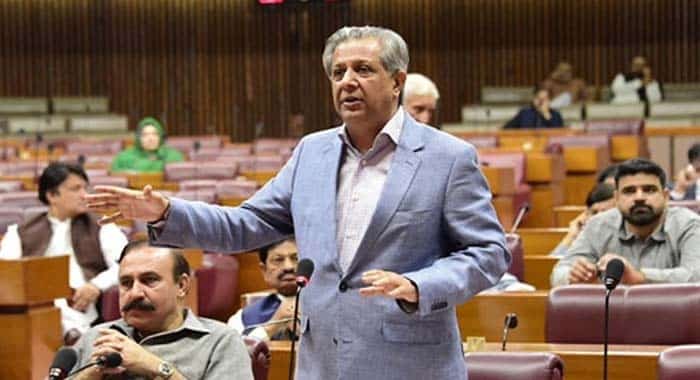
Federal Minister for Law and Justice Azam Nazeer Tarar has said that the decision to impose an emergency was taken in view of escalating terrorist incidents, internal instability, and cross-border infiltration in Khyber Pakhtunkhwa, stressing that the deteriorating security situation demands coordinated action by federal and provincial authorities and a unified national response against terrorism.
Addressing the National Assembly during a session chaired by Speaker Sardar Ayaz Sadiq, the federal law minister said the federal cabinet had reviewed the prevailing situation for approximately two and a half hours before advising the prime minister to proceed with the emergency decision.
The minister emphasised that counterterrorism efforts require political consensus, institutional coordination, and sustained operational preparedness. He also criticised the provincial government of Khyber Pakhtunkhwa, alleging that political activities had been given priority over practical measures to address the province’s deteriorating security environment.
Presenting figures to the National Assembly, Azam Nazeer Tarar stated that 2,911 terrorist incidents were recorded in Khyber Pakhtunkhwa between 2021 and 2024, while the number rose to 3,787 incidents between 15 October 2025 and 9 October 2026, according to the figures he cited.
The minister referred to the increase as an indication of the seriousness of the security challenges confronting the province and stressed the need for a comprehensive, coordinated response to prevent further deterioration. He said the fight against terrorism could not be treated as the responsibility of a single government or institution. Instead, federal and provincial administrations must work together to strengthen security arrangements, improve coordination, and support the personnel confronting terrorist threats on the ground.
The minister also acknowledged the sacrifices of the armed forces, police personnel, and civilians who have lost their lives in the fight against terrorism. He emphasised that these sacrifices must be matched by practical action, effective governance, and a sustained commitment to protecting citizens. Criticising the provincial government’s response to the security situation, Tarar alleged that the chief minister of Khyber Pakhtunkhwa had prioritised political engagements and visits to other cities despite the gravity of the challenges facing the province.
According to the minister, the provincial administration should have convened daily security meetings, developed a coordinated response with relevant institutions, visited injured personnel, and met the families of those killed in the line of duty. He argued that the prevailing circumstances required continuous monitoring, timely decision-making, and close coordination between political leadership and law enforcement agencies.
The minister maintained that counterterrorism must remain a central governance priority, particularly in areas facing persistent militant attacks and cross-border security threats. His remarks placed renewed focus on the respective responsibilities of federal and provincial authorities in addressing terrorism and ensuring that political differences do not undermine public safety. Tarar alleged that, during discussions concerning counterterrorism measures, opposition representatives also raised issues relating to facilities for their incarcerated political leader.
He argued that the fight against terrorism should remain the principal focus of political negotiations, particularly when the security situation requires urgent and coordinated action. The minister also clarified the distinction between judicial processes and constitutional powers relating to prisoners. He said that decisions concerning release and legal proceedings fall within the relevant judicial and legal framework, while Article 45 of the Constitution empowers the president to grant pardons, reprieves, and remissions, as well as to remit, suspend, or commute sentences in accordance with the constitutional provision.
His remarks underscored the government’s position that political negotiations must operate within constitutional boundaries and that legal matters concerning individual prisoners must be addressed through the applicable procedures. The allegations concerning the opposition’s negotiating priorities reflect the minister’s account of the discussions and were not independently established in the information provided.
Explaining the constitutional procedure, the federal law minister referred to Article 232 of the Constitution, which provides the framework for proclaiming an emergency under specified circumstances. Tarar stated that the emergency proclamation must be submitted to both houses of Parliament for approval within ten days, describing parliamentary consideration as a constitutional requirement.
The provision establishes a formal role for Parliament in the emergency process, placing the decision within the country’s constitutional framework. The minister’s remarks brought the proposed emergency measures into focus as both a security response and a matter requiring constitutional and parliamentary consideration.
Tarar called on the entire nation and all political parties to unite in support of the security forces and work collectively towards eliminating terrorism. He stressed that the sacrifices of military personnel, police officers, and civilians demanded a response based on national solidarity rather than political division. According to the minister, counterterrorism efforts would be more effective if political leadership prioritised public safety, supported law enforcement institutions, and coordinated their actions with the relevant authorities.
He argued that the prevailing security challenges required a shared national commitment, with political differences addressed through dialogue while the fight against terrorism remained a common priority. During his address, Tarar also referred to political negotiations held in 2023 following discussions about the dissolution of provincial assemblies and the timing of general elections.
He claimed that an understanding had been reached to hold elections nationwide simultaneously, with assemblies to be dissolved following budget approval and elections subsequently conducted during the first or second week of September. According to the minister, the proposed arrangement was later rejected by the founder of Pakistan Tehreek-e-Insaf (PTI), a development he said had disappointed other participants in the negotiations.
Tarar also referred to the events of 9 May 2023, arguing that they contributed to a further deterioration in the country’s political environment. His account highlighted the continuing political disagreements that have shaped relations between the government and opposition, as well as the challenges of building lasting consensus on national issues. The federal law minister’s address brought together three central issues facing Pakistan: the worsening security situation in Khyber Pakhtunkhwa, the constitutional process surrounding emergency measures, and the continuing difficulties of political cooperation.
His remarks reflected the federal government’s position that the rising number of reported terrorist incidents requires an urgent and coordinated response, supported by effective provincial governance and national political consensus.
The figures cited in the National Assembly, the allegations concerning provincial priorities, and the account of previous negotiations form part of the minister’s statement. Their broader assessment requires consideration of official records, the applicable constitutional provisions, and responses from the other parties concerned.
Ultimately, the challenge facing the country is to ensure that counterterrorism measures are effective, constitutionally grounded, and supported by sustained cooperation among federal and provincial institutions. The federal government has called for national unity against terrorism, emphasising that protecting citizens, supporting the security forces, and preserving constitutional governance must remain shared priorities across the political spectrum.



