
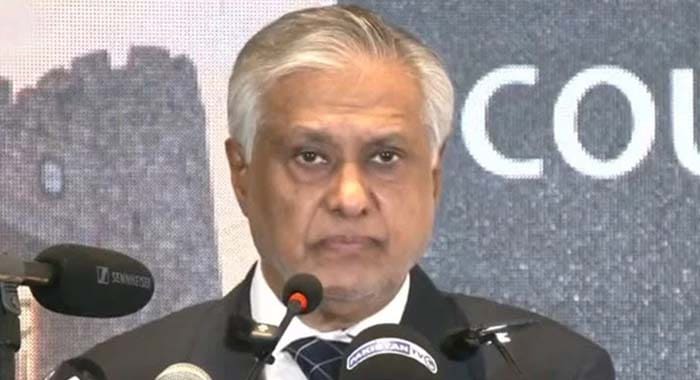
Deputy Prime Minister and Foreign Minister Senator Mohammad Ishaq Dar has reaffirmed Pakistan’s unwavering commitment to combating terrorism, calling on the international community to recognise the extraordinary sacrifices made by the Pakistani nation in confronting a threat that continues to undermine regional and global peace.
Addressing a seminar in Islamabad, Ishaq Dar stated that terrorism remains one of the greatest challenges facing the region and the wider world. He emphasised that Pakistan has sacrificed more than 90,000 lives in the fight against terrorism, demonstrating exceptional courage, resilience and determination in confronting extremist violence.
The Deputy Prime Minister underscored that Pakistan’s struggle against terrorism has exacted a devastating human and economic toll. He called for international recognition of the country’s contributions and sacrifices, stressing that Pakistan has remained at the forefront of efforts to counter terrorist threats despite the immense costs borne by its people, economy and security institutions.
He highlighted the grave incidents Pakistan has endured, including the Jaffar Express tragedy and the abduction and killing of workers in Balochistan, as stark reminders of the continuing threat posed by terrorist organisations.
Ishaq Dar stressed that Pakistan’s counterterrorism campaign has been marked by sustained sacrifices by civilians, security personnel and law enforcement agencies. The loss of more than 90,000 lives reflects the magnitude of the challenge confronting the country and the determination with which the Pakistani nation has resisted terrorist violence.
He noted that terrorism has inflicted severe damage on Pakistan’s economy, disrupting economic activity, undermining investor confidence and imposing substantial costs on national security and development.
The Deputy Prime Minister emphasised that these sacrifices must be acknowledged by the international community, particularly given the wider implications of terrorism for regional stability and international security.
He reiterated that Pakistan’s efforts are not limited to protecting its own territory but also contribute to the broader objective of preventing terrorist networks from threatening peace and stability across the region.
Highlighting the government’s continued efforts to eliminate terrorism, Ishaq Dar said that under the leadership of Prime Minister Shehbaz Sharif, Pakistan has pursued a renewed approach to counterterrorism. He stated that law enforcement agencies remain actively engaged in efforts to dismantle terrorist networks, prevent attacks and restore lasting peace in affected areas. Security operations are being conducted on a daily basis as part of the continuing campaign against terrorist organisations.
The Deputy Prime Minister also acknowledged the commitment of Field Marshal Syed Asim Munir to combating terrorism, noting that operations against terrorist elements are being carried out under his direction.
He emphasised that defeating terrorism requires sustained national resolve, effective coordination among security institutions and the active participation of all provinces. According to Ishaq Dar, counterterrorism cannot be treated as the responsibility of any single institution or region. A coordinated national effort involving federal and provincial governments, law enforcement agencies and local communities is essential to achieving lasting security.
Addressing cross-border security challenges, the Deputy Prime Minister reiterated Pakistan’s longstanding position that Afghan territory must not be used by terrorist organisations to plan or carry out attacks against Pakistan.
He said Pakistan has repeatedly urged the Afghan authorities to fulfil their commitments and prevent terrorist groups from operating from Afghan soil. Islamabad has also pursued diplomatic engagement, including visits to Afghanistan, in an effort to address these concerns through dialogue.
Ishaq Dar emphasised that Pakistan’s demand is clear: Afghanistan must ensure that its territory is not used to threaten Pakistan or undermine regional peace.
He recalled the trilateral meeting involving Pakistan, China and Afghanistan held in Kabul in August 2025, expressing disappointment that the Afghan authorities had not fulfilled their commitments concerning the prevention of terrorism.
The Deputy Prime Minister highlighted concerns over the presence of the banned Tehreek-e-Taliban Pakistan (TTP) and other terrorist organisations in Afghanistan, describing such groups as a serious threat to regional peace and stability.
He also pointed to cross-border infiltration by terrorists, who enter Pakistani territory and launch attacks against security personnel and civilians. These threats, he stressed, underscore the importance of effective border management and concrete action against terrorist networks.
Ishaq Dar stated that Pakistan has installed a security fence along the Pakistan-Afghanistan border as part of its efforts to prevent unauthorised crossings and terrorist infiltration. He emphasised that effective border security is essential to protecting the lives of Pakistani citizens, safeguarding security personnel and preventing terrorist groups from exploiting cross-border routes.
The Deputy Prime Minister reiterated that Pakistan has consistently pursued regional peace through diplomatic engagement and constructive cooperation. He noted that Pakistan has also extended substantial humanitarian assistance to Afghanistan, reflecting its commitment to supporting the Afghan people despite persistent security concerns.
He stressed that Pakistan’s efforts to promote regional stability and facilitate cooperation cannot be dismissed, adding that lasting peace requires all regional stakeholders to fulfil their responsibilities and prevent their territories from being used for terrorist activities.
The Deputy Prime Minister also addressed the broader implications of terrorism and political instability for Pakistan’s economy. He observed that prolonged protests, sit-ins and disruptive political activities can impose significant economic costs, affecting business confidence, economic activity and national development.
Discussing the possibility of imposing emergency measures in Khyber Pakhtunkhwa, Ishaq Dar stated that such a decision would not be easy, but argued that the federal government had been left with limited alternatives in the circumstances he described.
He underscored the importance of maintaining stability, protecting economic activity and ensuring that political disagreements do not undermine national security or the country’s economic interests.
At the same time, he reiterated that every province must play its part in the national campaign against terrorism. Effective cooperation between federal and provincial authorities is essential to addressing local security challenges, strengthening governance and ensuring that terrorist organisations cannot exploit administrative or political divisions.
Concluding his remarks, Ishaq Dar emphasised that terrorism remains a shared challenge requiring determined action, international cooperation and a unified regional approach.
He reiterated that Pakistan has paid an extraordinary price in its fight against terrorism, losing more than 90,000 lives while sustaining substantial economic damage. He called for the international community to recognise these sacrifices and appreciate Pakistan’s continued efforts to counter terrorist threats.
The Deputy Prime Minister stressed that lasting peace will require more than military and law enforcement operations. It will also depend on responsible regional engagement, effective border controls, the prevention of cross-border terrorism and practical cooperation among neighbouring countries.
He reaffirmed Pakistan’s commitment to protecting its citizens, strengthening national security and pursuing regional stability through both sustained counterterrorism efforts and diplomatic engagement.



