
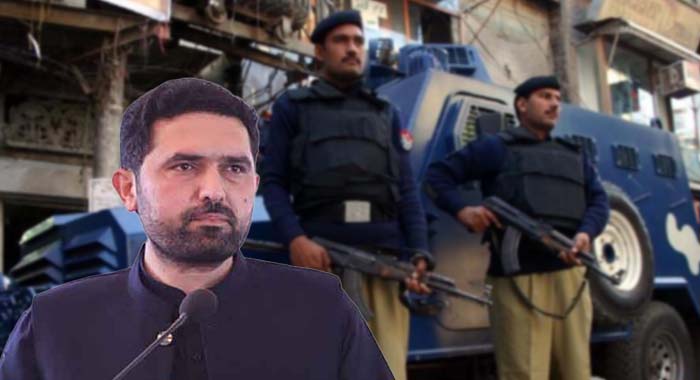
The delivery record of critical security equipment procured for the Khyber Pakhtunkhwa Police presents a substantially different picture from recent claims made by Chief Minister Sohail Afridi regarding alleged delays and non-provision of equipment.
At a time when Khyber Pakhtunkhwa continues to face serious security challenges and its police force remains at the forefront of the fight against terrorism, accurate information about the availability and delivery of protective equipment is not merely a matter of administrative detail. It is a matter of public interest and operational importance. Police personnel confronting terrorism and other security threats require specialised equipment, and the public deserves an accurate account of what has been ordered, delivered, installed, made available for collection, and what remains contractually due.
The available delivery figures provide a clear basis for that assessment.
Since May 2025, HIT has provided the KP Police with 73 protected vehicles, comprising 59 bulletproof vehicles and 14 B7 armoured personnel carriers (APCs). The APC deliveries include six Dragoons, providing the police force with specialised protected mobility for operations in high-risk environments.
The delivery programme is continuing. Four additional Dragoons are already ready for collection, while seven more APCs are scheduled for delivery in early October and another six in mid-November.
These figures are significant in the context of the security environment confronting KP Police. In the fight against terrorism, protected mobility and armoured vehicles can form an important component of police operational capability, particularly for personnel deployed in areas where the threat of armed attacks remains a concern.
It is therefore essential that any public discussion of the procurement programme differentiates between equipment that has already been delivered, equipment that is ready for collection, and equipment that remains scheduled for delivery under an agreed contractual timeline.
The record concerning jammers similarly requires a distinction between equipment already delivered and equipment that remains within its contractual delivery period. NRTC has already delivered five jammers to the KP Police and has offered a further 20 jammers for delivery ahead of its October deadline. These systems are intended to contribute to the security architecture required for police operations in a province where terrorism and remotely coordinated attacks have been persistent security concerns.
The installation process also depends on the availability of the relevant police vehicles. Ten KP Police vehicles have already reported for installation, while 10 vehicles are still awaited. This is an important operational detail that should be included in any complete assessment of the programme. Meanwhile, the remaining 56 jammers have later contractual delivery dates. Their agreed deadlines have not yet expired.
Consequently, equipment cannot accurately be characterised as overdue simply because it has not yet been delivered on a date that falls within a future contractual period. The same applies to the 23 anti-drone guns included in the procurement programme. These systems are scheduled for delivery in October and December 2026. Those contractual deadlines have not yet passed. The distinction is straightforward: an item with a future contractual delivery date is not the same as an item whose contractual delivery deadline has expired without fulfilment.
At a time when police forces across the country are adapting their security measures to evolving threats, including the use of drones and other emerging technologies by hostile actors, the public debate surrounding such equipment should be based on the actual procurement schedule and not on assumptions about when delivery was expected to occur.
Another point raised in connection with the equipment issue concerns APCs supplied to the Islamabad Police. That comparison also requires a factual clarification. The APCs supplied to Islamabad Police were Mohafiz APCs, whereas the requirement sought by KP Police was for the higher B7 protection level.
It is therefore misleading to treat the two procurements as though they involved identical equipment and specifications. Specialised security equipment is procured according to operational requirements, protection standards and technical specifications. A comparison is meaningful only when the type of vehicle, protection level, contractual requirements and delivery schedule are the same. The fact that one police force received a particular APC model does not, by itself, establish that the same model met the operational requirement of another police force.
Against this background, there is a straightforward question for Sohail Afridi. Which specific contract has been paid for, has already passed its contractual delivery deadline, and remains unfulfilled? If the allegation is that public funds have been paid for equipment that should already have been delivered, then the relevant contract should be identified clearly and publicly.
That means putting the contract, equipment specification, quantity, payment status, contractual delivery deadline and present delivery position on the record. Such a presentation would allow the public to distinguish between a genuinely overdue contract and equipment that is either already delivered, awaiting collection, undergoing installation, scheduled for imminent delivery, or still within its contractual delivery period.
This issue cannot be separated from the wider security situation in Khyber Pakhtunkhwa. KP Police personnel have continued to operate on the front line against terrorism, often in difficult and dangerous circumstances. Protected vehicles, armoured personnel carriers, communications and counter-surveillance equipment are procured precisely because police personnel face serious threats while carrying out their duties.
In such an environment, political statements concerning the availability of security equipment carry particular weight. They can influence public understanding of the preparedness of the police and the use of public funds. That is why the standard must be higher than political rhetoric.
The people of Khyber Pakhtunkhwa deserve to know whether equipment has actually been delivered, whether it is available for deployment, whether it is awaiting collection or installation, and when outstanding equipment is contractually due. They also deserve to know if a supplier has genuinely missed a binding contractual deadline.
But those questions must be answered through documentary evidence and contractual records not through broad allegations that fail to distinguish between delivered equipment, pending collection, ongoing installation and future contractual obligations.
The figures provide a clear chronology. Since May 2025, 73 protected vehicles have been provided to KP Police, including 59 bulletproof vehicles and 14 B7 APCs. Six of those APCs are Dragoons, with four additional Dragoons already ready for collection. Seven further APCs are scheduled for early October, followed by another six in mid-November.
On the jammer side, five units have already been delivered by NRTC, while another 20 have been offered for delivery ahead of the October deadline. Ten police vehicles have reported for installation, while 10 more remain awaited from KP Police. The remaining 56 jammers have contractual delivery dates that fall later in the programme. Similarly, the 23 anti-drone guns have contractual delivery dates in October and December 2026. Those dates have not yet expired.
Taken together, these figures demonstrate why a simple claim that the required equipment has not been provided does not adequately describe the actual status of the procurement programme.
There should be no objection to scrutiny of government procurement. On the contrary, contracts involving public money should always be open to legitimate scrutiny and accountability. But accountability works only when the underlying facts are correctly presented. If a contract has been paid for and its delivery deadline has expired, that should be identified.
If equipment has been delivered, that should be acknowledged. If equipment is ready for collection, that should be stated. If installation is awaiting the relevant police vehicles, that should form part of the explanation. And if a contractual deadline falls in October or December 2026, it should not be represented as though it has already expired.
The public debate should therefore move away from generalised political accusations and towards the documentary record. The relevant question is not who can make the strongest allegation. The relevant question is which contract, if any, has crossed its contractual deadline without delivery. If Sohail Afridi maintains that equipment has been paid for but remains undelivered after the expiry of its contractual deadline, he should identify the specific contract and place the relevant dates and details before the public.
That is the appropriate standard for a serious discussion about police preparedness, public expenditure and the security of Khyber Pakhtunkhwa. At a time when KP Police continues to shoulder the burden of confronting terrorism and protecting citizens, the men and women serving on the front line deserve more than political controversy. They deserve accurate information about the equipment being provided to them and the resources being deployed for their protection.
The delivery record should be judged by contracts, specifications, dates and documented deliveries not by political assertions. If there is a contract that is genuinely overdue and unfulfilled, identify it. Put the contract and the dates on the record. Let the facts speak for themselves.



