
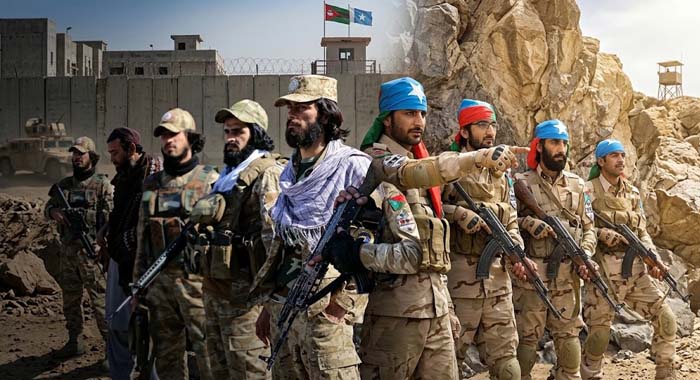
Questions have emerged over the circumstances surrounding an attack on Frontier Corps personnel at Ziarat Cross in Balochistan after the outlawed Baloch Liberation Army (BLA) reportedly claimed responsibility for the incident, while a security analysis has raised the possibility that the attack may have involved the outlawed Tehreek-e-Taliban Pakistan (TTP).
The conflicting attribution has prompted renewed scrutiny of the attack’s background, the possible operational relationships between militant groups operating in the region, and the broader security dynamics affecting Balochistan and Pakistan’s western border areas.
According to a security analysis, the attack targeting Frontier Corps personnel at Ziarat Cross was allegedly carried out by elements associated with the TTP, despite the BLA subsequently claiming responsibility. The analysis raises a key question: if TTP-linked elements were involved in the attack, why was responsibility claimed by the BLA?
One possible explanation presented in the analysis is that individuals or networks associated with the Afghan Taliban authorities may seek to prevent the TTP from directly claiming responsibility for certain attacks against Pakistan. According to this assessment, an explicit TTP claim could potentially increase political and security pressure on Afghanistan and raise concerns about possible Pakistani retaliation or intensified counterterrorism operations.
The analysis, however, does not establish this explanation as a confirmed fact. Rather, it presents it as one possible interpretation of the conflicting claims surrounding the Ziarat Cross incident.
The episode has also renewed attention on reported contacts and alleged cooperation between the TTP and BLA. The security analysis claims that the two organizations may maintain operational-level contacts in certain circumstances and could potentially provide one another with information, logistical assistance, or other forms of facilitation.
Such allegations, if substantiated, would have significant implications for the regional security environment, particularly because the two organizations have historically operated under different organizational identities, geographic areas of influence, and stated objectives.
The analysis further claims that arrangements may exist under which members or affiliates of one group receive assistance in areas influenced by the other. It also refers to recent claims concerning attempts by TTP elements to communicate their ideological message to militants associated with the BLA.
One particularly notable claim cited by the analysis alleges that TTP-associated militants conducted prayers at a BLA camp. This allegation, like the other claims regarding cooperation between the two organizations, requires independent verification before it can be treated as an established fact.
If operational cooperation between militant organizations were to be established, security officials would face an increasingly complex threat environment in which groups with distinct identities could exploit overlapping networks, geographical spaces, logistical channels, and local support structures.
Such cooperation could potentially complicate attribution following attacks, allowing militant organizations to obscure the identity of those responsible and making it more difficult for authorities to determine the precise networks involved.
The Ziarat Cross episode therefore raises broader questions about how militant groups may coordinate, communicate, or seek to shield one another from direct attribution. It also underscores the importance of reliable intelligence, independent verification, and coordinated counterterrorism mechanisms when assessing responsibility for attacks.
The analysis also raises questions regarding the policies of Western governments toward the BLA and the international designation of militant organizations.
It claims that some Western governments have remained cautious regarding efforts to designate the BLA under United Nations Security Council Resolution 1267, a framework associated with international sanctions against designated terrorist organizations and individuals.
Any such policy debate carries wider implications for international counterterrorism cooperation. Supporters of stronger designation measures argue that international recognition of terrorist threats can strengthen efforts to restrict financing, movement, recruitment, and logistical support. At the same time, governments making designation decisions generally consider legal, evidentiary, diplomatic, and security factors before taking action.
The conflicting claims surrounding the Ziarat Cross attack highlight the difficulty of establishing responsibility in an environment where militant organizations may issue competing or strategic claims.
Security assessments regarding the TTP, BLA, their alleged contacts, or possible third-party facilitation should therefore be subjected to rigorous independent verification. Attribution based solely on a militant group’s statement, an unverified intelligence claim, or an individual security assessment can risk creating an incomplete picture of the incident.
Nevertheless, the allegations have brought renewed attention to a critical question for regional security: are Pakistan’s militant threats increasingly operating through overlapping networks in which responsibility, support, and operational roles are deliberately obscured?
The answer will depend on further intelligence, credible evidence, and independent investigation. Until such evidence becomes available, the reported links and competing attribution of the Ziarat Cross attack should be regarded as allegations and analytical assessments rather than established facts.
The incident nevertheless underscores the continuing security challenges facing Balochistan and the importance of strengthening intelligence coordination, protecting security personnel and civilians, disrupting militant financing and logistics, and maintaining effective international cooperation against terrorism.



