
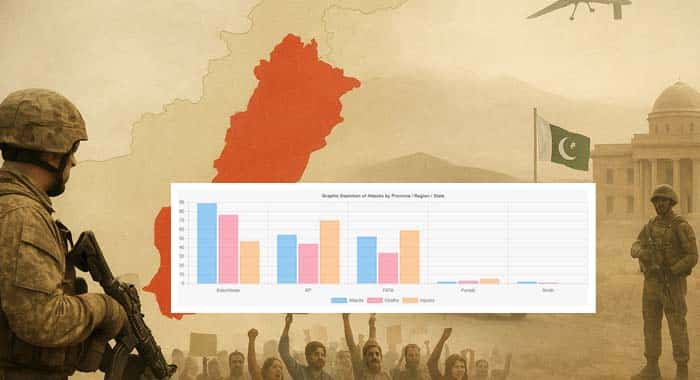
The frequency of terrorist attacks in Pakistan increased significantly during August 2026, despite sustained counter-terrorism pressure by the security forces. However, the overall human cost of terrorist violence declined considerably compared with the previous month, according to the latest monthly security assessment compiled by the Pakistan Institute for Conflict and Security Studies (PICSS).
According to the data, Pakistan recorded 199 terrorist attacks in August, compared with 144 attacks in July, representing an increase of 38 per cent. The rise in attack frequency came despite continuing counter-terrorism operations across several parts of the country.
July had witnessed a particularly sharp escalation in violence linked to terrorist attacks and counter-terrorism operations and was recorded as the deadliest month of 2026. In contrast, the August figures indicate that while terrorists carried out attacks more frequently, the overall human impact of those attacks declined substantially.
The 199 terrorist attacks recorded in August resulted in 158 deaths and 181 injuries, compared with 268 deaths and 216 injuries resulting from 144 attacks in July. This represents a 41 per cent decline in deaths and a 16 per cent decline in injuries caused by terrorist attacks compared with the previous month. The figures therefore present a mixed security picture: while the number of attacks increased markedly, the lethality and overall human impact of those attacks declined.
Security forces continued intensive counter-terrorism operations throughout August, resulting in 211 deaths, including 203 terrorists. In addition, 21 terrorists were injured and 26 suspected terrorists were arrested during security forces’ actions. Balochistan remained the principal theatre of counter-terrorism operations. Security forces eliminated 115 terrorists in Balochistan, while 56 terrorists were killed in mainland Khyber Pakhtunkhwa and 32 in the merged districts of Khyber Pakhtunkhwa.
The figures underscore the continuing operational pressure being maintained against terrorist networks and their support infrastructure across the country.
The month also witnessed a notable decline in suicide attacks. PICSS recorded three suicide attacks in August, including two vehicle-borne suicide attacks. This represented a substantial reduction from July, when eight suicide attacks were recorded, including five vehicle-borne suicide attacks. According to PICSS, July’s eight suicide attacks constituted the highest number of suicide attacks recorded in a single month during the past decade.
The decline in suicide attacks during August represents one of the most significant positive indicators in the month’s security assessment, despite the overall increase in the number of terrorist incidents. Kidnapping incidents also registered a significant decline during August. The number of reported kidnapping incidents fell from 66 in July to 42 in August, representing a decrease of 36 per cent.
In terms of attack typology, tactical assaults emerged as the most frequently employed terrorist tactic during August, with 47 incidents recorded.
These were followed by:
- 46 target-killing incidents
- 36 IED attacks
Tactical assaults resulted in 40 deaths and 44 injuries. Target killings were the deadliest among the three major categories, causing 50 deaths and 23 injuries. IED attacks resulted in 15 deaths and 50 injuries, making them particularly significant in terms of casualties caused by injuries. The data indicates that terrorists continued to rely heavily on small-scale tactical assaults, targeted violence and improvised explosive devices rather than concentrating exclusively on high-casualty mass attacks.
The security situation remained most severe in Balochistan, which recorded 89 terrorist attacks in August, compared with 83 in July, representing an increase of 7 per cent. Despite the rise in attack frequency, the human impact of terrorism in the province declined substantially. Deaths resulting from terrorist attacks fell from 162 in July to 76 in August, while injuries declined from 86 to 47. At the same time, security forces intensified their counter-terrorism actions in the province. Their operations during August resulted in 118 deaths, including 115 terrorists, compared with 192 deaths, including 189 terrorists, in July. Balochistan therefore continued to account for the largest share of both terrorist activity and counter-terrorism operations during the month.
Mainland Khyber Pakhtunkhwa, excluding the merged districts, recorded a significant increase in terrorist activity. The province witnessed 54 terrorist attacks in August, compared with 36 in July, representing an increase of 50 per cent.
However, as in Balochistan, the human impact of terrorist attacks declined. Deaths caused by terrorist attacks fell from 69 in July to 44 in August, while injuries declined from 96 to 70, representing a 27 per cent decrease in injuries. Security forces continued counter-terrorism operations in the province, resulting in 60 deaths, including 56 terrorists. This was also lower than the corresponding figures recorded in July.
The merged districts of Khyber Pakhtunkhwa, formerly known as FATA, recorded the sharpest increase in terrorist attack frequency during August. The region witnessed 52 terrorist attacks, compared with 23 in July, representing a substantial 126 per cent increase. Despite this sharp rise in attack frequency, deaths resulting from terrorist attacks declined slightly, from 36 in July to 34 in August.
However, injuries increased considerably, rising from 33 to 59. Security forces continued operations against terrorist elements in the merged districts, resulting in 33 deaths, including 32 terrorists, compared with 43 deaths, including 41 terrorists, during July.
In Punjab, PICSS recorded two terrorist attacks during August, resulting in three deaths and five injuries. Security forces conducted two notable operations in the province and arrested five suspected terrorists. Sindh also recorded two terrorist attacks during the month. These incidents resulted in one death. Security forces conducted two operations in Sindh and arrested two suspected terrorists.
The security assessment also recorded a notable absence of terrorist attacks in several regions. Islamabad, Azad Jammu and Kashmir (AJK), and Gilgit-Baltistan (GB) recorded no terrorist attacks during August.
The August security data presents a complex and contrasting picture of Pakistan’s counter-terrorism environment. On one hand, the number of terrorist attacks increased by 38 per cent, rising from 144 in July to 199 in August. On the other hand, the human toll of those attacks declined substantially, with deaths falling by 41 per cent and injuries by 16 per cent.
The continued operations of the security forces also resulted in significant losses to terrorist elements, with 203 terrorists killed, 21 injured and 26 suspected terrorists arrested during August. The sharp decline in suicide attacks, including vehicle-borne attacks, and the reduction in kidnapping incidents provide additional indicators of changing terrorist tactics and operational patterns. At the same time, the substantial increase in attacks in the merged districts and the continued high level of violence in Balochistan and Khyber Pakhtunkhwa demonstrate that the terrorist threat remains serious and geographically concentrated.
The latest assessment highlights both the persistent resilience of terrorist networks and the sustained pressure being exerted against them by Pakistan’s security forces. While the increase in attack frequency remains a significant concern, the reduction in casualties, suicide attacks and kidnappings indicates that counter-terrorism operations and preventive measures continue to exert pressure on the overall impact of terrorist violence.
The security forces remain committed to maintaining sustained operational pressure against terrorist elements, protecting the civilian population, and preventing terrorist organizations from establishing or expanding their foothold in any part of the country.



