
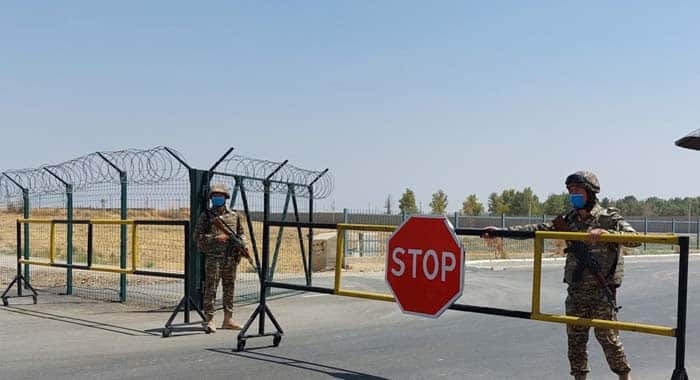
Tajikistan has reportedly become the second country after Pakistan to close its border with Afghanistan, in a development that could further underscore growing regional concerns over security, terrorism, drug trafficking and cross-border threats associated with the situation in Afghanistan.
The reported move comes against the backdrop of heightened security concerns among Afghanistan’s neighbouring states, which have increasingly focused on preventing the movement of armed groups, illicit drugs and other security threats across their borders.
The closure represents a significant development in regional border security and could have wider implications for Afghanistan’s relations with its immediate neighbours.
Afghanistan’s neighbours have long expressed concerns about the potential spillover of instability from the country into surrounding states. Among the principal concerns are the activities of terrorist and armed groups, cross-border infiltration, weapons and drug trafficking, and the possibility of militant networks exploiting remote border areas. Tajikistan shares a strategically important border with Afghanistan and has repeatedly remained attentive to security developments along its southern frontier. Any restrictions on cross-border movement could therefore have implications not only for bilateral relations but also for broader regional security arrangements.
The reported Tajik decision follows Pakistan’s reported closure of its border with Afghanistan, placing two of Afghanistan’s neighbours among the countries adopting significantly stricter border measures. The developments highlight the increasingly important role of border security in the region’s response to Afghanistan’s evolving political and security environment. For neighbouring states, securing their frontiers remains closely linked to broader concerns over terrorism, organised crime, narcotics trafficking and illegal cross-border movement.
The reported border developments could also increase pressure on the Taliban administration to address concerns raised by neighbouring countries regarding security emanating from Afghan territory. Afghanistan’s neighbours have repeatedly called for stronger measures against terrorist groups operating within or from Afghanistan and have emphasised the need for effective action to prevent Afghan territory from being used against neighbouring states. The issue has become particularly significant as regional countries seek assurances that Afghanistan will not become a source of instability beyond its borders.
The reported closure of the Tajik-Afghan border could have consequences extending beyond security considerations. Cross-border trade, transportation, movement of people and regional connectivity could all be affected by prolonged restrictions. Afghanistan’s landlocked geography makes its border crossings particularly important for commercial activity and access to regional markets. Any extended closure could therefore create additional economic and logistical pressure while simultaneously reinforcing security controls.
The reported decisions by Tajikistan and Pakistan reflect the increasingly complex security environment surrounding Afghanistan. As neighbouring states reassess their border policies, regional attention is likely to remain focused on whether security concerns can be addressed through diplomatic engagement, enhanced border controls and stronger regional cooperation. The developments also reinforce the importance of coordinated regional efforts to combat terrorism, drug trafficking and other transnational threats while maintaining legitimate trade and humanitarian connectivity.
The reported Tajik border closure is likely to be closely monitored by Afghanistan’s neighbours and other regional stakeholders. The duration and scope of the restrictions, as well as any subsequent diplomatic or security measures, could provide important indications of how regional governments intend to respond to continuing concerns surrounding Afghanistan.
As the regional security situation evolves, the relationship between Afghanistan and its neighbours is expected to remain a key factor in determining the future of border security, regional connectivity and wider stability across Central and South Asia. This press release is based on the information provided and should be read as a report of the stated developments pending confirmation from the relevant authorities.



