
Amid growing security concerns along the Tajikistan-Afghanistan border, Russia is set to provide Tajikistan with weapons, military equipment and other security-related supplies under a broader regional effort to strengthen the country’s frontier with Afghanistan.
The first shipment of the equipment is expected to reach Tajikistan during the current year, according to statements attributed to Collective Security Treaty Organization (CSTO) Secretary-General Talgat Musabayev. The development comes as concerns continue to mount over the security situation along the approximately 1,300-kilometre Tajik-Afghan frontier.
According to reports, the decision forms part of an interstate programme aimed at strengthening Tajikistan’s border capabilities and enhancing its ability to respond to potential security threats emanating from Afghan territory.
CSTO Secretary-General Talgat Musabayev has reportedly expressed concern over the security situation along the Tajik-Afghan border, emphasizing Russia’s role in providing military assistance to Tajikistan. According to his remarks, CSTO member states have agreed on a list of lethal and non-lethal weapons, military equipment and other supplies based on Tajikistan’s stated requirements.
The equipment is expected to be delivered under an interstate programme designed to strengthen the Tajik-Afghan border and improve the capabilities of Tajik border forces. Musabayev reportedly stated that Russia remains prepared to support Tajikistan and other CSTO member states despite the pressures facing Moscow. He stressed the need to reinforce the Afghan-facing Tajik border as quickly as possible, warning that a serious deterioration in security along the frontier could have consequences extending beyond Tajikistan.
The CSTO has increasingly viewed instability along the southern borders of its member states as a broader regional security concern. According to the reported assessment, any major security threat emerging along the Tajik-Afghan frontier could potentially affect not only Tajikistan but also other CSTO member states and countries belonging to the Commonwealth of Independent States.
The strategic importance of the border is further heightened by its length, difficult terrain and proximity to areas of Afghanistan where militant and criminal networks have remained active. Strengthening border infrastructure and providing additional equipment to Tajik forces is therefore being presented as part of a wider effort to prevent security threats from spreading northward into Central Asia.
During a recent visit to Tajikistan at the invitation of President Emomali Rahmon, the CSTO secretary-general reportedly travelled with the commander of Tajikistan’s border forces to inspect more than 700 kilometres of the country’s approximately 1,300-kilometre border with Afghanistan. The visit provided an opportunity to assess the operational environment faced by Tajik border personnel and the challenges involved in monitoring and securing the frontier.
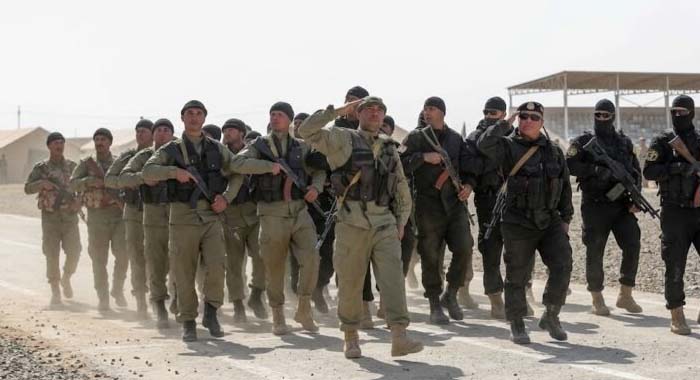
According to the reported assessment, Tajik border forces remain engaged in securing the area but continue to face shortages of resources and equipment. The planned Russian assistance is therefore expected to strengthen surveillance, border protection and operational capabilities along vulnerable sections of the frontier.
The latest move follows the implementation of a broader five-year programme to strengthen the Tajik-Afghan border. According to the reported information, the programme was approved around 2024, with implementation beginning the following year. The initiative is intended to improve Tajikistan’s capacity to secure its border and respond to emerging threats from across Afghanistan.
The programme reflects growing regional concern that developments inside Afghanistan could have consequences for neighboring Central Asian states, particularly those sharing long and difficult-to-secure borders with the country.
Security concerns have intensified following a series of reported attacks originating from the Afghan side of the border. Since November 2025, several incidents have reportedly occurred in Tajikistan, with civilians, Chinese nationals and Tajik border personnel among those reportedly killed or wounded. Tajik authorities have also reported recovering weapons and narcotics from some of the alleged attackers, while several attackers were reportedly killed during security operations.
These incidents have contributed to heightened concerns in Dushanbe over cross-border militant activity, trafficking networks and other forms of organized security threats. The reported presence of weapons and narcotics among some attackers has further reinforced concerns that militant activity and transnational criminal networks could overlap along the border.
The strengthening of Tajikistan’s Afghan border is taking place against the backdrop of continuing uncertainty over Afghanistan’s security environment. For Central Asian states, the primary concern is that militant organizations, criminal networks, weapons trafficking and narcotics smuggling could exploit difficult terrain and gaps in border security to establish routes into neighboring countries.
Tajikistan’s geographical position makes the issue particularly significant. Its long border with Afghanistan represents one of the most strategically sensitive frontiers between Afghanistan and Central Asia. The planned assistance from Russia, therefore, carries significance beyond the provision of military hardware. It reflects Moscow’s continued interest in Central Asian security and the CSTO’s efforts to strengthen the defensive capabilities of its member states along vulnerable southern borders.
The planned delivery of lethal and non-lethal equipment is expected to form part of broader security cooperation between Russia, Tajikistan and other CSTO members. For Tajikistan, strengthening the border remains a critical national-security priority as it seeks to prevent armed infiltration, terrorism, trafficking and other cross-border threats. For Russia and the CSTO, meanwhile, securing the region’s southern frontier is viewed as an important component of protecting the wider security architecture of Central Asia.
The coming months are therefore expected to see increased attention to border infrastructure, military preparedness, intelligence cooperation and the capabilities of Tajik border forces. The planned Russian military assistance marks a significant development in regional security cooperation and underscores the growing concern among Central Asian states and their security partners over potential threats emerging from Afghanistan.
As the security environment along the Tajik-Afghan border continues to evolve, the ability of regional states to strengthen their frontiers and prevent cross-border threats from spreading is likely to remain a key security priority.



