
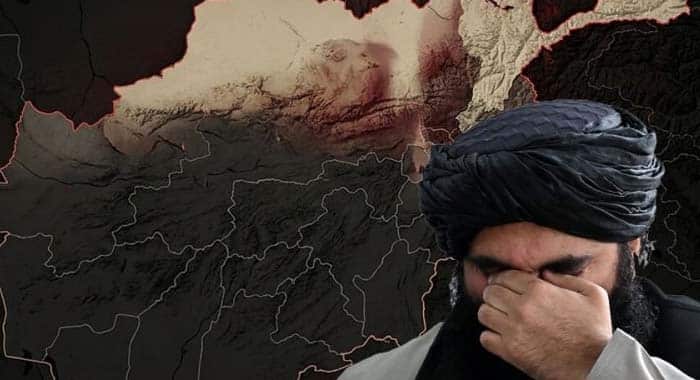
Afghanistan’s mountainous and resource-rich Badakhshan Province is once again emerging as a significant centre of armed resistance, with a series of recent attacks by anti-Taliban groups highlighting growing tensions between the Taliban administration and armed opposition forces in northern Afghanistan.
Historically, Badakhshan played a central role in resisting Taliban rule during the 1990s. Despite repeated and intense military operations by the Taliban at the time, the province remained outside Taliban control and was administered by the Northern Alliance under the leadership of Ahmad Shah Massoud.
Three decades later, the province is again witnessing a surge in armed activity against Taliban forces. Experts cited in the assessment attribute the renewed resistance to a combination of local grievances, disputes over control of natural resources, ethnic tensions and dissatisfaction with Taliban security policies.
The developments have increasingly forced the Taliban to reinforce its military presence in the region and reassess the reliability of its locally based forces.
One of the most notable recent incidents occurred on July 17, when fighters belonging to the newly formed Sepahiyan-e Mihan (Homeland Soldiers Front) launched an attack on the district centre of Yaftali Sufla. According to the information available, the attacking force consisted of approximately 25 fighters and succeeded in taking control of the district centre for several hours before subsequently withdrawing.
The temporary loss of the district centre was reportedly acknowledged by the Taliban, underlining the seriousness of the incursion. Following the incident, Taliban Chief of Army Staff Fasihuddin Fitrat travelled to Yaftali Sufla to assess the situation, evaluate the readiness of Taliban forces and review the security arrangements following the attack.
The episode represented a significant symbolic development, demonstrating that relatively small armed formations can challenge Taliban positions even in areas where the administration maintains security forces.
The situation escalated further on July 23, when the Afghanistan Freedom Front (AFF), led by former Afghan Armed Forces Chief of General Staff Yasin Zia, reportedly carried out multiple targeted operations against Taliban units in Zebak district of Badakhshan.
At approximately the same time, the National Resistance Front (NRF), led by Ahmad Massoud, claimed responsibility for an attack on a Taliban outpost in Kuran wa Munjan district.
The simultaneous activity by multiple resistance organizations across different parts of the province has reinforced the perception that Badakhshan is becoming an increasingly important theatre of confrontation between the Taliban and armed opposition groups.
The temporary seizure of a district centre, followed by continued AFF operations and an NRF attack elsewhere in the province, represents a notable escalation in the pattern of resistance activity.
To gain a deeper understanding of the developing resistance movement in northern Afghanistan, Dawod Naji, head of the Political Committee of the Afghanistan Freedom Front, was interviewed regarding recent developments.
Naji claimed that AFF forces had captured several Taliban outposts during recent operations and maintained control of some of the positions despite counterattacks by significantly larger Taliban forces.
He further argued that the AFF has evolved from a primarily clandestine form of warfare toward more direct frontline engagements and offensive operations against Taliban forces.
Regarding relations with other armed opposition groups, including the newly established Sepahiyan-e Mihan, Naji said the AFF maintains meaningful contacts with forces opposed to Taliban rule, describing their objective as broadly shared.
These claims represent the position of the Afghanistan Freedom Front and have not been independently verified.
The resurgence of armed resistance in Badakhshan is being linked not only to military and political opposition to the Taliban but also to longstanding local grievances.
According to the assessment, Taliban policies in northern Afghanistan have contributed to increasing support for anti-Taliban groups. Collective punishment, arbitrary arrests and heavy-handed security operations targeting communities suspected of sympathizing with resistance groups have reportedly intensified local resentment.
Ethnic dynamics are another factor.
The Taliban has incorporated commanders from non-Pashtun ethnic communities, particularly Tajiks and Uzbeks, into local security structures. However, tensions have reportedly emerged between some of these local commanders and the Taliban’s central leadership.
Disputes over control of natural resources have further complicated the situation. In Badakhshan, conflicts surrounding resources such as gold mines, combined with central Taliban disarmament policies, have reportedly contributed to open local disputes and internal friction.
The recent developments have reportedly prompted the Taliban leadership to take the situation in Badakhshan seriously, including concerns over the reliability and effectiveness of some local forces. In response, the Taliban has mobilized additional forces from its established military formations. Among the units reportedly deployed or involved are the 219th Omar-e-Salis Division, stationed in Badakhshan, elements associated with the 207th Al-Farooq Corps, and the newly established Hebati unit, commanded by Mawlawi Hamidullah Musafir.
The reported mobilization reflects an effort by the Taliban to strengthen its military posture in northern Afghanistan and prevent armed resistance groups from exploiting local security vulnerabilities.
The reported security mobilization has also extended beyond Taliban formations themselves. According to the information provided, the Taliban has approached allied armed groups for assistance in the northern theatre.
In neighbouring Nuristan Province, Abdul Aziz Haqqani of the Haqqani Network reportedly convened a meeting with representatives of Jamaat Ansarullah, the Islamic Movement of Uzbekistan (IMU), and Al Qaeda.
During the reported meeting, Haqqani allegedly requested that these organizations provide experienced fighters to support Taliban forces operating in northern Afghanistan.
If confirmed, such cooperation would add another dimension to the evolving security environment, potentially bringing experienced foreign or transnational fighters into an already volatile region.
Despite the mobilization of larger Taliban forces, the geography of northern Afghanistan presents significant operational challenges. Small, mobile and self-contained guerrilla formations can use motorcycles, pack animals and difficult mountain terrain to conduct attacks against convoys and outposts before rapidly dispersing.
This form of warfare has historically posed major challenges to larger conventional forces operating in Afghanistan. Similar tactics contributed to the exhaustion of both Soviet forces during the 1980s and NATO forces during the later international military campaign. The same geographic characteristics that have historically complicated large-scale military operations remain relevant today.
Mountain passes, valleys and remote settlements provide armed groups with opportunities to conduct hit-and-run attacks while making it difficult for larger formations to maintain continuous control over extensive territory.
Anti-Taliban groups also reportedly benefit from a number of factors beyond terrain. These include high motivation among fighters, detailed knowledge of local geography and residual loyalty among former members of the Afghan National Security Forces. A number of commanders associated with the resistance reportedly received military training from the United States or NATO during the previous Afghan government.
Such experience could provide some resistance commanders with tactical knowledge and operational sophistication that may be uncommon among newly formed irregular forces. However, these advantages have yet to translate into a unified nationwide military challenge to Taliban authority.
Despite the recent escalation, the assessment cautions against interpreting the developments as an immediate threat to Taliban rule across Afghanistan. Anti-Taliban groups have yet to demonstrate several capabilities required to transform localized armed resistance into a sustained national challenge.
These include the ability to recruit fighters on a large scale, maintain reliable supply lines, establish unified command structures among different resistance organizations and administer territory after capturing it.
The resistance movement remains divided among multiple organizations with different leadership structures, operational capabilities and political approaches. This fragmentation limits the ability of individual groups to convert tactical successes into sustained territorial control.
The Taliban continues to possess substantial advantages in several critical areas. These include intelligence capabilities, manpower, transportation and access to heavy weapons. The Taliban’s ability to mobilize larger numbers of forces and deploy reinforcements from established military formations gives it a considerable advantage when responding to localized attacks. Consequently, while resistance groups may be capable of conducting successful ambushes, raids and temporary seizures of positions, maintaining control of captured territory remains considerably more difficult.
The latest developments therefore do not currently indicate an imminent loss of Badakhshan or a nationwide collapse of Taliban authority. Nevertheless, the growing number of attacks carries an important political and psychological consequence. For years, the Taliban has sought to project an image of having restored security and eliminated the armed opposition that challenged its rule.
The ability of relatively small resistance formations to attack Taliban outposts, temporarily seize a district centre and operate across multiple areas of Badakhshan challenges that narrative. The attacks may therefore be less significant in terms of immediate territorial control than in terms of their impact on the Taliban’s image of invincibility.
Badakhshan’s geographic position further increases its significance. The province borders Tajikistan, China and Pakistan, placing it at a strategically important intersection between Afghanistan and the wider region. Its mountainous terrain, proximity to international borders and significant natural resources make developments in the province relevant not only to the Taliban and its opponents but also to neighbouring countries concerned about cross-border security and regional stability.
The combination of armed resistance, ethnic grievances, resource disputes and difficult geography makes Badakhshan a particularly challenging environment for the Taliban to manage.
The current pattern suggests that Badakhshan could remain an important centre of armed resistance in northern Afghanistan. The Taliban has demonstrated its ability to deploy significant military resources and retain control over major population centres, while resistance groups have demonstrated an ability to exploit local grievances, conduct mobile attacks and challenge isolated Taliban positions.
The central question is whether the various resistance organizations can overcome their fragmentation and develop the recruitment capacity, logistical networks, coordination and territorial administration necessary to transform localized attacks into a sustained insurgency. For now, the evidence does not indicate that Taliban authority across Afghanistan is facing an imminent collapse. However, the recent developments demonstrate that opposition to Taliban rule has not disappeared.
Instead, Badakhshan is once again emerging as a critical testing ground for the Taliban’s ability to maintain control over Afghanistan’s remote northern regions—and for the armed resistance’s ability to convert local grievances into a broader and sustained challenge.



