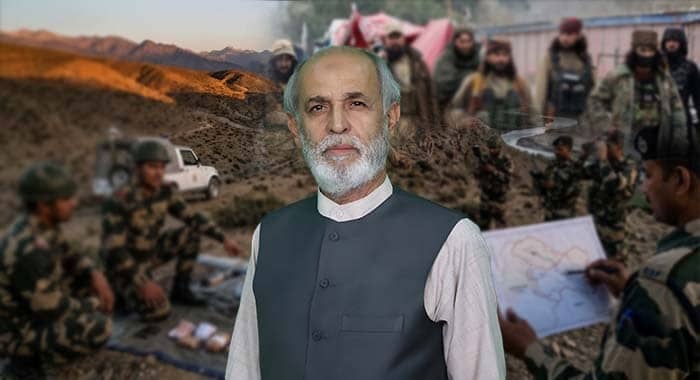
Shamim Shahid
The security landscape surrounding Pakistan has entered a dangerous and complicated phase in which developments inside Afghanistan, alleged foreign involvement in drone warfare, militant activity along Pakistan’s western frontier, and growing political divisions within the Taliban government are increasingly becoming interconnected.
An investigative report has made a serious allegation: drones used in attacks during June and July were reportedly not manufactured in Afghanistan but were supplied from India. If substantiated, such a development would represent a major escalation in the regional security equation. It would not merely be a question of drones or technology; it would raise profound questions about foreign support, cross-border militancy, the strategic contest between Pakistan and India, and the future of Afghanistan.
At the same time, Afghanistan itself appears to be facing mounting internal and external pressures. Reports and political statements suggest that discussions surrounding former Afghan President Ashraf Ghani have resurfaced, while resistance figures associated with the former Afghan security establishment are attempting to organize opposition to the Taliban. The Taliban, meanwhile, are confronting an economy struggling to provide employment, dissatisfaction among sections of the population, international isolation, criticism over domestic policies, and the continuing challenge of relations with Pakistan.
These developments deserve to be examined together rather than as isolated stories. The allegation concerning the origin of drones used in attacks during June and July is perhaps the most sensitive part of the current discussion.
According to the investigative report cited in the discussion, the drones were not manufactured in Afghanistan and were allegedly supplied through India. The argument presented by Shamim Shahid is that Afghanistan does not possess the indigenous technological infrastructure necessary to manufacture sophisticated drone systems of the type being discussed. He also points to the absence of a substantial Afghan air-defense capability as part of the broader security picture.
Such allegations require evidence, technical verification and independent investigation. A claim that a particular state supplied weapons to actors conducting attacks is far too consequential to be accepted merely because it appears in a report or is repeated by officials. Yet neither should such a claim be ignored.
Pakistan has already experienced the growing importance of unmanned aerial systems in modern warfare. During the military confrontation between Pakistan and India in 2024, Pakistan’s military publicly claimed that dozens of Indian drones had been brought down during the fighting. Those claims, like the present allegations, belong to a wider story: drones have rapidly transformed the nature of warfare in South Asia.
The significance is obvious. A drone is relatively inexpensive compared with conventional aircraft. It can cross difficult terrain, observe targets, deliver explosives and strike with limited warning. For militant organizations operating in remote areas, such technology can dramatically increase their operational reach. This is why Pakistan needs to establish facts rather than simply exchange accusations.
If drones used against Pakistan are being manufactured or supplied from outside Afghanistan, the critical question is not merely where the drone came from. The more important questions are: Who purchased it? Who transported it? Who trained the operators? Who provided navigation or targeting technology? Who financed the operation? And who ultimately benefits from the attacks? Only a complete investigation can answer these questions.
Another important point emerging from the discussion is that drone attacks in different parts of Pakistan may not represent a single phenomenon. In North Waziristan and South Waziristan, attacks involving militants and security targets have their own historical and operational context. Balochistan presents another security environment altogether. The discussion suggests that attacks there have frequently focused on state institutions, security personnel and government representatives. Khyber Pakhtunkhwa presents an even more disturbing picture because civilians, including children, have also been among those affected by militant violence.
This distinction matters. Pakistan cannot develop an effective counterterrorism policy if every attack is placed under one broad label. Militancy in Balochistan, attacks by groups operating along the Afghanistan-Pakistan frontier, sectarian violence and attacks on civilians may overlap in their consequences but can have different causes, sponsors, recruitment networks and strategic objectives. A sophisticated security policy therefore requires sophisticated analysis. The drone issue should similarly be examined through this lens. If different groups are using drones for different purposes, their supply chains and foreign connections may also differ.
The second major issue is Afghanistan’s political future. There have been reports and social-media discussions about contacts involving former President Ashraf Ghani and the Taliban. In the discussion, reference was made to Dr. Abdul Qayyum Kochi, described as Ashraf Ghani’s uncle and someone who played an important role in his political development.
According to the account presented, Dr. Kochi suggested that the Taliban government had expressed a desire for Ashraf Ghani to return to Afghanistan and reconcile with the authorities. Taliban spokesman Zabihullah Mujahid was also cited as saying, in relation to the general amnesty announced by the Taliban, that Ashraf Ghani could return to Afghanistan because Afghanistan is his homeland.
If such an opening develops into genuine political engagement, it could become significant. The Taliban’s return to power in August 2021 fundamentally changed Afghanistan’s political structure. But military victory did not automatically resolve the country’s political problems. A government can control territory while still struggling to achieve broad political legitimacy. The question facing Afghanistan today is therefore larger than whether the Taliban can remain in power. It is whether they can create a political arrangement sufficiently inclusive to reduce opposition, improve international relations and provide stability to a population suffering from economic hardship.
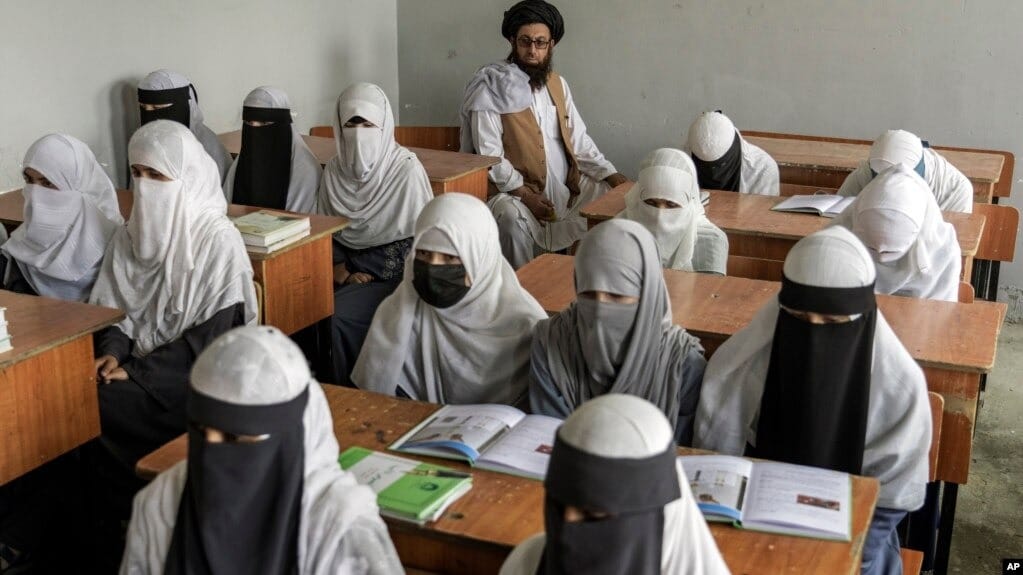
The Taliban are not operating in a political vacuum. Their policies have attracted criticism over women’s education, political freedoms, allegations of political retaliation and the nature of their relationships with foreign governments. Whatever one’s political position, it is clear that Afghanistan’s current authorities face demands from multiple directions.
The opposition is also not limited to one organization. The National Resistance Front associated with Ahmad Massoud has continued to represent one strand of opposition to Taliban rule. At the same time, the discussion highlights former Afghan Army commander Sami Sadat, who has reportedly positioned himself as another figure capable of mobilizing resistance. Sadat has claimed that resistance activities were initiated in Kandahar, the Taliban’s political heartland, and that former members of Afghanistan’s military establishment have been regrouped and organized. Such claims should be treated cautiously until independently verified. Nevertheless, the broader point is difficult to ignore: former security personnel, political figures and opposition networks remain part of Afghanistan’s political equation.
For the Taliban, the emergence of a credible military figure with links to the former Afghan security establishment could represent a serious challenge. But Afghanistan’s political landscape is extraordinarily complex. No single opposition commander can automatically mobilize the entire country. Afghanistan’s society is fragmented along political, ethnic, regional and tribal lines, and resistance movements have historically struggled to transform localized opposition into a unified national alternative. Still, the potential for organized opposition should not be underestimated.
The Taliban may increasingly recognize that maintaining the status quo indefinitely is difficult. Afghanistan’s economic problems remain enormous. Ordinary people need employment, income, education and access to basic services. A government cannot indefinitely ask a population to tolerate economic hardship simply on the promise of security. Unemployment and economic stagnation create political risks.
When people cannot find work, when young people see no future, and when families struggle to meet basic needs, political dissatisfaction eventually becomes a security issue. This may explain why there is growing speculation about political accommodation and a broader governing arrangement. The idea of a more inclusive or “mixed” government one that represents a wider range of Afghan political and social groups could become increasingly important. A government perceived as representative of broader Afghan society would have a better chance of gaining domestic acceptance and improving relations with the outside world.
The Taliban may therefore face a strategic choice. They can continue to rely primarily on their existing political structure and security apparatus, or they can attempt to broaden the political system and bring former opponents and other Afghan constituencies into a negotiated framework. The second option would involve risks, but the first carries risks of its own.
The possible return of Ashraf Ghani should not be interpreted merely as a question concerning one former president. If the Taliban were genuinely prepared to accommodate Ghani or figures associated with his former government, it could represent a symbolic shift in Afghan politics. It could indicate that the Taliban recognize the need for reconciliation beyond their traditional political base. However, reconciliation is much easier to announce than to implement. For genuine reconciliation to succeed, there would have to be confidence on both sides. Former officials would need assurances regarding their safety and political participation. The Taliban would need assurances that returning figures would not use Afghanistan as a platform for another armed confrontation.
The same principle applies to other opposition figures. Afghanistan cannot escape its cycle of conflict if every political disagreement eventually becomes a military confrontation. A sustainable settlement must therefore create political space for disagreement.
This brings the discussion directly to Pakistan. Islamabad cannot afford to view Afghanistan only through the narrow lens of border security. Nor can Pakistan’s Afghan policy be reduced to periodic diplomatic delegations whenever terrorism increases. The relationship requires a long-term strategy. Pakistan has repeatedly emphasized that terrorism emanating from Afghan territory is unacceptable. At the same time, Islamabad has an obvious interest in a stable, economically viable and politically inclusive Afghanistan.
These objectives are not contradictory. In fact, they are interconnected. A stable Afghanistan is less likely to become a sanctuary for militant organizations. An economically functioning Afghanistan creates fewer incentives for illicit activity. A politically inclusive Afghanistan has greater potential to develop stable relations with its neighbors.
But stability cannot be achieved through declarations alone. The discussion makes another important observation: multiple rounds of engagement between Pakistan and Afghanistan have reportedly failed to produce a durable breakthrough.
One explanation offered is that Pakistani delegations sent for negotiations lacked sufficient authority to make meaningful decisions. If that assessment is correct, it exposes a structural weakness in the diplomatic process. Negotiations cannot succeed when representatives can listen but cannot decide. Pakistan needs to determine exactly what it wants from Afghanistan, what it is prepared to offer, and which issues are negotiable and which are not. A serious diplomatic mechanism should include people with the authority to negotiate, verify commitments and follow through on agreements. There should also be continuity. Afghanistan policy cannot change every time there is a new security incident, political controversy or diplomatic disagreement.
Relations between Pakistan and the Taliban authorities are not one-sided. Pakistan has legitimate security concerns, particularly regarding militant activity and attacks originating from or facilitated by Afghan territory. Afghanistan, meanwhile, has its own grievances, reservations and political sensitivities.
The Taliban have repeatedly argued that Afghanistan’s sovereignty must be respected. Pakistan, in turn, expects the Afghan authorities to prevent their territory from being used against Pakistan. These positions can coexist if both sides are willing to establish mechanisms for verification and enforcement. The central principle should be simple: Afghan soil must not be used for terrorism against Pakistan, and Pakistan must pursue its concerns through structured diplomatic and security mechanisms rather than relying solely on public accusations.
Afghanistan’s problems are also being influenced by wider regional politics. The discussion refers to a new agreement involving Pakistan, Saudi Arabia and Turkey and suggests that developments of this kind have affected perceptions in Afghanistan and Iran.
Whether every interpretation of that development is accurate or not, the broader strategic reality is clear: Afghanistan is surrounded by states and regional powers with competing interests.
Pakistan cannot formulate its Afghan strategy without considering Iran, Central Asia, the Gulf states, Turkey, China, India and the wider international community.
The alleged Indian role in drone supplies makes this regional dimension even more important.
If India is ultimately shown to have provided technology or equipment used by militant groups against Pakistan, it would require a major diplomatic response. But Pakistan’s response should be evidence-based and internationally credible. The strongest case is not the loudest accusation; it is the accusation supported by verifiable evidence.
First, Pakistan should establish an independent and technically credible mechanism to investigate the origin of drones recovered from attack sites. Every component should be examined: engines, electronics, flight-control systems, navigation equipment, communications technology and manufacturing signatures. Second, Pakistan should strengthen intelligence cooperation with Afghanistan while making counterterrorism cooperation a measurable obligation.Third, Islamabad should engage Kabul at the highest possible political level. Delegations must have the authority to negotiate and deliver.
Fourth, Pakistan should encourage an Afghan political process that includes a wider spectrum of Afghan society. It is not Pakistan’s job to select Afghanistan’s government, but Pakistan has every reason to support an Afghanistan in which political disagreements are settled through institutions rather than guns. Fifth, Pakistan must avoid treating every Afghan political actor as either a friend or an enemy. Afghanistan requires nuanced diplomacy. And finally, Pakistan needs to recognize that border security, terrorism, trade, refugees, water, transit and political relations are interconnected
The drone allegations, the Taliban’s internal challenges, the possibility of reconciliation with Ashraf Ghani, the activities attributed to opposition figures such as Ahmad Massoud and Sami Sadat, and the worsening economic conditions in Afghanistan are not separate stories. They are pieces of the same puzzle. Afghanistan is searching for a political equilibrium five years after the Taliban’s return to power. Pakistan is simultaneously struggling with the consequences of instability along its western border. Regional powers are competing for influence. New technologies are making militant violence more sophisticated. And ordinary Afghans continue to bear the cost of political uncertainty and economic hardship.
The Taliban may be reaching a point where they have to decide whether military control alone is enough to govern Afghanistan.
It may not be. Similarly, Pakistan must decide whether episodic diplomacy and reactive security measures are sufficient to manage its relationship with Afghanistan. They are not. What Pakistan needs is a comprehensive Afghan policy based on three principles: security, diplomacy and political realism. If the allegations surrounding foreign-supplied drones are substantiated, Pakistan must respond firmly but intelligently. If the Taliban are genuinely considering political reconciliation, Pakistan should encourage it. If Afghan opposition groups are organizing, Islamabad should understand their objectives without becoming trapped in another cycle of proxy politics. And if the Taliban want improved relations with Pakistan, they must demonstrate that commitment through concrete action against militant networks operating from Afghan territory.
The future of Pakistan-Afghanistan relations cannot be built on speeches. It must be built on verifiable commitments. Afghanistan needs political inclusion. Pakistan needs security. The region needs stability.
The only sustainable path is one in which all three objectives are pursued simultaneously. The drone attacks may be the most visible symptom of the current crisis, but the deeper problem is political. Until Afghanistan develops a framework in which its competing factions can coexist, and until Pakistan and Afghanistan establish a credible mechanism for addressing security disputes, every drone, militant attack or diplomatic accusation will risk reopening the same old wounds. The moment has therefore arrived for a serious strategic rethink. Pakistan cannot choose Afghanistan’s future. But it can choose how intelligently it responds to it.