
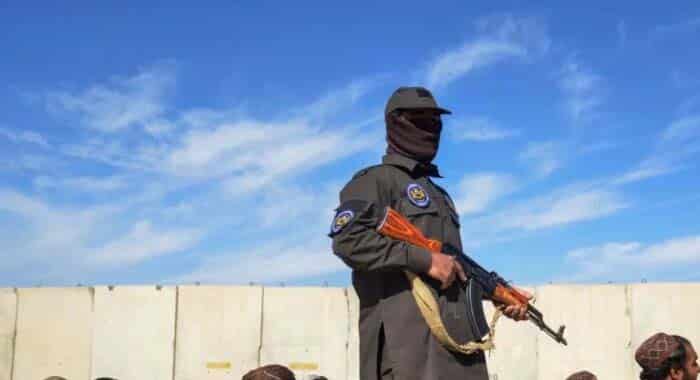
The recent offensive by the Afghanistan Freedom Front (AFF) in Badakhshan, including its reported seizure and temporary control of parts of Zebak district, has raised new questions about the Taliban’s ability to maintain its military dominance nearly five years after returning to power.
The development is particularly significant because opposition groups have rarely been able to seize and hold territory against the Taliban since August 2021. The AFF’s latest operation, which reportedly involved the capture of territory followed by the repulsion of multiple Taliban counterattacks, has challenged the perception that the Taliban possesses an unassailable military advantage across Afghanistan.
The development follows the temporary seizure of Yaftal district on 17 July 2026 by Sepaheyan-e-Maihan (“Soldiers of the Motherland”), a newly emerged local armed group. Taken together, the two developments represent a notable escalation in armed opposition activity and indicate that the security environment in northern Afghanistan may be entering a new phase.
The developments also come as the Taliban approaches five years of uninterrupted rule. While the movement demonstrated considerable effectiveness as an insurgent force, questions are increasingly being raised about its ability to provide sustainable, inclusive and broadly accepted governance.
A combination of internal political tensions, opposition activity, regional security disputes, economic hardship, restrictions on women and girls, and limitations in military equipment and resources could pose increasingly serious challenges to the Taliban’s current model of governance.
Despite its outward appearance of unity, the Taliban has historically consisted of numerous local and regional factions whose commanders have maintained varying degrees of autonomy and influence.
The case of Jumma Fatih in Badakhshan has previously illustrated the difficulties faced by the Taliban’s central leadership in enforcing its authority over powerful local figures. According to assessments cited in the supplied material, disagreements between local commanders and the leadership in Kandahar and Kabul eventually resulted in negotiations and concessions rather than the complete enforcement of central directives.
Jumma Fatih’s case is viewed as one example of a broader challenge involving influential commanders who may support the Taliban leadership as long as their political, economic and personal interests remain aligned with the centre.
Figures including Mawlawi Nooruddin, Qari Salahuddin, Makhdom Alem and Mawlawi Najib of Raghestan have been cited as examples of commanders who had expected greater recognition or senior appointments following the Taliban’s return to power.
Before the collapse of the former Afghan government, some of these commanders reportedly expressed dissatisfaction with what they regarded as excessive concentration of authority among senior Taliban figures from Kandahar. Following the Taliban takeover, these grievances reportedly persisted after several commanders failed to receive the positions and influence they had anticipated.
The concentration of authority in Kandahar therefore remains a potential source of friction. Should the interests of influential regional commanders diverge further from those of the central leadership, they could potentially challenge directives issued by Hibatullah Akhundzada or cooperate with other dissatisfied factions.
The internal tensions are not confined to northern Afghanistan. There are also reported grievances among influential Pashtun commanders associated with the Ghilzai tribal network, including elements connected to the Haqqani network. Although these tensions have not necessarily translated into open confrontation, they represent another potential fault line within the Taliban’s power structure.
Sirajuddin Haqqani and Sher Mohammad Abbas Stanekzai have been among the figures associated with disagreements over the distribution of authority and decision-making power. According to the supplied assessment, Haqqani-linked figures have long expressed frustration with the concentration of decision-making authority among the Greater Kandahar leadership. The Haqqanis reportedly faced similar difficulties even before the Taliban takeover in August 2021, despite their significant role in the insurgency.
Following the appointment of Hibatullah Akhundzada as Taliban leader, Haqqani figures reportedly remained numerically disadvantaged within the movement’s highest decision-making structures, where the Greater Kandahar faction retained considerable influence.
While the situation remains outwardly controlled, continued dissatisfaction could become more consequential if political, economic or security pressures intensify. Against this backdrop, the Afghanistan Freedom Front has announced an increase in operations against Taliban positions in Nuristan, Kunar and Takhar. According to the information provided, AFF operations in recent months have included an attack on a Taliban convoy in Surobi district of Kabul Province in May, an attack on a Taliban checkpoint in Kapisa, and an assault on a Taliban camp in Waygal district of Nuristan in June, where the group claimed to have inflicted significant casualties.
Smaller armed groups have also reportedly conducted activities in Kapisa, Kabul, Kandahar, Ghazni and Zabul. The expansion of armed activity has reportedly prompted the Taliban to deploy approximately 1,000 reinforcements from other provinces to Badakhshan amid deteriorating security conditions.
The Taliban also reportedly initiated a weapons-confiscation campaign among local populations in Badakhshan and other northern provinces during the first week of July. Four senior military appointments in northern Afghanistan were subsequently reshuffled, with particular attention focused on Badakhshan. Commanders regarded as trusted figures from Balkh and Jowzjan were reportedly transferred to the province.
Taken together, these measures have been interpreted by some observers as evidence that the Taliban leadership regards the security situation in northern Afghanistan as a serious and potentially expanding challenge. The concern appears to be that developments in the north could spread beyond individual provinces and develop into a broader opposition movement capable of challenging the Taliban’s political and security architecture.
Afghanistan’s internal security situation is further complicated by growing concerns among neighbouring countries regarding the presence of regional and international armed groups on Afghan territory. Multiple international assessments have alleged that Afghanistan under Taliban rule continues to provide space for organizations including Al-Qaeda, Tehreek-e-Taliban Pakistan (TTP), the East Turkistan Islamic Movement (ETIM), the Islamic Movement of Uzbekistan (IMU), and Jamaat Ansarullah of Tajikistan. These organizations have been associated in various reports with activities including recruitment, training and planning of attacks, creating significant security concerns for Afghanistan’s neighbours.
While regional governments have adopted different approaches towards the Taliban, the continued presence of armed groups regarded as threats by neighbouring states remains a major concern for national security establishments across the region.
Pakistan is particularly affected by attacks attributed to the TTP originating from Afghan territory. However, continued activity by other organizations could eventually create comparable concerns for additional neighbouring countries.
The supplied assessment argues that the Taliban’s alleged policy of permitting or tolerating the presence of such organizations could contribute to further international isolation and increase pressure from countries that regard these groups as direct security threats.
The issue has also entered the broader diplomatic debate. The European Union’s Special Envoy for Afghanistan has reportedly stated that Pakistan has a right to respond to terrorist threats originating from Afghanistan.
Such regional tensions carry consequences not only for the Taliban authorities but also for ordinary Afghans, who may ultimately bear the economic, humanitarian and security costs of confrontation between Afghanistan and neighbouring states.
The question of Taliban support for the TTP remains particularly contentious. Although Taliban officials have at times rejected allegations that the Afghan authorities permit Afghan territory to be used for attacks against Pakistan, the supplied assessment argues that support for the TTP may extend beyond individual local commanders.
It points to the reported appointment by Hibatullah Akhundzada of Mullah Mohammadzai, described as a former shadow governor of Kandahar and Ghazni, to oversee groups including the TTP and report directly to the Taliban leadership.
If accurate, such an arrangement would indicate a degree of centralized involvement rather than merely unauthorized activity by individual commanders. The selection of Mohammadzai is also described in the supplied material as politically significant because of his reported hostility towards Pakistan and his association with the circle of the late Mullah Akhtar Mansour.
The assessment links this hostility to allegations within that faction that Pakistan assisted the United States in targeting Akhtar Mansour while he was travelling from Iran towards Pakistan’s Balochistan province.
These allegations remain politically sensitive and should be distinguished from independently established facts.
There is currently little indication, according to the assessment provided, that the Taliban leadership intends to fundamentally alter its policy towards the TTP. The unsuccessful negotiations involving Pakistani and Taliban representatives in Türkiye, Saudi Arabia, China and Qatar have highlighted the depth of disagreement between the two sides. The Taliban’s negotiating approach towards Pakistan has also been compared with the strategy it employed during negotiations with the United States in the years preceding the American withdrawal.
During the Doha negotiations, the United States faced significant domestic political pressure and a strong desire to end its military involvement in Afghanistan. Protracted negotiations therefore provided the Taliban with leverage because Washington operated under political and strategic time constraints. Pakistan faces a fundamentally different situation.
Unlike the United States, Pakistan is not withdrawing from the region and does not operate under a predetermined deadline for disengagement from Afghanistan. Consequently, delaying negotiations may not provide the Taliban with the same strategic advantage it enjoyed during the Doha process.
The circumstances surrounding the American withdrawal were also shaped by a unique combination of domestic political considerations and wider strategic calculations. Those circumstances cannot necessarily be replicated in Pakistan’s relations with the Taliban, nor can they automatically be applied to China, Uzbekistan or Tajikistan.
The assessment therefore characterizes the Taliban’s current approach towards regional security concerns as a potential political miscalculation.
Economic conditions represent another significant challenge. On the surface, Afghanistan’s economy has remained functional in part because of continued international humanitarian assistance, cash transfers associated with the United States government, and remittances from Afghans living abroad. The supplied material estimates annual remittances at approximately $1.6 billion.
Beneath this relatively fragile economic stability, however, unemployment remains widespread, dependence on humanitarian assistance remains significant, major economic corridors face disruption, and long-term economic prospects remain uncertain. These conditions are compounded by restrictions imposed on girls’ education and women’s employment, which have generated substantial domestic and international criticism.
Economic deprivation and social restrictions can create conditions in which individuals who previously avoided confrontation with the authorities may become increasingly willing to express opposition or join existing or emerging resistance movements.
The assessment argues that fear of repression can discourage public dissent for extended periods, particularly when authorities possess broad powers and are accused of using extrajudicial measures. However, prolonged poverty and lack of economic opportunity can eventually alter public calculations, particularly when individuals perceive their economic survival as being at risk.
The expansion of opposition activity could also place additional pressure on the Taliban’s military resources. A significant portion of the military equipment inherited from the former Afghan government requires extensive maintenance and overhaul. This is particularly relevant to the Taliban’s limited fleet of helicopters and transport aircraft. Budgetary constraints and shortages of technical capacity have reportedly left some equipment increasingly difficult to maintain and operate.
At the same time, some of the light weapons inherited from the former government have reportedly been removed from military depots, sold through illicit markets or smuggled out of the country. The supplied assessment further argues that the Taliban initially expected the memorandum of understanding signed with Russia in May 2026 to result in assistance for repairing heavy equipment and overhauling aircraft. According to the assessment, the Taliban subsequently discovered that such repairs would require substantial financing from its own resources.
Several reports cited in the material suggest that the Taliban’s already limited fleet of helicopters and transport aircraft could face further operational deterioration over the coming year because of shortages of funding, spare parts and maintenance capacity. If opposition activity expands geographically, the inability to maintain adequate air mobility and heavy equipment could become an increasingly important military limitation.
The AFF’s operations in Badakhshan may therefore have significance beyond the territory directly affected. For nearly five years, the Taliban has maintained a reputation for possessing overwhelming military superiority over armed opposition groups. The reported ability of AFF forces to capture territory and withstand repeated counterattacks challenges that perception. The temporary seizure of Yaftal by Sepaheyan-e-Maihan adds another dimension to the evolving security environment. The significance of these developments may ultimately depend less on the amount of territory captured than on whether opposition groups can sustain their operations, coordinate effectively, attract broader support and withstand Taliban countermeasures.
The possibility of cooperation between the AFF, National Resistance Front (NRF), Sepaheyan-e-Maihan and other like-minded groups could represent a substantially different challenge if these organizations were able to coordinate their activities.
The broader political question concerns the sustainability of the Taliban’s governing model. The supplied assessment argues that the Taliban could have pursued a more inclusive political settlement following its return to power but instead chose to centralize authority and exclude significant sections of Afghan society from meaningful political participation. The concentration of senior appointments among figures associated with Kandahar has reportedly generated resentment among other factions and regions. The material also raises allegations of increasing corruption, nepotism and exploitation of state resources, as well as extensive smuggling involving gold, gemstones and narcotics.
It further alleges that Taliban figures associated with Kandahar have consolidated control over lucrative resources in northern provinces, displacing local landowners and local Taliban figures. These allegations would require independent verification, but they form part of a broader argument that the Taliban’s political model faces growing legitimacy and governance challenges.
The Taliban’s greatest vulnerability may not necessarily be a single military defeat. Rather, the more consequential challenge could be the gradual erosion of the political, economic, social and regional foundations supporting its rule. Internal factional tensions could weaken centralized decision-making. Expanding opposition activity could increase pressure on security forces. Regional disputes could deepen Afghanistan’s isolation. Economic hardship could intensify public frustration. Restrictions on women and girls could continue to undermine domestic and international acceptance, while shortages of resources could increasingly affect the Taliban’s ability to maintain sophisticated military equipment.
At the same time, continued armed activity by opposition groups could create a new psychological environment in which the Taliban is no longer viewed as militarily invulnerable. The coming months will therefore be critical in determining whether the recent developments in Badakhshan and other northern provinces remain isolated incidents or develop into a broader pattern of organized resistance.
The reported cooperation and initial engagement between AFF and Sepaheyan-e-Maihan may represent an early indication of greater coordination among groups opposed to Taliban rule. If additional organizations, including the National Resistance Front, become more active or coordinate their operations, the security landscape could change considerably.
For Afghanistan, however, the consequences extend beyond the battlefield. Any escalation in armed confrontation risks imposing further costs on a population already facing poverty, unemployment, displacement and restrictions on fundamental freedoms.
The central question facing Afghanistan is therefore not simply whether the Taliban can defeat individual armed groups. It is whether its current political and governance model can withstand mounting internal divisions, economic pressures, regional tensions and an increasingly active opposition.
As the Taliban approaches its fifth year in power, the emerging developments suggest that the durability of its rule may increasingly depend not only on military capability, but on its ability to address the political, economic and social grievances that continue to shape Afghanistan’s future.



