
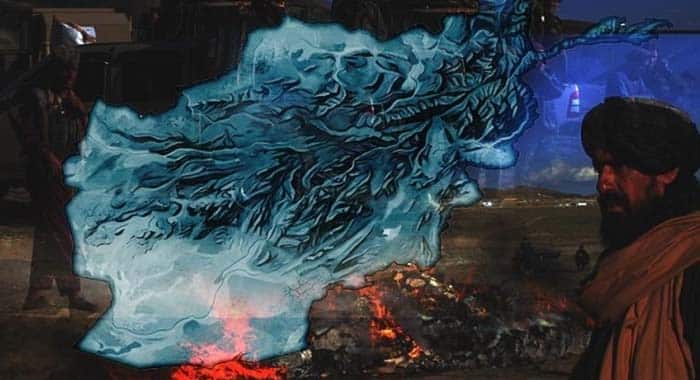
A comprehensive new research study examining Afghanistan’s political transformation since August 2021 concludes that the Taliban’s return to power has fundamentally altered the country’s political, social, and security landscape, with significant implications for regional and international security, human rights, and counterterrorism policy.
Drawing upon scholarly literature, library research, reports from international media and other published sources, interviews with former Afghan government officials now living abroad, confidential interviews with Afghan citizens currently residing inside the country, and field observations, the study presents an extensive assessment of the causes behind the collapse of the Islamic Republic of Afghanistan, the Taliban’s governance model, the country’s changing educational and social environment, and the presence of extremist organizations operating within Afghanistan.
Conducted using the Chicago citation style, the research argues that Afghanistan has undergone a profound transformation since the Taliban assumed power on 15 August 2021, creating conditions that, according to the study, could have long-term consequences for regional stability and global security.
The report begins by analyzing the principal factors that contributed to the collapse of the Islamic Republic of Afghanistan. According to the research, multiple interconnected developments weakened the republican system over two decades, including widespread corruption, structural weaknesses within state institutions, deficiencies in governance, political fragmentation, foreign intervention, and changing international priorities. The study argues that corruption within government institutions substantially undermined public confidence, weakened security institutions, reduced administrative effectiveness, and limited the government’s ability to respond to the growing Taliban insurgency.
The research also examines the constitutional and political structure established after 2001, arguing that Afghanistan’s presidential system concentrated excessive political authority while failing to accommodate the country’s complex political and ethnic realities. In addition, the study discusses the influence of regional actors, international diplomatic developments, and changing strategic calculations that ultimately contributed to the republic’s collapse.
The research identifies several major developments that, in the author’s assessment, facilitated the Taliban’s return to power. These include the gradual weakening of republican institutions, changes in international policy toward Afghanistan, diplomatic negotiations between the United States and the Taliban, support provided by various regional governments according to the study’s analysis, strategic decisions made during earlier stages of Afghanistan’s post-2001 political transition, and the persistence of religious fundamentalism within segments of Afghan society.
The report also argues that shortcomings in governance and leadership within the former republic contributed significantly to the political environment that enabled the Taliban’s return.
The study examines the Taliban’s domestic and foreign policies following their return to power. According to the report, Taliban governance is characterized by an extensive interpretation of religious authority combined with highly centralized political control. The research argues that the authorities have imposed sweeping restrictions affecting education, employment, media, artistic expression, civil society, and the public participation of women. The report states that girls and women have faced severe limitations on access to secondary and higher education, employment opportunities, and public life. It further examines restrictions affecting journalists, artists, musicians, and civil society organizations, as well as the reintroduction of corporal punishment and public executions under the Taliban’s interpretation of Islamic law.
The research also analyzes the Taliban’s foreign policy, arguing that while the authorities have sought diplomatic engagement with foreign governments, they have rejected external criticism concerning human rights and domestic governance.
A substantial portion of the study focuses on the human rights situation in Afghanistan. According to the research, the Taliban have implemented policies that significantly restrict civil liberties, particularly for women and girls. The report examines restrictions on education, employment, freedom of expression, media activity, artistic production, and civic participation. It also discusses allegations documented by various reports concerning arbitrary detention, corporal punishment, forced marriage, and violence against women. The author argues that these developments represent one of the most significant reversals of women’s rights in contemporary history.
One of the central themes of the research concerns Afghanistan’s changing security environment following the Taliban takeover. The report examines ideological similarities that the author identifies between the Taliban and several armed Islamist organizations operating in different regions of the world. The study discusses organizations including al-Qaeda, ISIS, Tehrik-e-Taliban Pakistan (TTP), al-Shabaab, Lashkar-e-Taiba, the Houthis, Hamas, and other groups, analyzing areas in which the author argues they share ideological or political characteristics.
The report further examines allegations regarding the presence of members of various extremist organizations inside Afghanistan and argues that these developments have transformed the country’s security environment. According to the author, Afghanistan has increasingly become a destination for extremist networks whose activities may pose long-term risks extending beyond South Asia.
A major section of the study analyzes changes introduced within Afghanistan’s educational system after 2021. According to the research, educational curricula have been revised to reflect the Taliban’s ideological perspectives, while the broader educational environment has undergone significant transformation. The report also discusses the expansion of religious seminaries throughout Afghanistan and examines the possible long-term implications of these institutions for future generations. The author argues that, if current trends continue, Afghanistan could become one of the world’s largest producers of extremist ideology during the coming decade. The study emphasizes that this conclusion represents the author’s projection based on observed developments rather than a prediction of certainty.
The report argues that developments inside Afghanistan have implications extending well beyond the country’s borders. According to the study, extremist organizations operating in Afghanistan could pose future security challenges affecting neighboring countries, South Asia, Central Asia, Europe, Russia, and North America. The research therefore calls upon policymakers, international organizations, security experts, and human rights institutions to continue closely monitoring developments inside Afghanistan and to assess their potential implications for international peace and security.
The study follows the Chicago citation style and draws upon multiple categories of evidence, including academic literature, published reports, library sources, media reporting, interviews with former Afghan government officials currently living abroad, confidential interviews with Afghan citizens residing inside Afghanistan, and field observations. The report seeks to combine documentary evidence with firsthand testimony to provide a comprehensive assessment of Afghanistan’s political and security transformation following August 2021.



