
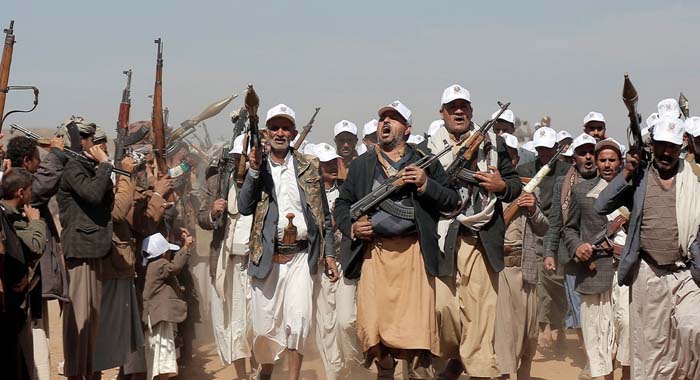
Pakistan continues to confront a complex and evolving security environment, facing challenges from both internal and external threats. While the country has consistently demonstrated resilience against conventional aggression, security experts warn that hostile actors have increasingly shifted toward hybrid warfare, exploiting extremist ideologies, misinformation, and proxy militant networks in an attempt to undermine Pakistan’s peace, stability, and national cohesion.
According to security assessments, terrorist organizations operating under religious slogans have sought to misuse the sacred concepts of Islam and Jihad to justify violence, target innocent civilians, and attack Pakistan’s security institutions. Analysts maintain that these groups seek to distort Islamic teachings in pursuit of political and strategic objectives that bear no resemblance to the principles of the Holy Quran and the Sunnah of Prophet Muhammad ﷺ.
Observers argue that after repeated failures through direct confrontation, Pakistan’s adversaries increasingly rely on proxy militant organizations to wage an indirect campaign against the state. These groups attempt to cloak acts of terrorism in religious rhetoric, despite the clear prohibition of such violence under Islamic law.
Security analysts further allege that certain elements operating from Afghan territory have provided space or facilitation to anti-Pakistan militant organizations, allowing cross-border terrorist networks to threaten Pakistan’s security. Pakistan has repeatedly urged that no country’s territory should be used for terrorist activities against another state and has consistently called for effective action against all militant sanctuaries.
Islam places the sanctity of human life above all worldly considerations. The Holy Quran unequivocally condemns corruption, oppression, and the unlawful taking of innocent life.
Allah Almighty commands in Surah Al-A’raf (7:56): “Do not spread corruption on the earth after it has been set right.”
Likewise, Surah Al-Ma’idah (5:32) declares: “Whoever kills an innocent soul… it is as though he has killed all mankind; and whoever saves a life, it is as though he has saved all mankind.”
These principles establish that terrorism, attacks on civilians, and violence against innocent people cannot be justified under any interpretation of Islamic law. Religious scholars further emphasize that Islam strictly protects the life, dignity, property, and honor of every individual. The Prophet Muhammad ﷺ taught that a true Muslim is one from whose hands and tongue others remain safe, while numerous authentic traditions declare the blood, wealth, and honor of a Muslim to be inviolable.
Accordingly, scholars argue that any ideology seeking to legitimize attacks on civilians, mosques, schools, markets, or security personnel fundamentally contradicts the teachings of Islam.
Islamic scholars note that the concept of Jihad is governed by clearly defined religious principles, legal authority, ethical limitations, and collective responsibility. They reject the notion that armed groups or individuals can unilaterally declare violence under the banner of religion.
The nationally endorsed religious declaration “Paigham-e-Pakistan,” signed by thousands of respected Pakistani religious scholars from diverse schools of thought, unequivocally rejects terrorism, violent extremism, and unauthorized armed violence carried out in the name of Islam. The declaration affirms that such actions constitute fasad (corruption) rather than legitimate religious struggle.
Pakistan has consistently maintained that cross-border terrorism remains one of the most significant challenges to regional peace and security. The country has repeatedly expressed concern regarding militant groups operating from sanctuaries beyond its borders and has urged all neighboring states to ensure that their territories are not used for terrorist activities against Pakistan.
International organizations, including the United Nations, have also documented concerns regarding the continued presence and activities of various armed groups in Afghanistan. Analysts argue that denying safe havens to such organizations remains essential for lasting regional stability.
Islam itself places great importance on honoring treaties, respecting neighbors, and preventing injustice. Providing sanctuary or support to individuals responsible for attacks on innocent people is inconsistent with both international obligations and Islamic ethical principles.
Security experts stress that defeating terrorism requires more than military operations alone. Alongside effective law enforcement and counterterrorism measures, there is a growing need to confront extremist propaganda through education, scholarship, public awareness, and authentic religious guidance.
Religious scholars, educators, journalists, academics, and community leaders all have a vital role in exposing the misuse of Islamic terminology by extremist organizations and preventing young people from falling victim to radicalization.
Analysts believe that protecting future generations requires promoting a correct understanding of Islam based on the Quran, the Sunnah, compassion, justice, and respect for human life, while firmly rejecting narratives that seek to manipulate religion to justify violence.
Pakistan remains committed to safeguarding its sovereignty, protecting its citizens, and continuing its comprehensive efforts to eliminate terrorism in all its forms. The country’s long struggle against violent extremism has been marked by immense sacrifices, and authorities reaffirm that both military resolve and ideological clarity remain essential pillars in securing a peaceful, stable, and prosperous future.



