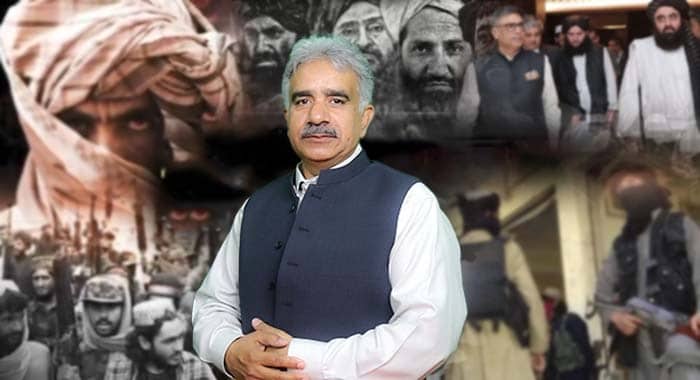
The developments unfolding in Afghanistan indicate that the challenges facing the Afghan Taliban are no longer limited to political disagreements or opposition from organized armed groups. A wider crisis of governance, representation and public confidence appears to be emerging, with resistance voices increasingly coming from different regions and segments of Afghan society.
The recent developments in Badakhshan, Baghlan, Takhar, Kapisa, Balkh, Herat and other areas reflect a deeper issue: many communities feel disconnected from the current system of governance and believe their concerns are being ignored.
The Afghan Taliban leadership has repeatedly claimed that it has established peace and stability after decades of conflict. However, peace cannot survive only through control of territory. A state requires public trust, inclusive governance and acceptance among its people.
Today, the question being raised inside Afghanistan is not simply about who controls Kabul, but whether the governing system has succeeded in addressing the concerns of ordinary Afghans living in different provinces.
The situation in Badakhshan provides an important example. What began as opposition by certain groups has expanded into broader dissatisfaction involving local figures, communities and young people. Similar voices have emerged from other northern and western provinces, showing that the issue is not confined to one organization or one region.
One of the significant aspects of the current situation is that opposition is not limited to a single political or armed platform. Different groups and individuals are expressing their dissatisfaction for different reasons, ranging from political exclusion to disputes over resources, governance decisions and local authority.
For instance, concerns have emerged regarding control over natural resources in areas such as Badakhshan, where local figures have objected to the alleged concentration of authority and economic opportunities among Taliban commanders.
Similarly, decisions affecting local livelihoods have created resentment. The ban on opium cultivation, while presented as a counter-narcotics measure, also created economic difficulties for communities dependent on that income without adequate alternatives being provided.
When governments introduce major policies, they must consider the social and economic consequences for ordinary people. Otherwise, even decisions made with a stated objective can become a source of public anger.
Another important factor behind the growing dissatisfaction is the perception among some communities that power has become concentrated within a narrow circle. Afghanistan is a country of diverse ethnic, linguistic and cultural identities. Any attempt to govern such a society requires recognition of this diversity.
The concerns being voiced by various Afghan figures show that many communities fear losing their identity and political space under a system they believe does not sufficiently represent them.
The debate has also moved towards religious interpretation. Critics of the Afghan Taliban argue that the group has attempted to present its own interpretation as the only acceptable version of Islam, creating divisions among Afghans who belong to different ethnic and sectarian backgrounds.
This has created resentment among communities that consider themselves equally Muslim but feel excluded from the national narrative.
The statements from figures such as Abdul Rasul Sayyaf and Mohammad Mohaqiq reflect this broader debate. Their argument is that religious identity cannot be used as a tool to declare others less legitimate or less faithful.
A country like Afghanistan cannot achieve stability by excluding large sections of its population. History shows that governments that ignore social diversity eventually face resistance, whether political, social or armed.
The growing opposition therefore represents a warning sign for the Afghan Taliban. Control through force may temporarily suppress dissent, but long-term stability requires acceptance among the people.
The emergence of young commanders and local movements also indicates that frustration is spreading beyond traditional opposition groups. When ordinary citizens begin questioning a system, the challenge becomes much greater than any single armed organization.
The Afghan Taliban may still maintain control over major state institutions, but governance is ultimately measured by public confidence, not only by administrative control.
The coming period will determine whether Afghanistan moves towards broader political accommodation or deeper internal divisions.
Afghanistan’s Instability and the Regional Security Challenge
The growing internal challenges facing Afghanistan do not remain confined within its borders. Any instability in Afghanistan has direct consequences for neighboring countries, particularly Pakistan, because of the shared border, historical links and the presence of various armed groups operating from Afghan territory.
The international community must also recognize that Afghanistan’s security situation has implications far beyond the region. The concern is not only about political opposition to the Afghan Taliban, but also about the presence and activities of multiple terrorist organizations that continue to find space inside Afghanistan.
Various international assessments have repeatedly highlighted concerns regarding the presence of foreign and regional terrorist groups in Afghanistan. Groups such as Tehreek-e-Taliban Pakistan, Al-Qaeda, Islamic State Khorasan Province (ISKP) and other terrorist organizations have remained a major security concern for neighboring countries.
The question that needs to be answered is how these groups continue to maintain their networks, acquire resources and operate despite claims of complete security control by the Afghan Taliban.
A terrorist network requires three basic elements to survive: safe space, financing and recruitment. If any government genuinely wants stability, it must ensure that its territory is not used against neighboring states and that armed groups do not receive protection or freedom of movement.
The issue of international assistance to Afghanistan has also raised questions regarding transparency and accountability. The global community has continued humanitarian engagement with Afghanistan because ordinary Afghans require assistance, but the mechanism through which funds are delivered remains a matter of debate.
The international community must ensure that humanitarian assistance reaches the people who need it most and does not unintentionally strengthen any group involved in activities threatening regional or global security.
Afghanistan cannot become a source of instability while the world continues to search for ways to support its people. There must be a balance between humanitarian responsibility and security concerns.
For Pakistan, the challenge is particularly serious because any instability in Afghanistan directly affects Khyber Pakhtunkhwa and Balochistan. The presence of terrorist sanctuaries across the border creates security pressures for communities already affected by decades of militancy.
However, another important factor has emerged in recent years: local communities themselves are increasingly rejecting terrorist organizations.
From Swat to Dir and other areas of Khyber Pakhtunkhwa, people have repeatedly expressed their desire for peace and refused to provide space to groups attempting to revive violence.
This public resistance is significant because terrorism cannot survive only through weapons. Terrorist organizations depend on fear, intimidation, recruitment and social acceptance. When communities reject them, their operational capacity weakens.
The complaints of terrorist commanders that local populations are not supporting them reveal an important reality: the people who have suffered from terrorism understand its consequences better than anyone else.
Residents know that the arrival of terrorist groups brings targeted killings, attacks, displacement, economic losses and disruption of daily life. Therefore, many communities have chosen cooperation with the state over allowing violent organizations to return.
The solution, however, cannot rely only on security operations. Counterterrorism requires a comprehensive approach.
Where communities stand with the state, their protection must become a priority. Peace committees, tribal elders, local governance structures and police institutions must be strengthened so that people have confidence that standing against terrorists will not leave them vulnerable.
At the same time, improving education, healthcare, employment opportunities and governance in affected areas is essential. A population that feels connected with state institutions is far less vulnerable to extremist propaganda.
The previous approach of attempting reconciliation with armed groups, offering them opportunities for rehabilitation and expecting them to abandon violence did not produce the desired results in many cases. Those who reject violence and stand with the state must now receive greater support and protection.
The contrast between the state system and extremist ideology is clear. A modern state is built around millions of citizens with different backgrounds, while extremist groups attempt to impose the will of a small number of individuals on entire societies.
No society can achieve lasting stability when a narrow interpretation of ideology is forced upon millions of people.
The situation in Afghanistan should therefore be viewed with seriousness. The growing dissatisfaction inside the country, combined with the continued presence of terrorist networks, creates risks not only for Afghans but for the entire region.
The Afghan Taliban now face a crucial choice. They can either move towards a system that addresses the concerns of different communities and prevents Afghan soil from being used against others, or they can allow divisions and instability to deepen.
For Pakistan and the international community, the priority remains clear: Afghanistan must not become a center for terrorism and instability. At the same time, regional peace requires addressing the legitimate concerns of Afghan communities who seek security, dignity and representation.
The future of Afghanistan will depend not only on who controls power, but on whether ordinary Afghans believe that power serves them.
A government may control institutions through force, but lasting authority comes from public acceptance. Without that acceptance, every system eventually faces the weight of its own contradictions.