
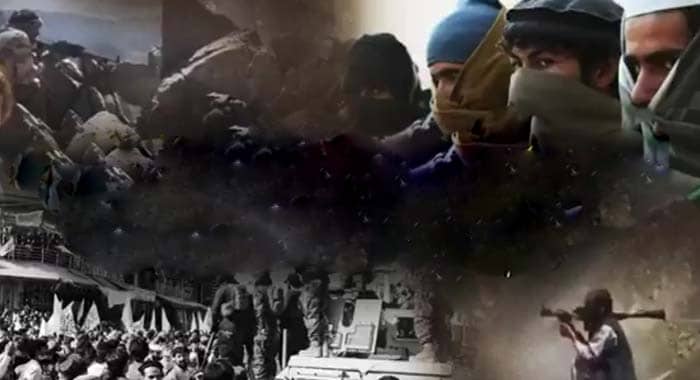
Reports of emerging anti-Taliban resistance movements in several provinces of Afghanistan have intensified, with new developments in Badakhshan highlighting growing internal tensions, leadership disputes, and challenges facing the Taliban administration.
According to Afghan media reports, a newly formed armed group known as Sipahian-e-Mihan has announced its presence against the Taliban regime after claiming control over the Yeftal-e-Sufla district of Badakhshan province. The group reportedly includes individuals from various segments of society, including former security personnel and local residents who oppose Taliban rule.
The reported emergence of the group comes amid increasing attention toward internal disagreements within Taliban ranks, particularly in Badakhshan, where recent administrative changes and disputes have fueled speculation about growing divisions within the movement.
Reports indicate that the dismissal of a district governor in Badakhshan only months after another similar removal has exposed tensions and disagreements within the Taliban’s administrative structure. According to local media accounts, Qari Matiur Rahman, who was appointed as district governor, was removed from his position only one week after his appointment, further contributing to perceptions of instability within local Taliban governance.
According to reporting cited by the South Asia Terrorism Portal (SATP), disagreements between the Taliban leadership and supporters of Juma Khan Fateh have reportedly not been resolved. The report suggests that tensions remain ongoing between Taliban authorities and groups associated with Fateh in Badakhshan.
Observers have noted that such internal disagreements could present additional challenges for the Taliban administration as it seeks to maintain political control and administrative authority across Afghanistan.
Badakhshan has historically been viewed as a strategically important province due to its geographical location and complex political dynamics. Recent developments in the region have drawn attention to the evolving security environment and the emergence of competing political and armed actors.
Alongside newly reported groups, established anti-Taliban organizations, including the National Resistance Front of Afghanistan (NRF) and the Afghanistan Freedom Front (AFF), continue to claim activities in Badakhshan and other Afghan provinces.
The National Resistance Front recently shared a video through its official account on the social media platform X, claiming to show resistance forces conducting patrols in an important area. The footage was presented by the group as evidence of its continued presence and operational activity against the Taliban.
The NRF and AFF have previously stated that their objectives include opposing Taliban rule and advocating for political change in Afghanistan. However, independent verification of specific operational claims and battlefield developments remains challenging due to limited access and the complex information environment inside the country.
The reported expansion of resistance activities comes amid broader concerns regarding Afghanistan’s political stability, governance challenges, and security situation following the Taliban’s return to power.
While the Taliban maintains control over most of Afghanistan’s territory, reports of armed opposition activity, internal disagreements, and local grievances continue to shape the country’s evolving political landscape.
Analysts suggest that the emergence of multiple opposition groups, combined with internal administrative disputes, could create additional pressures for Taliban authorities. At the same time, the fragmented nature of resistance movements and the uncertain level of public support for various groups remain key factors in determining Afghanistan’s future security environment.
Developments in Afghanistan continue to attract regional and international attention, particularly regarding security, governance, humanitarian conditions, and the potential impact of instability on neighboring countries.
The reported activities of anti-Taliban groups, along with internal divisions within Taliban structures, are expected to remain significant issues for observers monitoring Afghanistan’s political and security trajectory.
As the situation continues to evolve, further developments in Badakhshan and other provinces will likely influence assessments of the Taliban administration’s stability, its internal cohesion, and the future direction of Afghanistan’s security landscape.



