
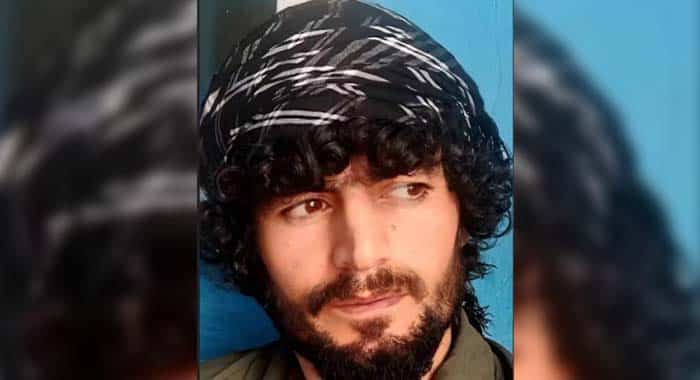
The Commander-in-Chief of the Sepah-e Mihan (Homeland Front), Qayum Malang, has publicly rejected Taliban claims that members of his organization were arrested following the group’s recent operation in Yaftali Sufla district of Badakhshan province, asserting that all resistance fighters remain safe and that the movement continues to pursue its strategic objectives.
In his first public audio message since the operation—released five days after the front temporarily seized control of Yaftali Sufla, Malang dismissed statements issued by Taliban authorities as “propaganda” and sought to reassure supporters regarding the condition of the group’s personnel.
“I am in full health. Do not follow the enemy’s propaganda. We are all safe and well,” Malang stated, while emphasizing that the Sepah-e Mihan Front remains firmly committed to its own long-term strategy and vision.
Highlighting the ideological foundation of the movement, the commander declared that the organization operates according to “its own plans and objectives” and that its members place freedom above all other considerations.
The statement marks Malang’s first direct public response following one of the most significant anti-Taliban operations witnessed in Badakhshan province in recent years.
The recently established Sepah-e Mihan Front launched a coordinated assault on Yaftali Sufla district, located near Faizabad, the provincial capital of Badakhshan, temporarily capturing the district for several hours before withdrawing.
During the operation, resistance fighters reportedly entered several government installations, seized military equipment, and raised the organization’s flag over a number of administrative buildings, symbolically demonstrating their ability to penetrate Taliban-controlled territory.
The operation rapidly drew national and international attention, placing Qayum Malang at the center of Afghanistan’s evolving anti-Taliban resistance landscape.
Following the incident, Taliban officials announced that several members of the Sepah-e Mihan Front had been detained during subsequent security operations.
Malang categorically rejected those assertions, insisting that no fighters had been captured and urging supporters not to be influenced by Taliban information campaigns.
His statement represents a direct challenge to the Taliban’s official narrative regarding the outcome of the Yaftali Sufla operation and reflects the increasingly important role that information and strategic communications now play alongside military activities in Afghanistan’s ongoing conflict.
Yaftali Sufla remains one of the strategically important districts of Badakhshan province. Its temporary capture by an armed anti-Taliban organization has been widely regarded as one of the province’s most consequential recent security developments, generating extensive political discussion and strategic analysis both inside and outside Afghanistan.
The unprecedented nature of the operation prompted an immediate response from the Taliban leadership.
In the aftermath of the attack, the Taliban assigned its Chief of Army Staff, Fasihuddin Fitrat, to oversee efforts aimed at containing the emerging resistance movement and stabilizing the security situation in Badakhshan.
Travelling from Kabul to the affected district, Fitrat maintained that Taliban forces had successfully responded to the attack and prevented the resistance group from accomplishing its broader objectives.
According to the Taliban military chief, authorities had received advance intelligence indicating that armed groups intended to target Yaftali Sufla.
He stated that security agencies were informed during the early morning hours of the planned operation, enabling Taliban forces to mobilize rapidly and implement countermeasures designed to contain the situation.
Fitrat asserted that the Taliban’s security response successfully disrupted the attackers’ plans and prevented them from achieving their intended objectives.
Meanwhile, senior Taliban officials continued to issue strong public warnings following the incident.
Hayatullah Muhajir Farahi, the Taliban’s Deputy Minister of Information and Culture, stated publicly that both domestic and foreign adversaries should recognize the readiness and vigilance of Taliban security institutions in responding to any perceived threat.
In comments shared through social media, Farahi further declared that individuals or groups attempting to obstruct Afghanistan’s stability or economic development would receive no leniency from Taliban authorities.
The differing accounts presented by the Taliban and the Sepah-e Mihan Front underscore the continuing contest over both the military and informational dimensions of Afghanistan’s evolving security environment.
While the Taliban maintains that the operation was effectively neutralized, the resistance movement continues to portray the temporary seizure of Yaftali Sufla as evidence of its operational capability and growing organizational confidence.
The incident has intensified attention on the emergence of new armed resistance groups operating in northern Afghanistan and highlights the increasingly dynamic security landscape confronting the country’s de facto authorities.
Observers note that the developments in Badakhshan may carry broader implications for Afghanistan’s internal security environment, particularly if anti-Taliban groups continue to demonstrate the capacity to conduct coordinated operations in strategically significant districts.



