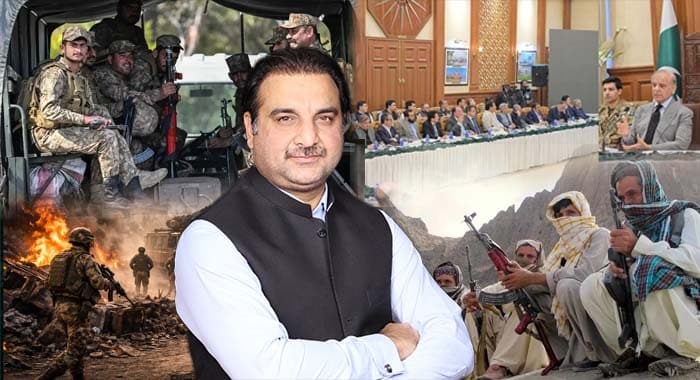
The APEX Committee’s decisions on counterterrorism, intelligence-based operations and a reported Rs160 billion development package for 12 areas offer an opportunity to reshape the future of Pakistan’s conflict-affected regions. But success will depend on political sincerity, local participation, transparent spending and the government’s ability to replace fear and deprivation with jobs, education, healthcare and lasting peace.
Pakistan stands at a critical crossroads in its long struggle against terrorism. In its conflict-affected regions, particularly the areas of Khyber Pakhtunkhwa that have endured years of insecurity, the challenge is no longer limited to eliminating armed militants. It is also about restoring public confidence, rebuilding institutions, creating economic opportunities and ensuring that ordinary citizens can live with dignity in their own communities.
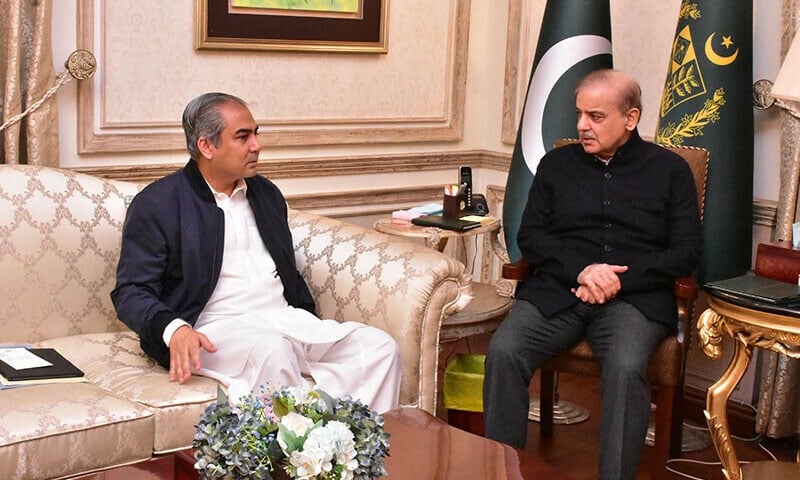
Against this backdrop, the recent meeting of the APEX Committee, attended by Prime Minister Shehbaz Sharif, senior military leadership and other relevant representatives, deserves serious public attention. The discussions focused on the security situation, the nature of future counterterrorism operations, the responsibilities of local representatives and a substantial development package intended for 12 areas.
The message emerging from these discussions is significant: Pakistan’s response to militancy must not depend exclusively on the use of force. Security is indispensable, but security without development cannot guarantee lasting peace. Similarly, development without security, accountability and public trust cannot deliver its promised benefits.
The real test of the APEX Committee’s decisions will therefore be whether they produce tangible improvements in the lives of people who have waited far too long for peace, prosperity and equal opportunities.
One of the most important decisions discussed at the meeting was the reported intention to avoid large-scale military operations and instead rely on intelligence-based operations against terrorist networks. Security authorities and relevant institutions have reportedly concluded that large-scale operations could create additional difficulties for the population and produce consequences that would undermine the broader objective of restoring peace.
Such operations can require the displacement of hundreds of thousands, or even millions, of people. Families may be forced to leave their homes, livelihoods and agricultural land. Children lose access to education, patients struggle to obtain medical treatment, and elderly people face particular hardships. Women and vulnerable families can suffer disproportionately when entire communities are uprooted.
The possibility of displacing 10 lakh, 15 lakh or even 20 lakh people presents an enormous humanitarian and administrative challenge. Accommodating such a large population would place a tremendous burden on the government and humanitarian services.
For a family whose home represents its only source of security, belonging and economic stability, displacement is not a minor administrative inconvenience. It can mean the loss of everything built over generations. An intelligence-based approach offers a different direction. Rather than treating entire localities as security problems, it focuses on identifying specific militant networks, gathering credible intelligence and conducting targeted operations against those responsible for violence.
This approach can reduce unnecessary disruption to civilian life while allowing security agencies to concentrate their resources on genuine threats. However, its effectiveness will depend on reliable intelligence, professional execution, interagency coordination and strict protection of civilians.
The distinction is fundamental: the state must pursue terrorists without alienating the communities whose cooperation is essential to defeating them. An incident in Karak provides a relevant illustration of this approach. Terrorists were reportedly present in a house, and local information helped security personnel identify the threat. During the operation, police personnel came under fire and were martyred, while the terrorists inside the house were subsequently killed.
The incident highlights both the sacrifices made by security personnel and the importance of timely intelligence in confronting armed groups. At the same time, operational decisions must always be guided by the protection of innocent people and respect for the rule of law. The reported policy direction is therefore encouraging, provided it is implemented consistently. Targeted operations must not become a substitute for effective policing, prosecution and the restoration of civilian administration. Military and security action can suppress immediate threats, but durable peace requires institutions capable of preventing militants from returning.
One of the most important aspects of the current situation is the relationship between terrorism and the destruction of ordinary life. When armed groups establish a presence in a community, their influence can extend far beyond physical violence. They can intimidate traders, threaten public servants, obstruct development projects and discourage young people from pursuing independent livelihoods. Militants reportedly kidnap and torture government personnel, police officers, local security personnel and employees of other institutions. Threats are also directed at individuals who refuse to abandon government service, sometimes accompanied by threats of death.
Such coercion creates an atmosphere in which people become afraid to cooperate with the state. Government employees may hesitate to perform their duties, contractors may avoid development projects, teachers and healthcare workers may become reluctant to serve in vulnerable locations, and businesses may refuse to invest. The consequences are devastating. A young person who wants to open a shop, establish a small business or find a respectable job cannot build a secure future in an environment dominated by fear. A farmer cannot confidently invest in improved production if insecurity threatens his land and livelihood. A parent cannot plan a child’s education if schools and public services are constantly disrupted.
This is precisely why the struggle against militancy must be connected to economic and social development. The objective should not simply be to remove armed groups from an area. It should be to restore a normal environment in which citizens can work, trade, study, travel and participate in public life without intimidation. When people experience the benefits of peace, they gain a powerful incentive to reject those who seek to control them through violence. Development, in this sense, is not a secondary component of counterterrorism. It is one of its most important long-term foundations.
Another major decision is the reported development allocation of Rs160 billion, with approximately 70 percent around Rs112 billion earmarked for 12 areas. The distinction between an announced allocation and actual expenditure is essential. Nevertheless, if properly funded, released and implemented, a package of this scale could provide a significant opportunity to address longstanding deficiencies in public services.
Previous administrative arrangements involving deputy commissioners and elected representatives have been criticized for failing to deliver sufficient progress. The reasons identified include inadequate government funding, a lack of seriousness at the local level and insufficient commitment at the provincial level. Whatever the precise combination of causes, the underlying concern is clear: communities that have faced insecurity and deprivation for decades cannot be expected to trust new promises automatically.
They need evidence of change. The proposed approach calls for development schemes to be selected according to the needs of individual areas. If a community lacks a school, the priority should be education. If its principal problem is inadequate healthcare, a health facility should receive attention. If residents lack clean drinking water, water supply schemes should take precedence. This is a sensible principle. Development cannot succeed through a uniform formula imposed on communities with different circumstances.
One locality may need roads and transport connections to reach markets. Another may require electricity, irrigation or agricultural support. A third may need vocational training, a functioning hospital, secondary schools or better access to higher education. The government must therefore resist the temptation to measure success simply by the number of schemes announced or the money allocated. It must measure success by the quality of services delivered and the improvements experienced by citizens.
How many schools have become functional? How many qualified teachers are attending regularly? How many patients can receive treatment locally? How many households have gained reliable access to clean water? How many young people have found sustainable employment? These are the questions that should define the performance of the development programme.
The proposed role of development councils, through which local people would be represented and consulted in identifying priorities, could prove particularly important. For decades, development decisions in many underserved regions have too often been shaped by distant authorities, political calculations or administrative assumptions rather than by the everyday experiences of residents.
A development council that genuinely represents the population can help change this pattern. Local people understand which roads become impassable during difficult weather, which schools lack teachers, which villages have water shortages and which communities remain disconnected from healthcare facilities. Their participation can help the government direct public money towards the problems that matter most.
However, local representation must be meaningful rather than symbolic. Councils should not become another layer of political patronage or a mechanism through which influential individuals secure contracts and resources for their supporters. Their membership, responsibilities, decision-making processes and financial powers should be clearly defined. Citizens should be able to understand how projects are selected, how funds are spent and who is responsible when schemes fail.
Transparent procurement, independent audits, public reporting and accessible complaint mechanisms are essential safeguards. The principle should be straightforward: public money belongs to the public, and communities have a legitimate right to know how it is being used. Local consultation must also include women, young people, disadvantaged households and communities that may lack strong political connections. Otherwise, the loudest or most powerful voices could once again dominate decisions. If development councils are empowered to represent the population fairly, they can become a bridge between citizens and the state. If they are captured by vested interests, they risk reproducing the very failures they are intended to correct.
A particularly important concern is the relationship between unemployment and the influence of armed groups. Young people who lack employment opportunities can become vulnerable to recruitment by militant organizations offering money, monthly payments or a sense of belonging in circumstances where legitimate opportunities are scarce. This does not mean that unemployment automatically produces terrorism, nor does it excuse anyone who participates in violence. People join militant organizations for different reasons, including coercion, ideology, personal networks and financial incentives.
But economic exclusion can make recruitment easier, especially where public institutions are weak and young people see little prospect of a secure future. The government must therefore create credible alternatives. Vocational education, technical training, small-business financing, agricultural modernization, market access and private-sector investment can all help expand opportunities. Public works programmes can provide temporary employment, but they should be designed to build useful infrastructure and skills rather than merely distribute salaries.
Young people need more than short-term financial assistance. They need a pathway towards independence. A trained electrician should be able to find work. A student completing technical education should have a reasonable chance of employment. A small entrepreneur should be able to register a business without excessive bureaucracy or intimidation. Farmers should have access to markets and the infrastructure necessary to improve productivity. The most sustainable response to militant recruitment is a society in which lawful work offers greater dignity, security and opportunity than joining an armed organization.
The reported development package must therefore be judged partly by its employment outcomes. Money spent on infrastructure is important, but the ultimate objective should be a stronger local economy that continues generating opportunities after the initial projects are completed.
The decisions have also prompted questions about the speed of implementation, the responsibilities of local representatives and the proposed administrative arrangements. The central argument in favour of the initiative is that if the measures improve people’s lives, restore security and create prosperity, their practical results should be evaluated seriously. That is a reasonable starting point, but it should not become an excuse to dismiss criticism.
Public concerns about the design, legality, transparency or implementation of government policy deserve consideration. A successful strategy must be able to withstand scrutiny. The government should explain the objectives of its security policy, the role of civilian institutions, the mechanisms for selecting development projects and the procedures for monitoring expenditure. Local communities must be able to raise concerns without fear. Trust cannot be demanded through official announcements. It has to be earned through consistent conduct.
For the state, this means protecting civilians, delivering services fairly, holding officials accountable and ensuring that security measures do not unnecessarily disrupt daily life. For political representatives, it means moving beyond slogans and demonstrating measurable results. For communities, it means having a meaningful opportunity to participate in decisions that shape their future. And for security institutions, it means combining operational effectiveness with respect for the people whose safety they are responsible for protecting. Lasting peace requires cooperation among all these stakeholders.
The implementation of the announced measures will require a workable administrative structure, clearly defined responsibilities and an effective system of oversight. A development package of Rs160 billion cannot succeed through declarations alone. It requires timelines, responsible departments, clearly identified projects and a system for resolving administrative obstacles. The federal and provincial governments must coordinate their responsibilities. Local councils need the authority and capacity to identify priorities. Technical departments must ensure that projects are properly designed. Financial institutions must track releases and expenditure, while independent oversight bodies must investigate irregularities.
Projects should be published in a form that citizens can understand, including their costs, locations, implementation schedules and responsible authorities. Progress reports should distinguish between money announced, money released, contracts awarded and facilities actually completed.
This distinction matters because a school building that has been constructed but has no teachers is not a successful educational intervention. A hospital without medicines, equipment or qualified staff does not provide adequate healthcare. A water scheme that stops working after a few months does not solve a community’s water problem. Maintenance and long-term operational funding must therefore be built into the programme from the beginning.
The government should also establish measurable targets for employment, education, healthcare, water access and other local priorities. Progress should be assessed regularly, and failed projects should lead to corrective action rather than being concealed behind new announcements. In short, the programme needs not only financial resources but also administrative competence and political accountability.
The APEX Committee’s decisions could mark an important step towards a different future for Pakistan’s conflict-affected regions. A shift towards intelligence-based operations, an emphasis on protecting civilians from the disruption of large-scale operations, and a substantial development allocation for 12 areas are all potentially significant elements of a broader strategy.
Yet the real opportunity lies in changing the relationship between the state and its citizens. For decades, too many people in underserved regions have lived with insecurity, inadequate facilities and limited economic opportunities. They do not need another cycle of promises followed by disappointment. They need functioning institutions, reliable public services, meaningful employment and the freedom to plan their futures without fear.
The reported Rs160 billion development package must be translated into visible improvements. Development councils must genuinely represent local people. Elected representatives must be held accountable for their performance. Public spending must be transparent, and security operations must remain focused on legitimate threats while protecting civilian life. Above all, Pakistan must recognize that peace is not simply the absence of gunfire. Peace is the presence of opportunity, justice, dignity and hope.
The decisive question is no longer whether the government can announce a new strategy. It is whether the state can deliver results that ordinary citizens can see, experience and trust. If these decisions lead to safer communities, better schools, accessible healthcare, clean water, productive employment and accountable governance, they could help lay the foundations for lasting stability. If they remain confined to meetings, budgets and political statements, the underlying problems will persist.
Pakistan has an opportunity to demonstrate that the fight against terrorism and the pursuit of development are not competing priorities. They are inseparable responsibilities. The ultimate victory will come when young people choose education over extremism, enterprise over dependency, and hope over fear and when every citizen, regardless of where they live, can believe that the state is committed to their future.