
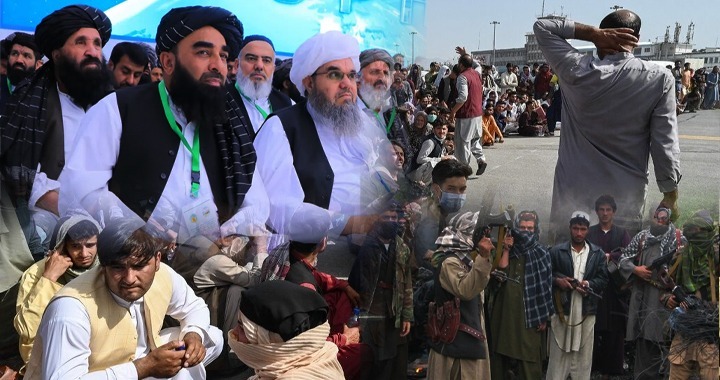

Nearly five years after the Taliban returned to power, Afghanistan continues to grapple with an increasingly complex combination of security, economic, humanitarian, and diplomatic challenges. Although the Taliban maintain that they have restored nationwide security compared with the final years of the previous republic, recent developments suggest that Afghanistan’s security landscape is becoming more complicated rather than more stable. Alongside persistent economic hardship and international isolation, emerging armed resistance, continued terrorist activity, internal disputes, and growing regional security concerns are reshaping perceptions of Afghanistan’s future.
The Taliban’s principal achievement since August 2021 has been consolidating political and territorial control over almost the entire country. Large-scale fighting between rival Afghan factions has largely ceased, allowing the interim authorities to establish centralized administrative and security structures across most provinces. Government institutions, checkpoints, and provincial administrations now operate under Taliban control, creating a level of nationwide territorial authority unmatched during the previous government’s final years.
However, territorial control alone does not necessarily guarantee lasting security.
Recent developments in northeastern Badakhshan province have highlighted growing challenges confronting Taliban authorities. Reports indicate that armed resistance has intensified in the province, where local commander Juma Khan Fatah and his supporters have reportedly clashed with Taliban forces amid disputes over authority, governance, and control of valuable mining resources. At the same time, a newly announced resistance group, Sepahiyan-e Mihan (Patriotic Soldiers Front), briefly seized control of Yaftali Sufla district before withdrawing after Taliban reinforcements arrived.
These incidents coincide with reports that former Afghan Special Forces-linked resistance organizations carried out approximately 30 attacks during June and July across different parts of Afghanistan. Operations claimed by groups including the National Resistance Front (NRF), Afghanistan Freedom Front (AFF), Afghan Green Trend, Homeland Soldiers Front, and National Mobilization Front suggest that organized armed opposition remains active despite the Taliban’s nationwide control. While these operations have largely followed guerrilla tactics rather than attempts to hold territory, they illustrate that armed resistance continues to survive in several regions.
Alongside armed opposition, Afghanistan continues to face threats from extremist organizations, particularly Islamic State Khorasan Province (ISIS-K), which has repeatedly carried out attacks against civilians, religious minorities, Taliban personnel, and foreign interests.
International concern regarding ISKP has also become increasingly visible. Russian Foreign Minister Sergei Lavrov recently described ISIS-K as the most significant terrorist threat facing Central Asia, warning that the group seeks to exploit Afghan territory as a strategic base for expanding its operations throughout the region and advancing its objective of establishing a so-called caliphate. Moscow has called for closer regional intelligence cooperation and strengthened collective counterterrorism efforts, reflecting broader concerns that Afghanistan’s security challenges increasingly affect neighboring countries beyond South Asia.
At the same time, allegations regarding the continued presence of foreign militant organizations inside Afghanistan remain an important regional concern.
Pakistan has consistently maintained that Tehreek-e-Taliban Pakistan (TTP) and several other terrorist organizations continue to operate from Afghan territory and use it to facilitate attacks across the border. Islamabad has repeatedly urged the Afghan authorities to ensure that Afghan soil is not used against neighboring states.
Recent reports suggesting that Taliban authorities instructed TTP members in Kunar province to relocate to Ghazni and Badakhshan have attracted regional attention. While the full implications of the reported directive remain unclear, it has renewed discussion regarding the presence and movement of foreign militant organizations inside Afghanistan and the challenges associated with addressing regional security concerns.
Security tensions have also continued along the Pakistan-Afghanistan border. Recent incidents in the Kurram sector, where Pakistani security sources reported cross-border firing and attempts by Afghan Taliban personnel to establish new border positions, demonstrated that border management remains one of the most sensitive aspects of bilateral relations. Although such incidents have remained localized, they underscore the continuing fragility of security along the shared frontier.
Economic challenges continue to compound Afghanistan’s broader security difficulties. Widespread poverty, unemployment, declining foreign assistance, limited private investment, and restricted access to international financial systems continue to constrain economic recovery. Although certain macroeconomic indicators have shown modest improvement since the severe contraction following the Taliban takeover, millions of Afghans continue to face difficult living conditions, while population growth continues to outpace economic expansion.
Humanitarian conditions likewise remain among the world’s most severe. Millions of Afghans continue to depend upon humanitarian assistance, with food insecurity, malnutrition, drought, and limited employment opportunities placing sustained pressure on vulnerable communities. International aid organizations continue providing essential assistance, yet humanitarian relief alone cannot generate sustainable economic growth or reduce long-term dependence.
The restrictions imposed on women and girls continue to influence Afghanistan’s international standing. Limitations affecting education, employment, and participation in public life remain among the principal obstacles to broader diplomatic engagement. Many governments continue to link any future normalization of relations with measurable progress in these areas, making social policy an increasingly important component of Afghanistan’s foreign relations.
Diplomatic challenges have likewise become more complex. While neighboring countries continue engaging Taliban authorities on practical matters including trade, border management, humanitarian coordination, and regional security, Afghanistan remains without formal international recognition. This diplomatic isolation continues to restrict foreign investment, access to international financial institutions, and broader economic integration.
Regional powers nevertheless remain deeply engaged. Pakistan, China, Russia, Iran, Central Asian states, and Gulf countries all recognize that Afghanistan’s future carries significant implications for regional security, connectivity, refugee movements, narcotics trafficking, and counterterrorism. Recent statements by Russian officials regarding ISIS-K, together with continuing concerns expressed by neighboring states over cross-border militant activity, illustrate that Afghanistan’s security situation is increasingly viewed as a regional rather than purely domestic issue.
Afghanistan retains considerable long-term strategic and economic potential due to its geographic position and natural resources. However, realizing that potential will require more than political control. Sustainable progress depends upon stronger governance, broader economic reforms, improved regional confidence, greater international engagement, and credible measures addressing the security concerns repeatedly raised by neighboring countries.
Nearly five years after the Taliban’s return to power, Afghanistan presents a complex picture. Large-scale civil war has largely ended, yet new security dynamics continue to emerge. Armed resistance remains active, terrorist organizations continue to pose threats, humanitarian pressures persist, and diplomatic isolation continues to constrain economic recovery. The country’s long-term stability will therefore depend not only on maintaining territorial control but also on addressing the interconnected political, economic, humanitarian, and regional security challenges that continue to shape Afghanistan’s future.



