
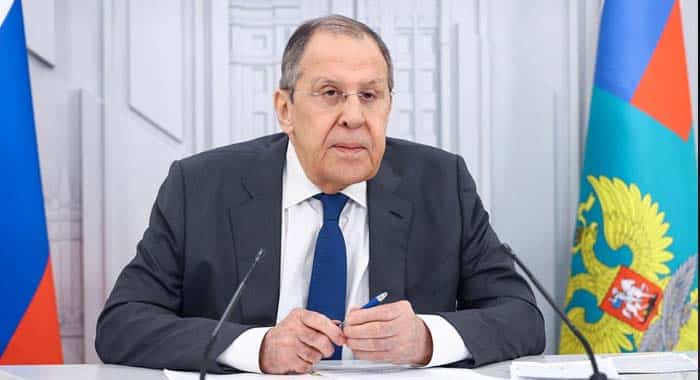
Russian Foreign Minister Sergei Lavrov has identified ISIS-K (Islamic State Khorasan) as the most significant terrorist threat facing Central Asia, warning that the group seeks to exploit Afghan territory as a strategic base to expand its operations across the region and advance its objective of establishing a so-called caliphate.
Speaking in a message to a high-level meeting focused on strengthening regional efforts to prevent terrorist organizations from acquiring weapons in Central Asia, Lavrov emphasized that contemporary terrorist threats transcend national borders and require a coordinated international response.
He stressed that effectively combating terrorism demands unconditional unity among states, enhanced intelligence cooperation, and a firm rejection of double standards in global counterterrorism efforts. Lavrov cautioned that fragmented approaches and selective policies only create opportunities for extremist organizations to exploit regional vulnerabilities.
The Russian Foreign Minister also criticized what he described as the destructive policies of certain Western countries, asserting that international cooperation against terrorism has increasingly become constrained by geopolitical considerations. He argued that political divisions should not undermine collective efforts to confront common security threats posed by transnational terrorist organizations.
Reaffirming Russia’s commitment to regional peace and security, Lavrov highlighted Moscow’s continued engagement with Central Asian partners to strengthen collective counterterrorism mechanisms. He noted that the foreign ministers of the Collective Security Treaty Organization (CSTO) recently approved a draft Counterterrorism Strategy through 2030 during their meeting in Kazan. The strategy is expected to be presented to the heads of CSTO member states for final endorsement later this autumn.
Lavrov further underscored Russia’s contribution to global counterterrorism initiatives, stating that Moscow remains among the ten largest financial contributors to the United Nations Office of Counter-Terrorism (UNOCT). Russia has provided US$7 million in support of the Office and its technical assistance programmes aimed at enhancing counterterrorism capabilities in Central Asia and Africa.
The remarks reflect growing international concern over the evolving threat posed by ISIS-K and underscore the importance of sustained regional and global cooperation to prevent terrorist organizations from exploiting fragile security environments, acquiring resources, and expanding their operational footprint beyond national borders.



