
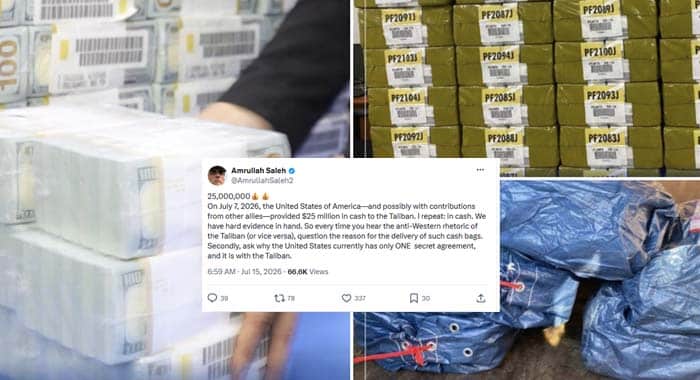

Former First Vice President of Afghanistan, Amrullah Saleh, has alleged that the United States, along with several of its allies, secretly provided the Taliban with US$25 million in cash, raising fresh questions about the nature of international engagement with Afghanistan’s de facto authorities.
In a statement posted on social media platform X, Saleh claimed that the alleged cash transfer took place on July 7, 2026, and suggested that several American allies may also have participated in the transaction.
According to Saleh, the funds were reportedly delivered entirely in cash rather than through formal banking or financial channels. He further asserted that he possesses substantial documentary evidence to support his allegations, although no such evidence has been publicly released or independently verified at this stage.
The former Afghan official questioned what he described as contradictory public messaging surrounding relations between Western governments and the Taliban. He argued that while public statements often portray tensions between the two sides, reports of alleged financial transfers raise broader questions regarding the true nature of their engagement.
Saleh stated that whenever the Taliban issue anti-Western rhetoric, or Western governments publicly criticise the Taliban, observers should also examine the alleged financial dealings that he claims continue behind closed doors.
In a further claim, Saleh asserted that the United States currently maintains only one undisclosed agreement inside Afghanistan, alleging that the arrangement is with the Taliban. He did not provide additional details regarding the nature or scope of the alleged agreement.
The allegations have attracted attention due to Saleh’s former role within the Afghan government. However, no official confirmation has been issued by the United States, its allies, or the Taliban regarding the claims, and the reported allegations remain unverified.
The statements are likely to intensify debate over international engagement with the Taliban, particularly concerning humanitarian assistance, diplomatic contacts, financial transparency, and broader questions surrounding the international community’s approach toward Afghanistan since the Taliban’s return to power in 2021.
Observers note that, if substantiated, such allegations could have significant diplomatic implications and may prompt renewed calls for transparency regarding international financial interactions with Afghanistan’s current authorities.
Further developments are expected should additional evidence emerge or official responses be issued by the parties named in the allegations.



