
The continued challenge of terrorism in Pakistan requires a comprehensive and balanced approach that addresses both external threats and internal security vulnerabilities. While hostile elements operating from outside Pakistan’s borders remain a serious concern, experts emphasize that lasting peace cannot be achieved without strengthening domestic counter-terrorism mechanisms, intelligence coordination, and measures against extremism.
Security analysts have highlighted that attributing all terrorism-related challenges solely to external actors risks overlooking critical internal responsibilities. Pakistan’s security environment requires effective coordination among law enforcement agencies, intelligence institutions, provincial counter-terrorism departments, and security forces to identify and prevent threats before they materialize.
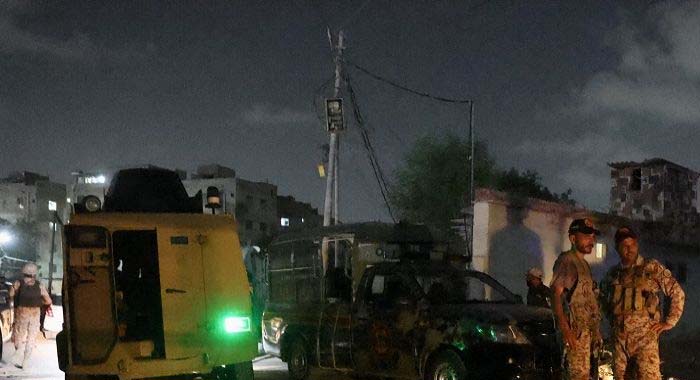
The recent attack on the Sindh Rangers facility in Karachi has raised important questions regarding potential security gaps and the effectiveness of existing intelligence networks. Karachi, located hundreds of kilometres away from Pakistan’s western borders and separated by multiple provinces, has a multilayered security structure involving provincial police, Counter-Terrorism Departments (CTDs), intelligence agencies, Rangers, and other security institutions. Any failure to detect or intercept attackers before a high-profile assault requires a thorough review of existing security arrangements.
If claims regarding the involvement of foreign-based attackers are accurate, questions must also be examined regarding how such individuals were able to enter, move, organize, and execute an attack despite extensive security networks. Accountability for security lapses, where established through investigations, remains essential to prevent similar incidents in the future.
While Pakistan faces security challenges from terrorist networks operating from sanctuaries outside the country, including across the western borders, it is also a reality that a significant number of individuals involved in these organizations are Pakistani citizens who have been influenced by extremist ideologies. Therefore, an effective response requires not only border security measures but also a comprehensive national policy addressing terrorism financing, radicalization, recruitment networks, and extremist narratives.
Pakistan has carried out multiple cross-border operations and air strikes against terrorist targets since 2022; however, the continued occurrence of terrorist attacks demonstrates that military actions alone cannot provide a complete solution. A sustainable counter-terrorism strategy requires a combination of intelligence-based operations, law enforcement reforms, prevention initiatives, and efforts to counter extremist ideologies within society.
Security experts have also drawn attention to the activities of Jamaat-ul-Ahrar, a faction known for conducting high-impact attacks in Pakistan. The group has historically been associated with major terrorist incidents targeting public places and security installations. Following internal differences within the Tehreek-e-Taliban Pakistan (TTP), Jamaat-ul-Ahrar reportedly resumed more independent activities and has sought to establish itself as a separate force within militant circles.
The group’s history includes several high-profile attacks, including attacks targeting civilian locations and public gatherings. Security assessments indicate that organizations such as Jamaat-ul-Ahrar often attempt to use major attacks as a means of demonstrating operational capability, attracting recruits, and challenging rival factions.
Reports suggest that internal disputes between terrorist factions, leadership disagreements, and competition for influence have contributed to the emergence of new operational strategies. Such divisions, however, do not reduce the threat posed by these groups; rather, they can create unpredictable security challenges as factions attempt to prove their relevance through high-impact attacks.
Security institutions must remain particularly vigilant against attempts by terrorist groups to target major cities, commercial centres, public spaces, and strategic installations. Past incidents demonstrate that such organizations have repeatedly sought maximum-impact attacks designed to create fear, gain publicity, and undermine public confidence.
The evolving nature of terrorism requires continuous assessment of security policies, improved coordination among institutions, and proactive measures to prevent attacks before they occur. Intelligence-sharing mechanisms, urban security frameworks, and counter-extremism initiatives must remain central components of Pakistan’s national security strategy.
Pakistan’s long-term success against terrorism will depend on a comprehensive approach that combines effective border management, decisive action against terrorist networks, accountability for security shortcomings, and sustained efforts to address the factors that allow extremist ideologies to spread.
A coordinated national response, supported by strong institutions and adaptable policies, remains essential to defeating terrorism and ensuring lasting peace and stability across the country.



