
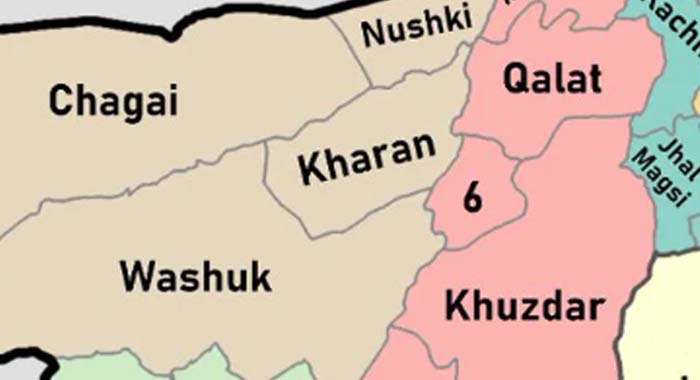
The brutal killing of five innocent laborers from Punjab in Mashkail, District Washuk, near Pakistan’s border with Iran, is yet another tragic reminder of the devastating human cost of terrorism. The victims, who had traveled hundreds of kilometers in search of honest employment to support their families, were mercilessly gunned down by unidentified armed assailants while at a local shop.
This was not merely another incident of targeted violence. It was a deliberate attack on defenseless civilians whose only aspiration was to earn a livelihood with dignity. Their deaths represent a profound assault on humanity itself and underscore the urgent need for a united stand against terrorism in all its forms.
Across Pakistan, thousands of laborers leave their homes every year in pursuit of employment, carrying with them the hopes of their families. They work under difficult conditions to provide food, education, healthcare, and a better future for their loved ones. To target such individuals solely because they are perceived as “non-local” is an act that cannot be justified under any political, ideological, or ethnic narrative.
No cause gains legitimacy through the murder of innocent civilians.
For years, Balochistan has faced a complex security environment marked by insurgency, terrorism, and socio-economic challenges. The banned Baloch Liberation Army (BLA) has claimed responsibility for numerous attacks targeting security personnel, public infrastructure, development initiatives, and civilians. The group portrays its actions as resistance against alleged exploitation. However, the deliberate targeting of unarmed workers and ordinary citizens fundamentally contradicts any claim of representing justice or liberation.
Killing laborers does not weaken a state, nor does it advance any political objective. Instead, such acts deepen the suffering of local communities, discourage domestic and foreign investment, hinder economic development, damage tourism, and create an atmosphere of fear that disproportionately affects the people of Balochistan themselves.
The true victims of this violence are not governments alone they are ordinary Pakistanis. Every terrorist attack leaves behind grieving parents, widowed spouses, orphaned children, and families whose lives are permanently shattered. The consequences extend far beyond the immediate tragedy, undermining social cohesion and delaying the region’s prospects for sustainable peace and prosperity.
The recent surge in terrorist violence has prompted intensified counterterrorism operations by Pakistan’s security forces. Following major attacks in July, security operations have continued with the stated objective of dismantling terrorist infrastructure, disrupting militant networks, and restoring stability across affected areas. These efforts reflect the state’s commitment to protecting citizens and maintaining public security.
At the same time, lasting peace cannot be achieved through security measures alone. Sustainable stability requires economic opportunity, improved governance, inclusive development, education, infrastructure, and meaningful dialogue that addresses the legitimate aspirations of the people of Balochistan within the framework of the Constitution and the rule of law.
It is equally important to reject narratives that attempt to romanticize or justify violence against civilians. The deliberate killing of innocent workers, travelers, and other non-combatants constitutes terrorism. Such acts violate the most fundamental principles of humanity and international norms, regardless of the perpetrators’ stated political objectives.
No movement can claim moral authority while shedding the blood of innocent people. Violence against civilians neither advances freedom nor secures justice; it only perpetuates cycles of fear, instability, and suffering.
The people of Balochistan deserve a future defined not by gunfire, but by opportunity; not by fear, but by hope; not by division, but by unity and progress. Their aspirations can only be realized through peace, dialogue, development, and the rule of law not through terrorism and bloodshed.
The tragic loss of these five laborers should serve as a solemn reminder that terrorism has no ethnicity, no morality, and no justification. Their sacrifice must strengthen the collective resolve of all stakeholders to reject extremism, protect innocent lives, and work together toward a peaceful, prosperous, and inclusive Balochistan.



