
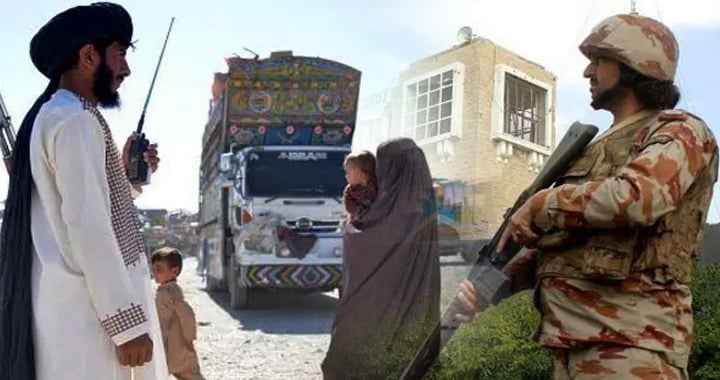
The security situation in Pakistan’s Khyber Pakhtunkhwa and Balochistan cannot be fully understood without examining the evolving dynamics between Pakistan and the Afghan Taliban administration. What was once expected to be a phase of improved border stability and enhanced cooperation after 2021 has instead developed into a complex and increasingly strained relationship shaped by mutual security concerns, cross-border militancy, and diverging strategic priorities.
The latest terrorist incidents in Khyber Pakhtunkhwa, including the quadcopter attack in Bannu that injured civilians, once again highlight a broader concern repeatedly raised by Pakistan: the continued presence and operational freedom of terrorist groups operating from Afghan territory. While the Afghan Taliban maintain that they do not allow their soil to be used against any country, Pakistan’s security experience over the past several years has pointed to persistent cross-border infiltration and the regrouping of terrorist networks along the porous frontier.
At the heart of this friction lies the challenge posed by terrorist organizations that exploit difficult terrain and limited border enforcement capacity. Groups such as those operating in southern KP have demonstrated the ability to move across border regions, establish temporary sanctuaries, and return to carry out attacks inside Pakistan. This fluidity has made traditional border management insufficient on its own, pushing both countries into a cycle of accusations, diplomatic engagement, and intermittent security operations.
Pakistan’s position has consistently emphasized the need for verifiable action against terrorist groups operating from Afghan soil. This includes dismantling training camps, restricting cross-border movement of fighters, and preventing the use of Afghan territory for planning and coordination. On the other hand, the Afghan Taliban government has often framed its approach as one of internal sovereignty and control, insisting that Afghanistan itself is also dealing with its own internal security pressures, particularly from groups like ISIS-K.
This divergence in perspective has created a persistent trust deficit. While diplomatic channels remain open, and engagement continues at multiple levels, the security relationship has not stabilized in the way many had anticipated in the immediate post-2021 period. Instead, incidents along the border and within Pakistani territory have reinforced a perception in Islamabad that the security challenge is transnational in nature and cannot be addressed through domestic measures alone.
Complicating the situation further is the humanitarian and economic crisis within Afghanistan itself. Economic contraction, reduced international aid, limited recognition, and internal governance challenges have created an environment where the Afghan state is heavily focused on internal consolidation. This inward focus limits its capacity and, at times, its willingness to prioritize cross-border security cooperation at the level demanded by Pakistan’s security concerns.
At the same time, Afghanistan faces its own internal security threats, particularly from ISIS-K, which continues to carry out attacks within Afghan territory. This dual pressure creates a complex security environment in which multiple actors operate simultaneously, often with overlapping and competing objectives. For Pakistan, this complexity translates into heightened border insecurity and unpredictable threat vectors, particularly in adjacent districts of Khyber Pakhtunkhwa and Balochistan.
Despite these challenges, diplomatic engagement has not broken down. Both sides continue to maintain communication channels, and border management mechanisms remain in place. However, these mechanisms are frequently tested by incidents on the ground, especially when terrorist attacks inside Pakistan are linked, directly or indirectly, to cross-border networks.
The broader regional context also plays a role. Neighboring countries, including China, Iran, and Central Asian states, have a shared interest in preventing instability from spilling over. Afghanistan’s geographic position makes it a critical node in regional connectivity projects, but sustained insecurity undermines its potential role as a transit and trade hub. This creates additional pressure on all stakeholders to seek some form of stability, even amid political and security disagreements.
Ultimately, Pakistan–Afghan Taliban relations are defined today by a paradox. On one hand, there is a shared interest in stability, economic connectivity, and regional integration. On the other, there is a persistent security gap defined by mistrust, differing threat perceptions, and the continued activity of terrorist networks operating across porous borders.
The outcome of this evolving relationship will continue to have direct implications for Pakistan’s internal security, particularly in Khyber Pakhtunkhwa and Balochistan. As long as cross-border militancy remains unresolved, incidents like the Bannu attack will continue to reflect not only local security challenges but also the broader regional security equation that links both sides of the Durand Line.



