(Aqeel Yousafzai)
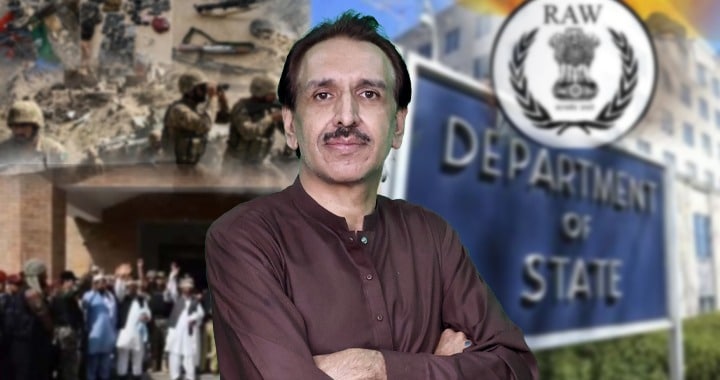
In the unfolding landscape of South Asian geopolitics, a new and deeply consequential narrative is taking shape one that revolves around an alleged and increasingly discussed security nexus between India and Afghanistan, viewed in certain strategic circles as being directed against Pakistan. Whether interpreted as emerging reality, intelligence assessment, or media amplification, this perception has now firmly entered the regional security discourse and is influencing how key actors interpret each other’s intentions.
What makes this development particularly significant is not just the claim itself, but the timing and context in which it is being discussed. Pakistan, Afghanistan, and India are already locked in a complex web of historical grievances, border disputes, insurgencies, and competing regional ambitions. Within this environment, even the perception of alignment between two states against a third has the potential to reshape strategic calculations and escalate tensions.
The argument being advanced in recent high-level discussions is that this nexus is not something that is merely forming in theory or speculation. Instead, it is presented as something that already exists in practical terms, albeit in layered and indirect forms. According to this interpretation, Pakistan has repeatedly raised concerns that Afghan territory has been used, in different phases of regional instability, for activities that undermine its internal security. In the same breath, it is suggested that India’s regional posture and Afghanistan’s evolving political dynamics have, over time, begun to intersect in ways that create a shared strategic convergence, particularly against Pakistan’s security establishment.
This interpretation further argues that the relationship between India and Afghanistan did not suddenly appear in its current form but evolved gradually through different phases of engagement and influence. In earlier periods, it is said to have been indirect and largely diplomatic, shaped by regional politics and external alignments. However, as the regional environment shifted—particularly after major geopolitical changes in the Middle East and South Asia—the interaction between these actors is described as becoming more politically charged and strategically defined. Within this broader framing, Pakistan is seen not only as a neighboring state but as a central reference point in the strategic calculations of multiple regional players.
Adding another layer of complexity to this discourse is the suggestion that broader international developments, particularly in the Middle East, are indirectly influencing South Asian alignments. It is argued that Pakistan’s diplomatic and strategic positioning during recent regional crises has brought it into sharper focus among global powers. In this context, countries such as Israel are mentioned in analytical commentary as part of a wider competitive geopolitical environment where regional narratives overlap and sometimes clash. While such interpretations remain contested, they reflect the increasingly interconnected nature of global and regional security dynamics, where events in one theater often reverberate across multiple others.
A particularly important moment in this evolving narrative was a recent high-level press briefing that triggered significant attention in both Pakistani and Indian media. The briefing touched on sensitive issues of regional security, including tensions between India and Pakistan, concerns related to water resources, and broader questions of military preparedness and deterrence. The tone of the briefing, as described in political and journalistic circles, was unusually assertive and direct, especially on the issue of water security.
Water, in fact, has emerged as one of the most sensitive and potentially dangerous flashpoints in the India–Pakistan relationship. The assertion that any attempt to disrupt or restrict water flows to Pakistan would be treated as an act of war reflects the gravity with which this issue is now being viewed. In strategic terms, water is no longer being discussed merely as a treaty obligation or a technical matter of resource sharing. Instead, it is increasingly being framed as a core national security concern, capable of triggering severe escalation if mismanaged.
Alongside this, references have been made to what Indian commentary has described as ongoing operational activities or strategic posturing, sometimes referred to in media narratives as “Operation Sindoor.” While details remain disputed and often filtered through competing media lenses, the broader implication is clear: both India and Pakistan are engaged in continuous strategic signaling, where military readiness, intelligence assertions, and media narratives all contribute to shaping perceptions of strength and resolve.
From the Pakistani perspective presented in these discussions, there is a strong emphasis on preparedness, deterrence, and confidence in defensive capability. It is argued that Pakistan remains fully capable of responding to any escalation, particularly in scenarios involving critical national resources or territorial integrity. At the same time, there is skepticism about how certain narratives are constructed in regional media, with claims that information warfare plays a significant role in shaping public perception on both sides of the border.
One of the most alarming dimensions of the current discourse is the repeated reference to water as a potential trigger for armed conflict. The language used in these discussions suggests that any attempt to weaponize water flows would fundamentally alter the nature of India–Pakistan relations. Historically, even during periods of full-scale war, water-sharing mechanisms under existing frameworks have largely remained intact. However, the current rhetoric suggests that this long-standing stability may no longer be guaranteed, which introduces a new and highly dangerous variable into regional security equations.
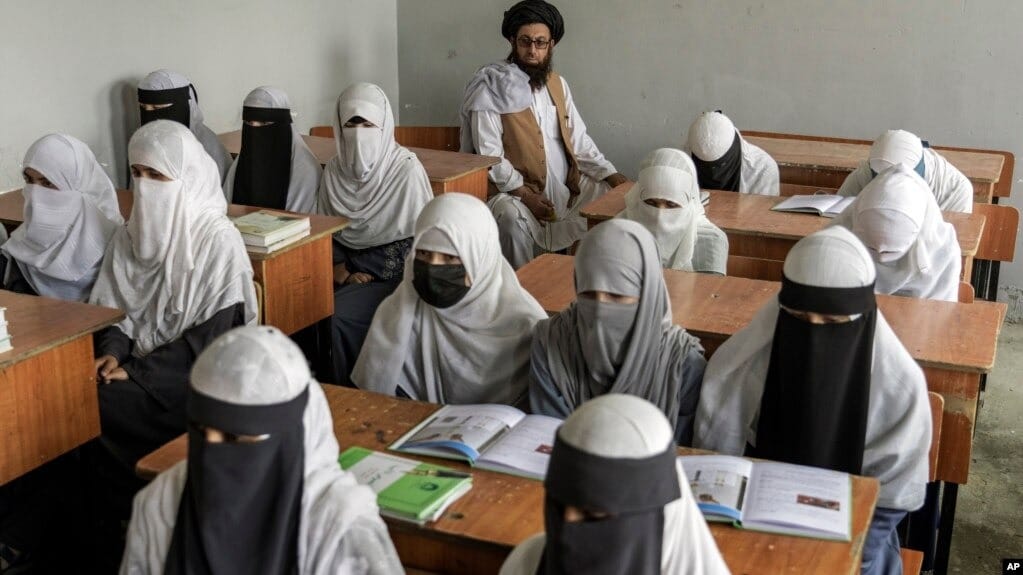
At the same time, Afghanistan remains central to this evolving security picture. The country is described not only as a neighboring state but as a critical geopolitical space whose internal stability has direct consequences for Pakistan’s western frontier. Concerns are raised about governance priorities, internal policy directions, and social control mechanisms within Afghanistan, with the argument that these internal dynamics have external security implications. From Pakistan’s security standpoint, instability or fragmentation within Afghanistan is seen as directly linked to the risk of increased militant activity across the border.
This concern becomes even more pronounced when viewed in the context of non-state armed groups operating in the region. The continued presence of militant organizations, including the TTP and other affiliated networks, is presented as a persistent challenge that complicates border security. The argument is that these groups exploit porous borders, difficult terrain, and shifting political landscapes to maintain operational capacity, thereby creating an ongoing security burden for Pakistan’s counter-terrorism framework.
In parallel, there is also a discussion around the technological dimension of modern conflict, particularly the use of drones. Contrary to widespread assumptions of highly advanced externally supplied systems, it is argued in some security commentary that drone technology in the region is often far more locally adaptable and accessible than commonly believed. The suggestion is that relatively simple materials and local expertise can be used to construct effective systems, challenging the perception that such capabilities are exclusively the domain of major global powers.
At the same time, it is acknowledged that Pakistan possesses significant technological and military capabilities in this domain, with systems that are reportedly operational in multiple contexts. However, what becomes clear is that drone warfare in South Asia is not just about technology but also about perception, narrative, and psychological impact, where media representation often amplifies or distorts actual battlefield realities.
This leads directly into the broader issue of media warfare, which has become one of the defining features of contemporary geopolitics in the region. Competing narratives across Indian, Pakistani, Western, Arab, and other international media outlets contribute to a fragmented information environment where the same event can be interpreted in entirely different ways. In such a context, truth becomes layered, and public perception is shaped as much by framing as by facts. The result is a form of informational contestation where media itself becomes an extension of strategic competition.
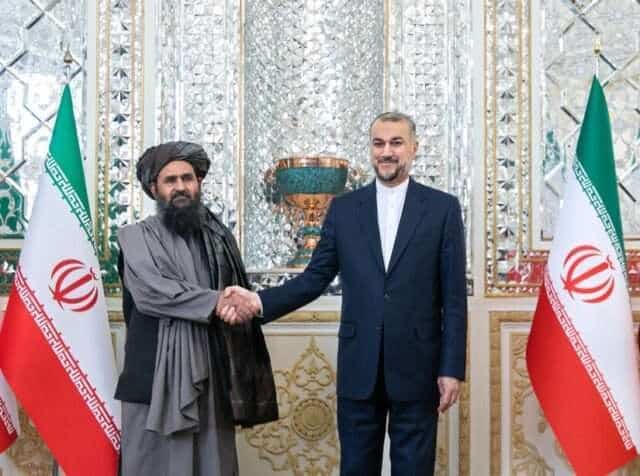
Amid this environment of tension and competing narratives, Pakistan’s evolving diplomatic engagement with Iran is presented as a stabilizing and strategically significant development. Increased high-level interactions, improved diplomatic communication, and emerging alignment on regional security issues suggest a potential shift in regional dynamics. This re-engagement is viewed as particularly important in the context of counter-terrorism cooperation, border stability, and large-scale regional infrastructure projects that involve multiple neighboring states.
Taken together, these developments point toward a region that is undergoing profound strategic transformation. South Asia is no longer operating in isolation but is deeply embedded within a broader geopolitical environment that includes the Middle East, Central Asia, and global power rivalries. The India–Afghanistan–Pakistan triangle, whether fully formalized or still evolving in perception, reflects a deeper reality: that regional security is increasingly interconnected, fragile, and subject to rapid shifts.
In such a landscape, perception itself becomes a form of power. The way alliances are interpreted, the way threats are framed, and the way narratives are constructed can influence policy decisions as much as actual military capabilities. This makes the current phase not only a moment of geopolitical tension but also one of narrative contestation, where the future of regional stability will depend as much on diplomacy and communication as on traditional security measures.