
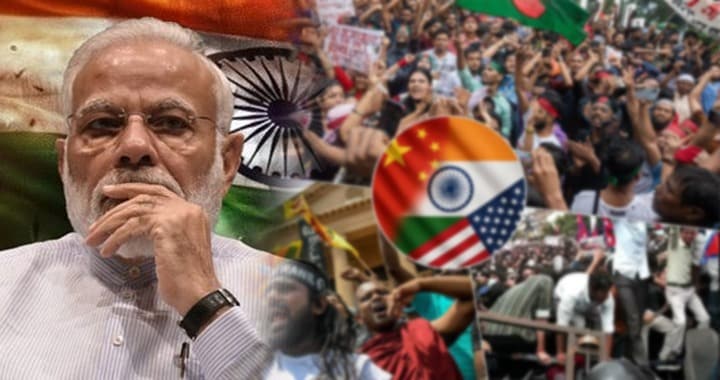
India is attempting to divert attention from its mounting internal political and social challenges by fueling instability across the region, particularly against Pakistan, senior Pakistani security officials have alleged, describing the strategy as part of a broader effort to shift focus away from growing domestic fault lines.
The assessment was shared during a high-level interaction between a senior security official and media influencers, where the regional security environment, with particular emphasis on India’s policies towards Pakistan, was discussed in detail.
According to security officials, the Indian leadership continues to ignore ground realities while pursuing an expansionist agenda rooted in the Hindutva ideology. They argued that rising religious extremism, growing intolerance, and deepening societal divisions have undermined India’s internal stability, despite official attempts to portray the country as a rising global power.
The officials further alleged that the Hindutva ideology has eroded India’s secular identity and increasingly influenced state institutions, including the military. They claimed that the narrative of a “Shining India” no longer reflects conditions on the ground, citing widening communal divisions and political polarization.
Describing India as an increasingly restrictive state, the officials alleged that freedom of expression and independent journalism remain under extensive state control. They also warned of what they called a growing risk of large-scale violence driven by rising communal tensions, arguing that the international community should not ignore developments inside the country.
The officials further claimed that religious minorities, particularly Muslims, face systematic discrimination and persecution under the prevailing ideological climate. They alleged that the treatment of minorities has deepened social divisions and warned that continued marginalization could have serious long-term consequences for India’s internal cohesion.
Discussing Indian Illegally Occupied Jammu and Kashmir, the officials described the territory as one of the world’s most heavily militarized regions, alleging that civilians continue to live under an extensive military presence. They further claimed that India frequently attempts to attribute internal security challenges to Pakistan through what they described as false flag narratives intended to divert international attention from indigenous resistance movements.
The officials also maintained that India’s strategic establishment views a stable, prosperous, and moderate Pakistan as a challenge to its regional ambitions. They alleged that sections of the Indian political leadership and media continue to promote narratives against Pakistan and its armed forces as part of a sustained information campaign.
The briefing also included allegations that the senior leadership of the banned Joint Awami Action Committee is acting in line with what the officials described as an Indian agenda. Indian authorities have not responded to the allegations raised during the briefing.



