
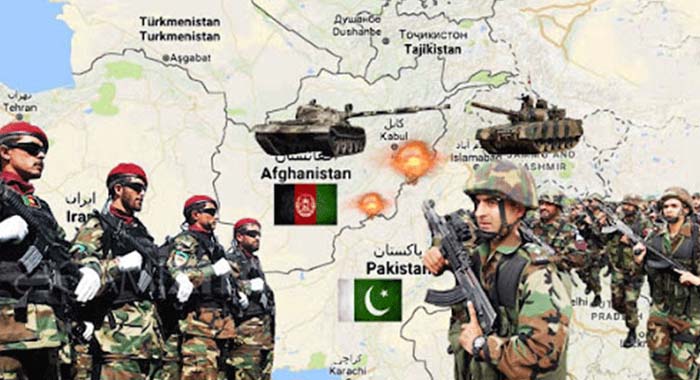
A newly released strategic assessment has concluded that the continued use of Afghan territory by anti-Pakistan terrorist organizations and proxy networks poses a growing threat not only to Pakistan’s national security but also to the long-term strategic, economic, and geopolitical interests of the United States across South and Central Asia.
The report underscores that if these evolving security challenges are not addressed through coordinated international action, the region could witness an accelerated expansion of China’s strategic influence, while Western economic engagement, regional connectivity initiatives, and global counterterrorism efforts may suffer significant setbacks.
According to the assessment, Pakistan’s western provinces particularly Balochistan are home to some of the world’s most valuable untapped reserves of copper, gold, and critical minerals that are increasingly essential for advanced technologies, renewable energy industries, and global supply chains. The report highlights the Reko Diq mining project as one of the largest known mineral deposits globally, containing billions of tons of valuable mineral resources.
However, persistent terrorist violence and instability continue to discourage Western investors from participating in these strategic projects, limiting future commercial opportunities for American and allied companies while creating space for competing geopolitical actors to expand their economic footprint.
The report further notes that Central Asian states are actively seeking alternative trade corridors to reduce their dependence on traditional northern routes and diversify access to global markets. Pakistan, owing to its strategic geographic location and access to the Arabian Sea, represents the most natural gateway for regional trade and economic integration.
Nevertheless, ongoing instability in Afghanistan and cross-border terrorist activities targeting Pakistan continue to delay major infrastructure projects, disrupt regional connectivity initiatives, and undermine the development of vital trade corridors that could facilitate greater economic integration between Central Asia, South Asia, and international markets.
The assessment warns that Pakistan’s increasing security requirements have created opportunities for China to deepen its strategic engagement by expanding security cooperation, intelligence collaboration, surveillance technologies, and the protection of critical infrastructure projects. As a result, the report argues, the gradual reduction of American strategic engagement has enabled Beijing to fill an increasingly significant security and geopolitical vacuum across the region.
Reflecting on the broader counterterrorism landscape, the report notes that despite two decades of extensive U.S.-led military and counterterrorism operations in Afghanistan, numerous extremist organizations continue to operate from Afghan territory. These groups, it argues, not only undermine Pakistan’s security but also pose wider regional and potentially transnational threats capable of affecting international stability.
The report emphasizes that sustained terrorist attacks against Pakistan weaken one of Washington’s important regional partners and diminish broader international efforts aimed at combating violent extremism.
Additionally, the report cautions that attempts to destabilize Pakistan and target strategic development initiatives, including the China-Pakistan Economic Corridor (CPEC), ultimately jeopardize broader international interests extending beyond China alone. While regional competitors may perceive instability in western Pakistan as serving certain short-term strategic objectives, the report argues that such instability simultaneously discourages Western investment, disrupts regional trade, weakens critical mineral supply chains, and limits future U.S. economic opportunities.
To address these challenges, the report recommends that the United States revive an effective intelligence-sharing framework with Pakistan similar to the mechanisms developed during previous counterterrorism cooperation. It further encourages Washington to consider supporting Pakistan through enhanced surveillance capabilities, advanced unmanned aerial systems, Black Hawk helicopters, signals intelligence platforms, secure communications monitoring technologies, and artificial intelligence-enabled intelligence systems to strengthen Pakistan’s capacity to detect, prevent, and respond to evolving terrorist threats.
The report also stresses that durable regional peace requires ensuring that Afghan territory is not used by any terrorist organization or proxy group against neighboring countries. It calls upon the United States and the broader international community to increase diplomatic engagement with the Taliban authorities, urging them to eliminate terrorist safe havens, dismantle extremist infrastructure, prevent militant groups from operating freely, and demonstrate measurable cooperation in regional counterterrorism efforts.
Furthermore, the assessment highlights that many extremist organizations continue to benefit from financial, political, and propaganda support networks operating abroad. It therefore recommends enhanced cooperation among the United States, European partners, the United Kingdom, and other allies to disrupt terrorist financing, counter extremist propaganda, prevent the misuse of political platforms, and address the exploitation of asylum and refugee systems by individuals linked to violent extremist organizations.
Concluding its analysis, the report states that Pakistan’s stability represents not merely a national concern but a significant strategic interest for the United States. Persistent proxy warfare and terrorism targeting Pakistan’s western regions threaten regional peace, undermine economic integration, restrict access to critical mineral resources, weaken connectivity with Central Asia, complicate international counterterrorism efforts, and affect the broader strategic balance in an increasingly competitive geopolitical environment.
The report concludes that strengthening bilateral security cooperation with Pakistan, preventing the use of Afghan territory for proxy warfare, and dismantling transnational support networks that enable terrorist organizations would significantly advance long-term U.S. strategic objectives while contributing to regional peace, stability, and sustainable economic development.



