
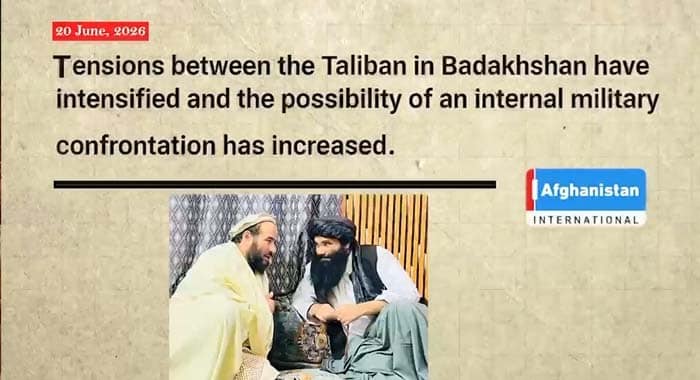
A significant internal dispute has reportedly emerged within the ranks of the Afghan Taliban regime, escalating into what analysts describe as one of the most serious challenges to the group’s internal cohesion since returning to power.
According to multiple Afghan media reports, growing tensions over control and distribution of mineral resources in Afghanistan’s northeastern province of Badakhshan have triggered a major confrontation between the Taliban leadership and a prominent local commander, Juma Khan Fateh.
The dispute, centered on the management and allocation of valuable mineral assets in the region, has reportedly evolved into a broader military and political crisis, exposing divisions within the Taliban’s command structure.
Reports indicate that Taliban Supreme Leader Mullah Hibatullah Akhundzada has declared Commander Juma Khan Fateh a rebel and ordered military action against him.
According to Afghan media sources, a large contingent of Taliban special forces has been deployed toward Shighnan District in Badakhshan with the objective of apprehending the commander. The reported deployment includes approximately 50 military vehicles, including Humvees and transport trucks, signaling the seriousness with which the Taliban leadership is treating the situation.
The mobilization of such a sizable force reflects growing concerns within the regime regarding potential dissent and challenges to central authority.
Badakhshan, known for its significant mineral wealth, has increasingly become a focal point of competition among various factions. Reports suggest that disagreements over control of mining operations and resource revenues have intensified friction between local commanders and the Taliban’s central leadership.
Observers note that resource-related disputes have historically played a significant role in shaping power dynamics within Afghanistan, particularly in remote provinces where local commanders maintain substantial influence.
According to Afghan media reports, Commander Juma Khan Fateh has allegedly instructed local supporters to take control of mining areas and resist Taliban authority. Intelligence assessments cited in various reports further suggest that preparations for organized military resistance against the Taliban regime may already be underway.
Commander Juma Khan Fateh has reportedly claimed that thousands of fighters are prepared to support resistance efforts, including approximately 10,000 fighters across Badakhshan Province and 2,500 fighters in Nasi District. These claims have not been independently verified.
Defense and security analysts believe that increasing resistance from dissatisfied commanders could pose a serious challenge to the Taliban’s internal unity and governance structure. Experts argue that if tensions continue to escalate, Afghanistan could witness renewed instability, particularly in regions where local commanders possess strong tribal, ethnic, or economic influence.
The situation has also highlighted broader concerns regarding governance, resource distribution, and the relationship between Kabul’s central authorities and regional power centers. Political observers suggest that emerging armed opposition from within Taliban ranks may indicate weakening cohesion within the regime’s command structure. They argue that growing dissatisfaction among local commanders, combined with disputes over resources and authority, could contribute to deeper internal divisions and increase the risk of prolonged unrest.
Analysts further note that developments in Badakhshan may serve as an important indicator of the Taliban regime’s ability to maintain internal discipline and manage competing interests among its various factions.
Given Badakhshan’s strategic location and economic significance, any prolonged confrontation between Taliban forces and local commanders could have broader implications for Afghanistan’s security environment. Observers are closely monitoring developments amid concerns that escalating internal disputes could further complicate efforts to maintain stability and governance across the country.



