
In conflict zones, the most revealing measure of violence is not always found in official statistics or operational reports. It is found in the lives of ordinary people, the Civilians who never chose to be part of the conflict, yet repeatedly find themselves inside its consequences.
Recent incidents in Balochistan and adjacent regions once again highlight this reality with painful clarity.
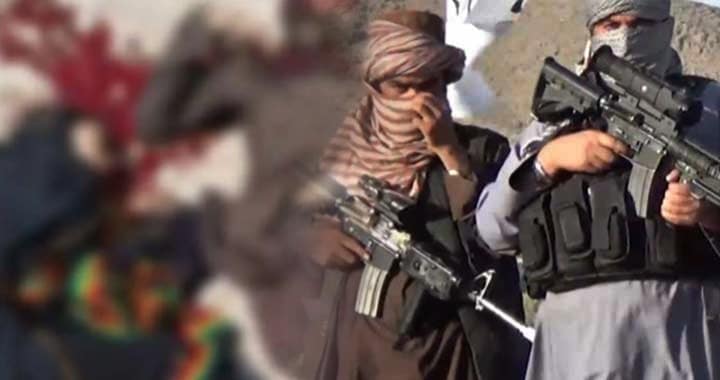
The killing of a young couple, Shah Zb and Zainab, during an armed attack allegedly linked to the banned Balochistan Liberation Army, has drawn attention to the continuing vulnerability of civilian households in volatile areas.
According to available accounts, armed individuals stormed a residential home during the night, allegedly attempting to abduct Zainab. In the confrontation that followed, her husband, Shah Zeb, reportedly resisted the attackers in an effort to protect his family.
He was subsequently shot, and both he and his wife were killed inside their home.
Beyond the immediate tragedy, the incident reflects a broader and recurring pattern in parts of Balochistan where civilian spaces are no longer insulated from armed violence.
Homes, markets, roads, and villages have, at different times, been exposed to attacks carried out by extremist elements operating in the region.
Each such incident reshapes local perceptions of security in ways that extend far beyond the immediate victims.
When Conflict Moves Into the Home
The most consequential shift in any insurgency is not always territorial. It is psychological.
When violence moves from remote areas or isolated encounters into domestic spaces, the sense of personal security begins to erode at its most fundamental level.
In the case of Shah Zeb and Zainab, the reported attack inside a private residence illustrates this shift in stark terms.
For local communities, such incidents are not interpreted through abstract political frameworks.
They are understood through lived experience: families, homes, and daily routines disrupted by sudden violence.
Observers note that this is one of the most damaging aspects of prolonged insecurity.
It alters how communities perceive both risk and stability.
A similar pattern was observed in Hassan Khel, where a reported attack on a police checkpoint and civilian residence caused damage to property, including a home where religious texts were also affected.
While operational narratives differ, the impact on civilians remains consistent: fear, disruption, and loss of a sense of safety.
These incidents collectively reinforce a critical point.
In environments affected by long-term violence, civilians often bear consequences that are disproportionate to their role in the conflict itself.
This reality is not unique to Balochistan, but it is particularly pronounced in areas where terrorist organizations operate in proximity to civilian populations.
Security analysts emphasize that such attacks also influence public attitudes over time.
While armed groups may attempt to justify their actions through political or ideological narratives, repeated harm to civilians tends to weaken such claims in the eyes of local populations.
The distinction between stated objectives and actual impact becomes increasingly difficult to reconcile.
Families affected by violence often do not engage with ideological debates.
Their focus remains on loss, survival, and the disruption of normal life.
In Balochistan, where decades of instability have already placed pressure on development, infrastructure, and social cohesion, the continued targeting of civilians adds another layer of complexity to an already fragile environment.
The human cost is not limited to fatalities.
It extends to displacement, psychological trauma, economic disruption, and the gradual erosion of trust in the possibility of normalcy.
Each incident contributes to a cumulative effect that is felt across communities, even those not directly affected.
Security forces and law enforcement agencies continue to respond through intelligence-based operations and targeted actions against armed groups.
However, officials and analysts alike acknowledge that preventing civilian harm remains one of the most difficult challenges in asymmetric conflict environments.
Terrorist tactics that involve blending into civilian areas, using residential cover, or operating in proximity to populated zones complicate response efforts and increase risks for non-combatants.
This reality underscores the importance of intelligence gathering, preventive operations, and community cooperation in reducing threats before they reach civilian spaces.
At the same time, the broader question remains how to ensure that civilians are not drawn into the center of conflicts they did not initiate and cannot control.
The deaths of Shah zeb and Zainab, as reported, serve as a reminder of what is ultimately at stake in such environments.
Beyond strategic assessments and operational narratives, there are individuals, families, and communities whose lives are directly shaped by the trajectory of violence.
Their experiences form the most tangible measure of the conflict’s impact.
As Balochistan continues to face security challenges, observers stress that protecting civilian life must remain the central priority of any counterterrorism framework.
Without that focus, the human cost of violence risks becoming normalized, even as it continues to accumulate quietly in the background of broader security developments.



