
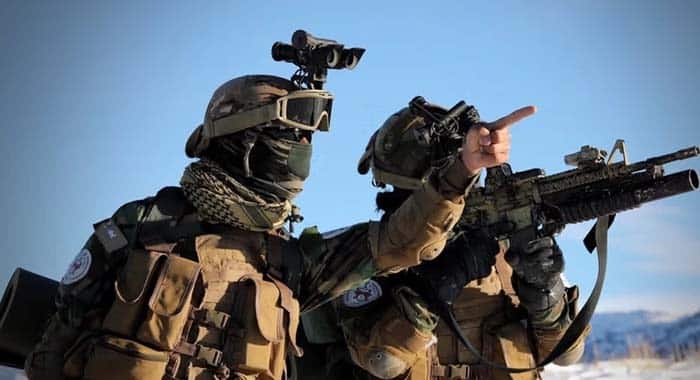
The reported formation of an 8,000-member special force by the Taliban, known as the “Hibati Unit,” has raised serious questions regarding Afghanistan’s evolving security landscape, the expansion of militant infrastructure, and the potential consequences for neighbouring countries.
According to two sources within the Taliban’s Ministry of Defence who spoke to Afghanistan International, the establishment of the new force is currently underway on the orders of Taliban leader Hibatullah Akhundzada. The unit is reportedly being developed as an elite formation with direct links to the Taliban leadership and is expected to function outside the existing structures of the Taliban’s ministries of defence and interior.
Sources claim that the new force will be responsible for securing Afghanistan’s border areas, particularly along the Pakistan frontier, while also conducting operations against the Islamic State Khorasan Province (ISKP/ISIS-K). However, the reported mission has raised questions among security observers regarding the Taliban’s ability and willingness to confront groups that have previously operated in Afghanistan’s complex militant environment.
The emergence of a new specialised force comes amid continued concerns over the presence of extremist networks inside Afghanistan. Critics argue that the Taliban’s own historical links with various militant factions and the existence of overlapping militant networks create uncertainty over how effectively the new unit can distinguish between rival groups and genuine security threats.
Sources further claim that the Hibati Unit will operate under the direct authority of Hibatullah Akhundzada, limiting the influence of other Taliban institutions over its activities. While existing Taliban border posts are expected to remain operational, final authority over border-related matters would reportedly shift towards the new formation.
According to information received to Afghanistan International, approximately 4,000 personnel of the force are currently positioned in Zhari district of Kandahar, where recruitment and registration activities are underway, while another 4,000 personnel are reportedly being organised in Kabul.
The reported structure of the unit suggests a move toward creating a more powerful and independent security apparatus within the Taliban system. Members of the force are expected to receive higher salaries, greater privileges, and advanced training compared to regular Taliban fighters, with recruitment reportedly beginning at officer level rather than conventional ranks but in reality it is not just more than a terror networks.
The unit is also expected to receive advanced military capabilities, including modern weapons, night-vision equipment, military vehicles, helicopters, and surveillance drones. Training reportedly includes border security operations, anti-smuggling activities, and the use of advanced surveillance technology, with the help of Russia.
The reported involvement of Russia in supporting the formation has added another layer of controversy. Sources claim that Moscow is providing funding, training, and military equipment for the force, although these claims have not been officially confirmed.
The reported Russian assistance has drawn attention due to previous statements from Russian officials describing Afghanistan as a security concern and a potential source of terrorist threats. Observers question how cooperation with a Taliban-led security structure aligns with those concerns, particularly as regional countries remain worried about militant groups operating from Afghan territory.
The Taliban’s reported commitment to countering ISKP has also faced scrutiny. Security analysts point to the complicated relationship between militant factions operating in Afghanistan and question whether the creation of a new force represents a genuine counterterrorism effort or a broader expansion of Taliban-controlled armed structures.
The development comes at a time when relations between the Taliban and Pakistan have remained tense, with border security, militant activity, and accusations of cross-border threats continuing to strain ties.
Regional security experts warn that the creation of a heavily equipped force operating directly under Taliban leadership could have wider implications for Afghanistan’s neighbours, potentially affecting border stability, militant movements, and the overall security environment across South and Central Asia.
The formation of the Hibati Unit, if confirmed, may represent another significant step in the Taliban’s consolidation of military power and the expansion of its security architecture a development that neighbouring countries are likely to monitor closely.



