
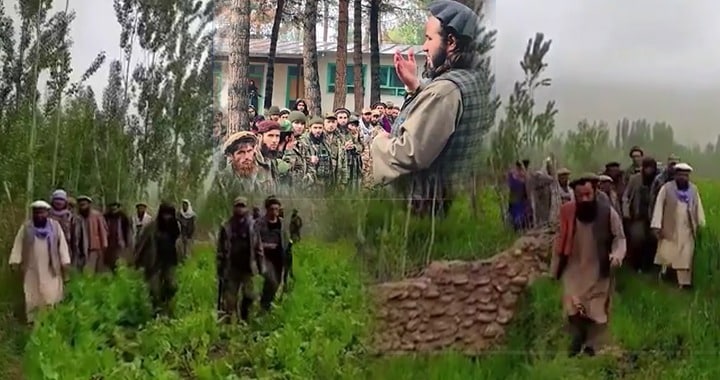
Reports emerging from Afghanistan’s northern Badakhshan province indicate rising tensions over control of gold mining sites, exposing deepening friction between Taliban authorities and locally entrenched armed networks competing over mineral revenues.
According to multiple local and media reports, disagreements have intensified between elements of the Taliban administration and an armed group commonly referred to as the “Juma Khan Fateh” network. The dispute is reportedly centered on access, taxation, and operational control of gold-rich mining zones that have long been a source of informal revenue and parallel authority structures in the region.
Sources familiar with the situation describe the “Juma Khan Fateh” group as a locally embedded armed formation operating across parts of Badakhshan, with influence over mining corridors and surrounding rural terrain. The group is alleged to maintain leverage through armed presence and informal agreements with local actors, particularly in areas where state enforcement remains limited or contested.
The latest escalation appears to stem from renewed efforts by Taliban authorities to assert centralized control over mineral extraction sites in northern Afghanistan. These efforts, according to reports, have disrupted existing local arrangements, triggering resistance from armed groups that rely on mining revenues as a financial lifeline.
While no independent verification has confirmed the full scale of the reported standoff, several accounts suggest that the situation has moved beyond administrative friction into the realm of potential armed confrontation. Some reports indicate that security deployments in sensitive zones have increased, raising concerns about possible clashes if negotiations fail to produce a workable power-sharing or revenue-sharing arrangement.
At the heart of the dispute lies the broader question of resource governance in Afghanistan, where mineral wealth, particularly gold deposits in northern provinces, has become a strategic and economic pressure point. In Badakhshan, competing centers of influence have historically included local commanders, tribal networks, and shifting administrative structures, all vying for control over extraction and transportation routes.
The “Juma Khan Fateh” network is reportedly resisting directives that would place mining operations under stricter centralized oversight. Sources claim the group has signaled opposition to recent administrative measures, further complicating already stalled negotiations between local intermediaries and senior Taliban-linked figures responsible for regional governance.
Attempts at mediation have reportedly taken place over recent weeks, involving discussions aimed at preventing escalation and maintaining operational continuity in mining zones. However, according to sources cited in local reporting, these talks have yet to yield a binding agreement. The absence of consensus has left the situation in a fragile and unpredictable state.
Observers note that the dispute reflects a broader structural challenge facing the Taliban administration: balancing centralized authority with entrenched local power networks that control revenue streams, especially in resource-rich areas. In several northern provinces, parallel systems of influence continue to shape security and economic realities on the ground.
Security analysts suggest that if tensions over Badakhshan’s gold mines continue unresolved, the province could witness further fragmentation of control, with implications for both local stability and broader governance cohesion. Any sustained confrontation would also risk disrupting already limited economic activity in the region, further intensifying humanitarian and security pressures.
For now, the situation remains fluid. While open conflict has not been independently confirmed, the combination of armed presence, contested resources, and stalled negotiations has created a volatile environment. The coming days are likely to determine whether the dispute can be contained through political accommodation or whether it escalates into a more direct security challenge for Taliban authorities in the north.



