
A deepening internal dispute within the Taliban has reportedly triggered efforts by the group’s leadership to replace one of its most influential commanders in northeastern Afghanistan, exposing growing tensions over authority, regional influence, and control of the country’s lucrative mineral resources.
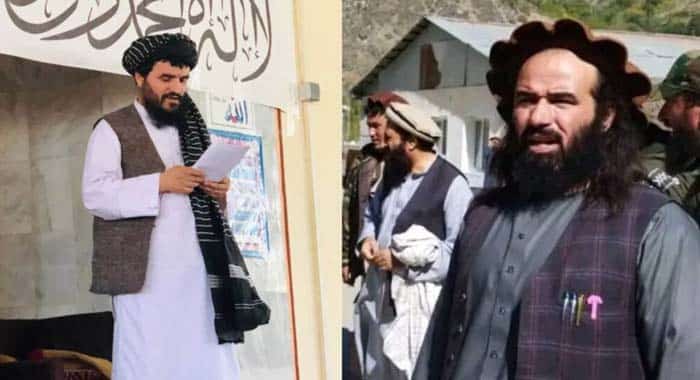
According to local sources, Taliban leaders are seeking to sideline Juma Khan Fateh, a powerful figure in Badakhshan Province who has long maintained significant influence across the strategically important Darwaz region. The move comes amid an intensifying standoff between Fateh and senior Taliban officials, with negotiations reportedly failing to produce a breakthrough.
Fateh currently serves as the Taliban’s Deputy Governor of Zabul Province in southern Afghanistan. Prior to his appointment, he held several influential positions in Badakhshan, including district governor of Nusay district. In late 2024, he was entrusted by the Taliban leadership to head a commission overseeing the campaign against poppy cultivation in the province.
Despite his transfer to Zabul, sources indicate that Fateh has retained extensive political, military, and economic influence in Badakhshan, particularly in the Darwaz region, where he is widely regarded as one of the most powerful figures within the Taliban’s local structure.
As part of efforts to reshape the regional power structure, Taliban officials have reportedly proposed Ghulamullah, a brigade commander from Faryab Province, as Fateh’s successor in Darwaz. The move is widely viewed as an attempt by the Taliban’s central leadership to reduce Fateh’s influence and strengthen direct control over one of Afghanistan’s most resource-rich provinces.
The situation has drawn the attention of senior Taliban officials. Sources report that Fasihuddin Fitrat, the Taliban’s Chief of Army Staff, and Amanuddin, the Taliban Governor of Helmand Province, have arrived in Faizabad, the capital of Badakhshan, to oversee efforts aimed at resolving the crisis and implementing directives related to Fateh’s reported arrest.
Negotiations between Taliban representatives and Fateh in Nusay district have reportedly continued in recent days. However, according to local sources, discussions have so far failed to achieve a settlement, raising concerns about a prolonged confrontation between competing factions within the movement.
Observers note that Fateh’s influence extends far beyond formal administrative titles. While some local residents refer to him as the “General Commander of Darwaz,” sources clarify that the designation is unofficial and reflects his longstanding authority and influence rather than a recognized position within the Taliban hierarchy.
At the heart of the dispute is the struggle for control over Badakhshan’s highly valuable gold-mining sector. The province possesses some of Afghanistan’s richest mineral reserves and has increasingly become a focal point of economic and political competition among Taliban factions.
In recent years, Badakhshan has witnessed recurring tensions linked to the management of natural resources, particularly gold mines. Local communities, mining interests, and Taliban commanders have repeatedly clashed over ownership, taxation, and revenue distribution. Anti-Taliban demonstrations have also periodically emerged in response to mining policies and economic grievances.
Fateh has long been viewed as a central figure in the province’s mining landscape. During a recent gathering in Badakhshan, he reportedly claimed to command approximately 10,000 armed men, a statement widely interpreted as a demonstration of his enduring military influence and regional support network.
Analysts believe the reported effort to remove Fateh reflects broader attempts by the Taliban leadership to consolidate authority over provincial power centers and strategic economic assets. As Afghanistan’s mining sector continues to emerge as a critical source of revenue, control over resource-rich regions such as Badakhshan has become increasingly important to the group’s political and financial agenda.
The unfolding dispute is being closely watched by regional observers, who view it as a significant test of the Taliban leadership’s ability to manage internal rivalries while maintaining cohesion within its ranks. The outcome could have far-reaching implications for security, governance, and control of Afghanistan’s natural resources in the months ahead.



