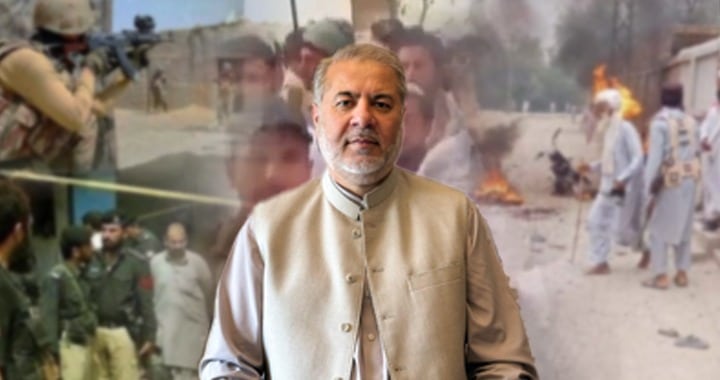
(Mushtaq Yusufzai)
The security situation in Lakki Marwat and the wider southern districts of Khyber Pakhtunkhwa has once again brought into sharp focus a question that has long troubled policymakers, security analysts, and local communities alike: why does the policing system appear so weak in these areas, and how have parallel power structures emerged that sometimes appear to operate above formal state institutions?
These are not new concerns. They are rooted in decades of underdevelopment, repeated waves of militancy, institutional inconsistency, and the gradual outsourcing of security responsibilities to informal arrangements that were initially designed as temporary responses but have, in some cases, taken on a life of their own.
To understand the present situation in Lakki Marwat, Bannu, Karak, and adjoining districts, one must begin with the historical context. These areas, including parts of the former tribal belt, have experienced prolonged exposure to conflict and militancy over the past several decades. Every wave of instability has left behind institutional gaps particularly in policing and civil administration.
Unlike more settled urban centers, where policing structures evolved steadily over time, these districts often saw abrupt disruptions. When militancy intensified in the region, the police system struggled to assert its writ effectively, and alternative arrangements began to emerge.
It is in this context that community-based structures such as Aman Committees came into existence. Their original purpose was not controversial: they were meant to support law enforcement agencies by providing local intelligence, facilitating dialogue, and helping identify suspicious elements in communities where state presence was weak.
However, over time, the role and influence of such committees began to evolve in ways that were not always aligned with their original mandate.
Aman Committees were initially formed as collaborative platforms involving local elders, community representatives, and in some cases, informal coordination with law enforcement agencies. Their strength lay in local knowledge. In areas where formal intelligence networks were limited, these committees provided valuable insight into community dynamics.
However, as the security situation deteriorated in parts of southern Khyber Pakhtunkhwa, these committees began to take on broader responsibilities. In some instances, they were perceived not just as support structures for the state, but as parallel mechanisms of influence.
The concern raised by many observers is not merely their existence, but the manner in which authority has, in certain contexts, become concentrated within informal networks that are neither fully accountable to the state nor regulated through transparent institutional frameworks.
In extreme cases, allegations have surfaced suggesting overlap between informal security actors and individuals with questionable backgrounds. While such claims vary in credibility and must be treated with caution, the perception itself has contributed to growing public unease about governance and accountability.
One of the most troubling developments in fragile security environments is the gradual normalization of parallel authority structures. When informal groups begin to perform quasi-policing functions, the distinction between lawful enforcement and extra-legal authority becomes blurred.
In Lakki Marwat and adjoining districts, concerns have been raised that certain local actors associated with security committees may exercise influence beyond their formal scope. The problem is not simply operational; it is institutional. When authority is exercised outside the chain of command, it weakens the credibility of the state and undermines public trust in official law enforcement institutions.
There is also the issue of role conflict. When individuals associated with policing structures simultaneously participate in informal committees or local enforcement arrangements, questions arise about accountability and neutrality. A system in which roles overlap without clear boundaries risks creating confusion about who holds legitimate authority.
Another critical issue highlighted by many observers is the weakening of deterrence within the policing system. When accountability mechanisms are inconsistent, and when transfers, postings, and disciplinary actions are perceived as irregular or politically influenced, the morale and effectiveness of law enforcement institutions are undermined.
In such environments, the perception that “nothing will change” becomes as damaging as the reality itself. Officers may begin to feel insulated from consequences, while communities lose confidence in the state’s ability to protect them.
It is often said that policing is not only about force; it is about legitimacy. Once legitimacy erodes, enforcement becomes reactive rather than preventive.
It is also important to acknowledge the enormous burden placed on police forces in these districts. Unlike the military or paramilitary forces that operate in more specialized counter-insurgency roles, the police are expected to handle everyday crime, intelligence gathering, community policing, and increasingly, aspects of counter-militancy.
However, without adequate training, resources, and institutional support, expecting the police alone to manage complex security challenges is unrealistic. Militancy is not merely a law-and-order issue; it is a multifaceted challenge requiring coordination between intelligence agencies, civil administration, and local governance structures.
In many cases, reliance on ad hoc arrangements has filled short-term gaps but created long-term structural weaknesses.
A recurring theme in discussions about security governance in Khyber Pakhtunkhwa is political instability. When political leadership is preoccupied with internal disputes, power struggles, and cabinet-level disagreements, governance priorities often suffer.
This is not unique to any single government. Across administrations, shifting political alliances and internal party tensions have frequently diverted attention from pressing security and administrative reforms.
As a result, critical issues such as police reform, institutional strengthening, and accountability mechanisms often remain incomplete or inconsistently implemented.
One of the most concerning trends in conflict-affected regions is the emergence of privatized or semi-formal security arrangements. When communities begin to rely on armed local groups for protection, it can lead to the normalization of non-state coercive power.
Reports and observations from the region suggest that in some cases, local actors associated with informal security structures possess arms and mobility that place them in positions of influence. While such arrangements may emerge out of necessity in the absence of effective policing, they carry significant long-term risks.
The most serious risk is the erosion of the state’s monopoly over legitimate force. Once that monopoly is diluted, restoring institutional authority becomes significantly more difficult.
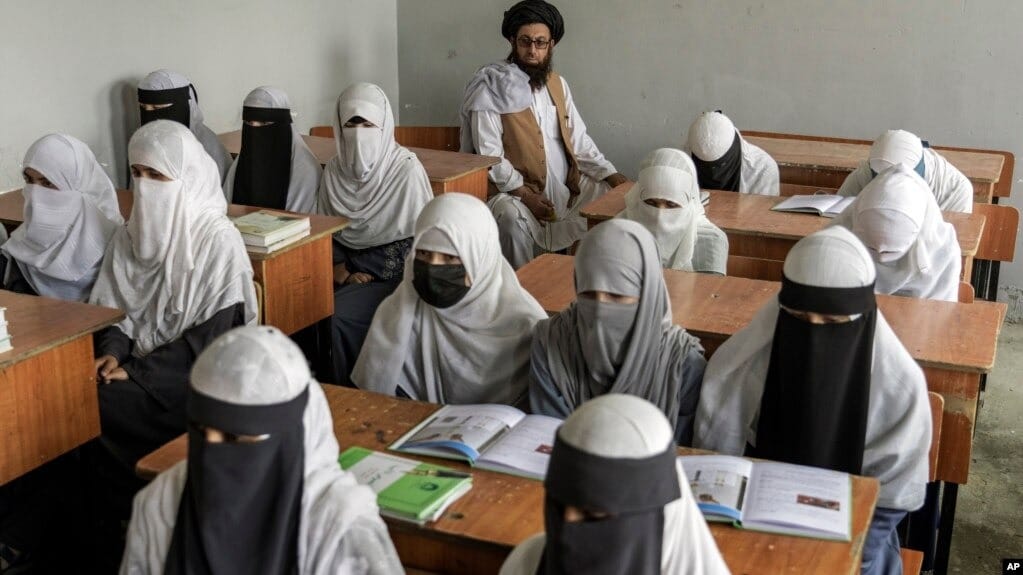
The discussion of governance and security in the region cannot be separated from developments in neighboring Afghanistan. The situation there illustrates how governance choices can have long-term social and economic consequences. Concerns have been widely raised in international forums about restrictions on education and participation of women in public life. Afghanistan’s demographic structure—dominated by a young population—makes these policies particularly consequential for the country’s future development.
A society in which a large segment of the population is excluded from education and professional participation risks long-term economic stagnation and social imbalance. This is not only a national issue for Afghanistan but a regional concern, given the interconnected nature of security, migration, and economic stability. There are important lessons here for Pakistan as well, particularly for regions like southern Khyber Pakhtunkhwa. Exclusion, weak governance, and institutional fragmentation create conditions in which insecurity thrives.
Pakistan’s strength lies in its institutional framework. But when parallel systems begin to overshadow formal institutions, even unintentionally, it creates ambiguity in authority and weakens governance outcomes. The solution does not lie in dismantling community participation structures like Aman Committees outright. Rather, it lies in clearly defining their scope, ensuring accountability, and integrating them within a transparent institutional framework that reinforces not replaces the state.
At the heart of the issue is the urgent need for police reform. This includes strengthening training, improving resource allocation, ensuring merit-based transfers and postings, and restoring public confidence in law enforcement institutions. Reform must also address the perception of impunity. A system in which accountability is inconsistent cannot sustain long-term stability. Equally important is the need to re-establish clear institutional boundaries. The police must function as a professional, accountable, and well-supported force—not as an entity supplemented or overshadowed by informal power structures.
The situation in Lakki Marwat and surrounding districts is not simply a law-and-order challenge. It is a reflection of deeper structural issues involving governance, institutional capacity, political priorities, and social trust. The emergence of informal security arrangements, the pressures of militancy, and the weaknesses of institutional coordination have collectively created a complex environment where the state’s authority is often tested.
The solution lies not in abandoning existing structures, but in reforming them with clarity and purpose. The state must reaffirm its writ, strengthen its institutions, and ensure that community participation operates within defined legal and institutional boundaries. Only then can the fragile balance between security and governance be restored in a way that is both sustainable and legitimate.