
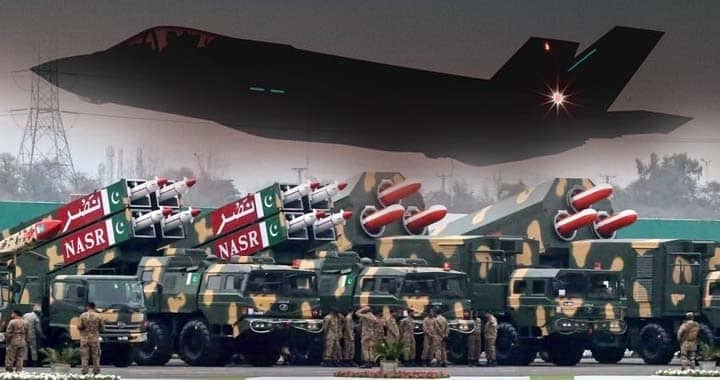
The Government of Pakistan‘s latest defence allocation reflects a prudent and necessary response to an increasingly complex security environment rather than any shift toward militarisation or regional escalation. Despite commentary focusing on the percentage increase in defence spending, a comprehensive assessment of the figures and regional realities demonstrates that Pakistan’s defence posture remains fundamentally defensive, restrained, and proportionate to the challenges it faces.
Pakistan’s defence budget has increased by approximately 17.5 percent in nominal terms. However, when viewed in absolute financial terms, the increase amounts to roughly US$1.3–1.5 billion. This must be understood against the backdrop of significant inflationary pressures, currency depreciation, rising operational costs, and increasing prices of imported military equipment, fuel, maintenance requirements, ammunition, and technological systems.
Any objective comparison of regional defence expenditures highlights the substantial disparity between Pakistan and India. India’s total defence budget now exceeds US$80 billion annually, making it nearly nine times larger than Pakistan’s defence allocation, which stands at approximately US$9 billion. More significantly, India’s capital modernisation and procurement budget alone—estimated between US$20–23 billion is more than twice the size of Pakistan’s entire defence budget.
This modernisation expenditure funds advanced military capabilities including next-generation combat aircraft, naval expansion, missile systems, air defence networks, cyber warfare infrastructure, space capabilities, submarines, drones, and strategic technologies.
By comparison, Pakistan’s increased allocation primarily supports the maintenance of existing capabilities, operational readiness, force sustainment, and essential modernisation requirements necessary to preserve a credible deterrent posture.
While percentage comparisons often dominate public discourse, they can obscure the underlying realities.
India’s defence budget increased by approximately 9.5 percent, while Pakistan’s increase is higher in percentage terms. However, because India’s budget starts from a base nearly nine times larger, the actual monetary gap between the two countries has widened rather than narrowed.
In practical terms, India added billions more in defence resources than Pakistan despite recording a lower percentage increase.
The same reality applies to procurement spending. India has earmarked approximately US$21 billion for new military equipment and strategic modernisation, whereas Pakistan’s procurement allocation remains a fraction of that figure, estimated at around US$2.34 billion. This continuing disparity underscores that Pakistan’s spending priorities are directed toward maintaining operational balance rather than seeking military superiority.
Pakistan’s security requirements extend well beyond conventional military preparedness.
The country simultaneously faces challenges on multiple fronts:
- A heavily militarised eastern border requiring constant vigilance and deterrence.
- Active counter-terrorism operations against militant networks.
- Cross-border terrorist threats and sanctuaries along the western frontier.
- Border management and surveillance requirements across vast and difficult terrain.
- Maritime security responsibilities in the Arabian Sea.
- Cybersecurity and information warfare threats.
- Protection of critical national infrastructure and strategic economic projects.
These obligations generate recurring operational costs that cannot be deferred or ignored.
Defence expenditure supports not only conventional military preparedness but also intelligence-led operations, border fencing initiatives, aviation readiness, surveillance systems, disaster response capabilities, evacuation operations, maritime security, and assistance to civil authorities during emergencies.
Recent regional developments have reaffirmed an enduring principle of national security: preparedness is significantly less costly than conflict.
Investments in air defence systems, intelligence capabilities, surveillance networks, ammunition reserves, mobility assets, cyber resilience, and operational readiness help prevent crises from escalating into larger confrontations.
A credible defensive capability reduces the likelihood of miscalculation and contributes to regional stability by reinforcing deterrence.
Pakistan’s defence policy remains anchored in the principle of maintaining a minimum credible deterrent and ensuring the ability to safeguard national sovereignty and territorial integrity.
National security and economic development are not competing objectives; they are mutually reinforcing.
Pakistan’s strategic economic assets—including ports, energy corridors, mining projects, industrial zones, foreign investments, and regional connectivity initiatives—require a stable and secure environment to attract investment and sustain growth.
Major infrastructure projects and economic corridors can only realize their full potential when protected against terrorism, sabotage, and external threats.
A secure environment remains one of the most important prerequisites for economic confidence, foreign direct investment, and long-term national development.
It is noteworthy that Pakistan’s latest defence allocation comes within a broader framework of fiscal discipline.
While overall federal expenditures have been reduced, defence remains one of the few sectors receiving additional resources due to the country’s pressing security requirements. This reflects prioritisation rather than unchecked spending.
The increase should therefore be viewed as a targeted allocation addressing essential national security needs rather than a departure from fiscal responsibility.
Pakistan is not building a global expeditionary force, nor is it pursuing military dominance in the region.
Its defence spending is directed toward maintaining:
- Territorial defence capabilities.
- Strategic deterrence.
- Counter-terrorism effectiveness.
- Border security.
- Maritime protection.
- Cyber resilience.
- Internal security support.
- Protection of national economic assets.
With approximately US$9 billion allocated to defend a country facing multiple security challenges and safeguarding thousands of kilometres of sensitive borders, Pakistan continues to operate one of the most resource-constrained defence postures among major frontline states.
The facts are clear: Pakistan’s defence budget remains substantially smaller than that of its principal regional competitor, while the capability and procurement gap continues to widen. The latest increase is therefore best understood as a measure to sustain readiness, preserve deterrence, and address legitimate security requirements in a challenging regional environment.
Pakistan remains committed to regional peace, stability, and responsible defence management. Ensuring a minimum credible capability is not an act of escalation—it is a prerequisite for deterrence, stability, and the protection of national sovereignty.



