
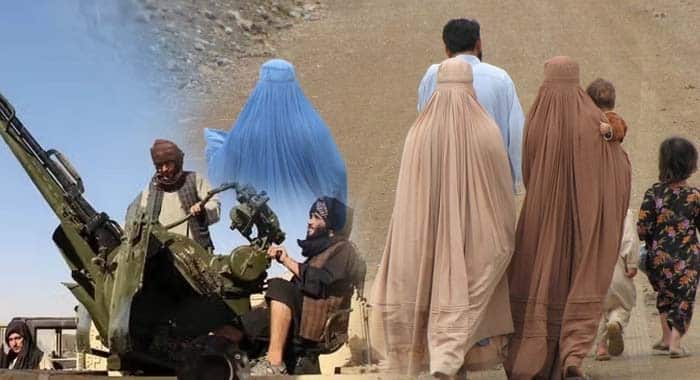
UN Women has expressed concern over the impact of rising tensions between Pakistan and the Taliban administration on Afghan women and girls, warning that vulnerable communities urgently require access to healthcare, food, shelter and other essential services.
In a statement posted on X on Thursday, the UN agency highlighted the worsening humanitarian situation and said women and girls were bearing a disproportionate share of the burden created by the ongoing crisis.
The remarks came after the United Nations Assistance Mission in Afghanistan (UNAMA) claimed that Pakistan’s recent precision strikes inside Afghanistan resulted in the deaths of 13 civilians and injuries to 10 others. According to the mission, women and children were among the reported casualties.
The Taliban administration has accused Pakistan of violating Afghan airspace and carrying out strikes in the provinces of Khost, Paktika and Kunar. Islamabad, however, has categorically rejected claims of civilian casualties, describing such allegations as part of a propaganda campaign aimed at diverting attention from the core issue of terrorist sanctuaries operating inside Afghanistan.
While humanitarian concerns deserve serious attention, critics argue that international organizations frequently discuss the consequences of regional tensions without adequately addressing the factors that have contributed to the current situation.
For years, Pakistan has repeatedly raised concerns through bilateral engagements, regional forums and international platforms regarding the presence of terrorist organizations operating from Afghan territory. Pakistani officials have consistently maintained that members of the banned Tehreek-e-Taliban Pakistan (TTP), as well as other terrorist groups, have used Afghan soil to plan, facilitate and launch attacks against Pakistan.
Successive Pakistani governments and military leaders have urged the Taliban administration to take effective action against terrorist networks, strengthen border controls and prevent non-state actors from exploiting Afghan territory. Despite repeated assurances, terrorist attacks inside Pakistan have continued, resulting in the martyrdom of civilians, security personnel and law enforcement officials.
Analysts note that any assessment of the current crisis must take into account the broader security environment that preceded the latest escalation. They argue that focusing exclusively on the aftermath of military actions while overlooking years of cross-border terrorist violence risks presenting an incomplete picture of the conflict.
Pakistan has long maintained that its actions are driven by legitimate security concerns and the need to protect its citizens from terrorist attacks originating across the border. Officials have repeatedly stated that Islamabad prefers cooperation and coordinated action against terrorist groups but cannot ignore persistent threats to national security.
The latest exchange of accusations has once again highlighted the deep divisions between Islamabad and the Taliban administration over the issue of terrorist sanctuaries. As diplomatic tensions continue, observers say lasting stability will remain difficult to achieve unless the root causes of the conflict, including the presence and activities of terrorist organizations operating from Afghan territory, are addressed effectively.
Many security experts argue that humanitarian concerns and counterterrorism realities should not be viewed in isolation. They contend that protecting civilians on both sides of the border requires confronting the underlying drivers of instability, including the continued ability of terrorist groups to find refuge, organize and operate from areas beyond Pakistan’s borders.



