
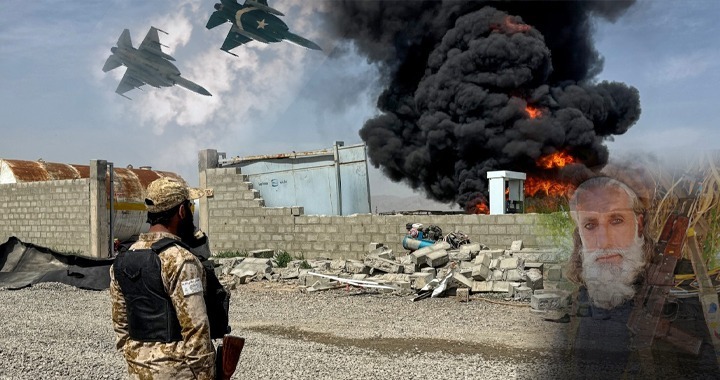
The airstrike in Afghanistan’s Kunar province targeting a senior terrorist commander of the banned Tehreek-e-Taliban Pakistan has once again reopened a recurring regional security question: what is the actual scale and nature of terrorist presence across the border?
Initial reports suggested Maulvi Abdullah alias Abu Bakr was eliminated in the strike. However, independent accounts now claim he was wounded and moved to an undisclosed facility, leaving his status uncertain. At the same time, reports indicate that over 20 terrorists were eliminated in the same operation.
For years, Afghan authorities have maintained that Afghan territory is not used for terrorist sanctuaries. Yet repeated incidents in border regions continue to generate competing narratives that challenge that assertion.
Pakistan has consistently argued that the banned Tehreek-e-Taliban Pakistan operates from across the border, enabling planning and coordination of attacks inside Pakistani territory. Each such reported strike adds weight to that long-standing claim.
The contradiction in this case lies not only in competing claims about Abu Bakr’s fate, but also in the broader pattern of recurring operations reported from the same region involving organized terrorist presence.
Whether confirmed killed or wounded, the emergence of a senior commander in such an incident, alongside reports of multiple fatalities among terrorist ranks, underscores the operational depth attributed to these networks.
The central question therefore persists: if terrorist sanctuaries do not exist, why do senior commanders continue to appear in such strikes across the border?
Until consistent verification mechanisms bridge the gap between official statements and field reporting, such contradictions are likely to remain a defining feature of regional security discourse.



