
A senior Russian Foreign Ministry official has warned that Afghanistan continues to host around 20 terrorist groups with an estimated combined strength of between 20,000 and 23,000 fighters, raising fresh concerns about regional security and the effectiveness of Taliban assurances regarding counterterrorism.
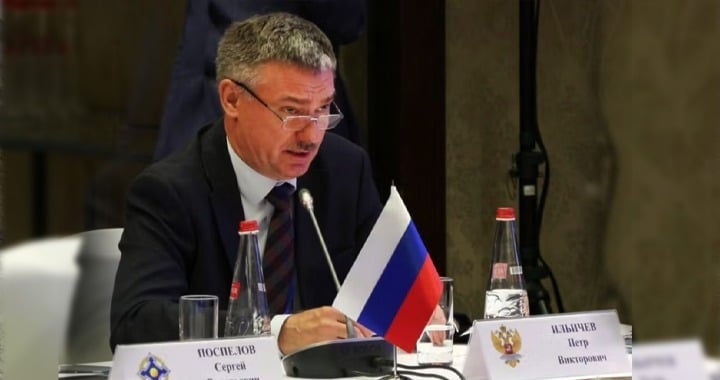
According to reports from Russian state sources, Pyotr Ilyichev, Director of the Russian Foreign Ministry’s Department for New Challenges and Threats, made the remarks during a meeting of counterterrorism chiefs from member states of the Commonwealth of Independent States (CIS).
Ilyichev reportedly described the security situation in Afghanistan as critical and warned that it continues to pose a significant threat to neighboring countries.
He stated that approximately 20 terrorist organizations remain present inside Afghanistan and warned that these groups are increasingly gaining access to emerging technologies, including commercial satellite communication systems and potentially artificial intelligence tools.
The Russian official also highlighted concerns regarding cross-border attacks and efforts by terrorist organizations to radicalize vulnerable segments of society beyond Afghanistan’s borders.
According to Ilyichev, the threat is further compounded by growing cooperation between terrorist organizations and transnational criminal networks. He noted that such groups generate revenue through narcotics trafficking, illicit arms trading, smuggling of precious stones and metals, and other forms of organized criminal activity.
The remarks add to a growing body of international assessments expressing concern about the continued presence of terrorist organizations inside Afghanistan despite repeated assurances from the Taliban administration that Afghan territory will not be used against neighboring countries.
Taliban officials have consistently maintained that they do not permit terrorist groups to operate from Afghanistan and have repeatedly rejected allegations that Afghan soil is being used to threaten regional states.
However, multiple assessments by the United Nations and regional security bodies have continued to identify the presence of ISIS-K and other terrorist organizations within Afghanistan.
Russia has repeatedly voiced concerns about the potential for Afghanistan to become a hub for regional instability. During meetings of regional security forums, including the CIS, the Collective Security Treaty Organization (CSTO), and the Moscow Format, Russian officials have emphasized the need to prevent terrorist groups from exploiting Afghan territory and have advocated stronger security measures along Central Asia’s southern borders.
The latest warning comes only days after Russia and the Taliban administration signed a military-technical cooperation agreement on the sidelines of an international security forum in Moscow.
The agreement was signed by Sergei Shoigu, Secretary of Russia’s Security Council, and Taliban Defence Minister Mullah Mohammad Yaqoob.
During the visit, Mullah Yaqoob described cooperation with Russia as highly important and called for deeper engagement between Moscow and Kabul, citing historical ties and shared interests.
The timing of Ilyichev’s remarks is likely to attract attention across the region, as they highlight a contrast between expanding Russian engagement with the Taliban administration and persistent warnings from Russian security officials regarding the continued presence of terrorist organizations operating from Afghan territory.
Security observers note that the issue remains central to regional stability, particularly for neighboring countries that have repeatedly expressed concerns about cross-border terrorism and the activities of terrorist groups based inside Afghanistan.



