
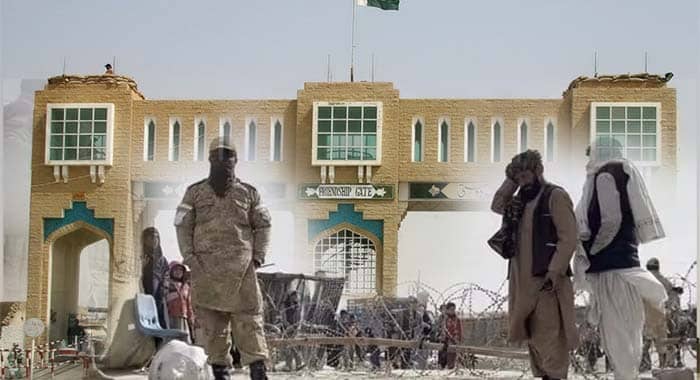
Prolonged restrictions at key Pakistan-Afghanistan border crossings, coupled with the Taliban’s inability to address the growing humanitarian and economic fallout inside Afghanistan, have contributed to a sharp rise in illegal cross-border movement and human smuggling networks operating along the frontier.
Sources in Spin Boldak district of Kandahar province told foreign media that increasing numbers of Afghans are being forced to rely on smugglers to enter Pakistan after legal travel became more difficult and expensive. Many of those seeking to cross the border are patients in need of medical treatment, traders, daily wage earners, and families attempting to reunite with relatives on the Pakistani side.
Residents familiar with the route said smugglers now charge substantial sums to move individuals across unofficial crossings, creating a lucrative underground economy that has flourished amid continuing restrictions.
One Afghan traveler claimed he paid 130,000 Pakistani rupees to be taken into Chaman through an illegal route. According to him, the money is allegedly distributed among multiple intermediaries along the route, including individuals linked to local Taliban authorities.
Several local sources alleged that large-scale smuggling operations could not function without the involvement or tacit cooperation of influential figures operating in border areas. While such claims remain difficult to independently verify, residents insist that ordinary people are bearing the burden of a system that increasingly rewards illegal movement while restricting legitimate travel.
The Taliban administration has repeatedly claimed to oppose human smuggling. However, residents say unofficial crossings remain active despite periodic crackdowns, raising questions about the effectiveness of enforcement measures.
Local observers argue that the broader crisis stems from policies implemented since the Taliban returned to power in 2021. Afghanistan’s worsening economic conditions, shrinking employment opportunities, restrictions on movement, and the absence of sustainable governance mechanisms have pushed many Afghans to seek opportunities, medical treatment, and family support outside the country.
Border communities say the situation has become particularly difficult for Afghans requiring healthcare. Pakistan has historically served as a major destination for Afghan patients seeking specialized treatment unavailable inside Afghanistan. However, travel restrictions and documentation requirements have forced some vulnerable individuals into the hands of smugglers.
Residents in Spin Boldak and surrounding districts also complain that while Afghan citizens face increasing hardships, certain networks continue to profit from the movement of desperate families. Some locals allege that unofficial payments in foreign currency have become commonplace for those attempting to navigate the complex border environment.
At the same time, hundreds of Pakistanis who travelled to Afghanistan before the deterioration in border conditions continue to face difficulties returning home. Tribal and business sources have repeatedly highlighted the plight of families stranded on the Afghan side of the border, saying little practical progress has been made to facilitate their smooth return despite months of uncertainty.
The prolonged disruption has also damaged long-standing economic and social ties between communities on both sides of the border. Thousands of families in Chaman, Spin Boldak and adjacent areas maintain cross-border relationships, businesses and tribal connections that traditionally depended on regular movement.
A tribal elder from the region said ordinary people have become the primary victims of political and security tensions, with workers losing livelihoods and families remaining separated for extended periods.
The challenges intensified after tensions and border clashes led to tighter controls at major crossing points, including Chaman and Torkham. Since then, local residents say unemployment has increased, commercial activity has declined, and smuggling networks have become more active.
Security analysts note that human trafficking and people smuggling often thrive when legal channels become restricted and governance gaps emerge. They warn that such networks can also be exploited by criminal groups and terrorist facilitators seeking to move operatives, finances and logistical support across borders.
The latest reports add to growing concerns about Afghanistan’s deteriorating humanitarian and governance situation under Taliban rule. Recent international assessments have highlighted rising economic pressures, restrictions on women’s rights, shrinking educational opportunities, and broader human rights concerns, all of which continue to drive outward migration and increase pressure on neighboring countries, particularly Pakistan



