
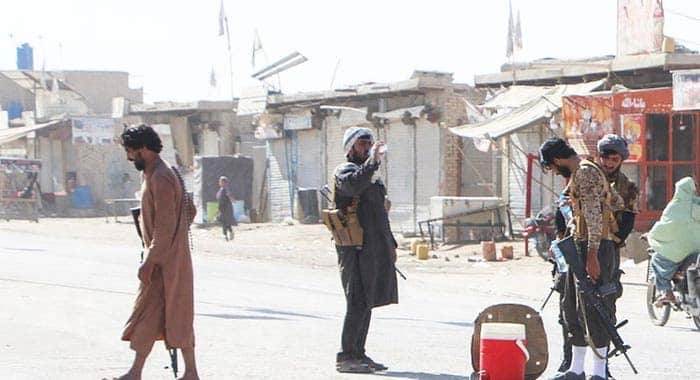
A reported operation in Yaftal-e-Sufla district of Badakhshan has drawn attention to emerging security and governance challenges facing the Taliban administration, after a small armed group reportedly entered the district headquarters, targeted key security facilities, and withdrew before reinforcements could arrive.
According to available reports, approximately 20 to 25 fighters entered the district centre of Yaftal-e-Sufla and carried out a coordinated operation against Taliban positions. The group reportedly reached the district headquarters, police command facilities, and intelligence offices, where Taliban personnel were disarmed, weapons and equipment were seized, vehicles were taken, and the Taliban flag was removed before the fighters withdrew from the area.
The reported incident represents one of the first temporary seizures of a district centre by an anti-Taliban group since August 2021. The operation has raised questions about the effectiveness of local security structures, intelligence coordination, command systems, and administrative control in areas considered strategically important.
Badakhshan has historically been regarded as one of the Taliban’s northern strongholds. However, the reported penetration of a district centre located near Faizabad highlights potential vulnerabilities within local security arrangements and exposes challenges related to intelligence gathering, rapid response capabilities, and governance effectiveness.
The incident has added pressure to the Taliban’s security narrative, which has relied heavily on claims of maintaining control and stability across Afghanistan. A successful temporary operation by a relatively small force, if confirmed, demonstrates that localized security gaps and dissatisfaction among communities may continue to present challenges.
Observers note that the development reflects patterns historically seen in insurgencies, where small mobile groups, weak local administration, captured resources, and unresolved grievances can gradually create conditions for broader instability. While a single operation does not constitute a nationwide uprising, it serves as a significant warning sign that emerging grievances and institutional weaknesses cannot be ignored.
Several internal challenges, including disputes surrounding natural resources and mining interests, disagreements over appointments, concerns regarding governance practices, and dissatisfaction with coercive administrative approaches, have contributed to increasing pressure within the Taliban system. These factors, if left unaddressed, could create additional instability and encourage further resistance in different regions.
The reported developments in Yaftal-e-Sufla underscore the importance of effective governance, inclusive political participation, accountable institutions, and policies that address the concerns of Afghanistan’s diverse population. Long-term stability cannot be achieved through security measures alone; it requires institutions that provide representation, justice, and public confidence.
With more than 40 million Afghans affected by the country’s political and economic challenges, the Taliban administration still faces an opportunity to reconsider its approach and pursue reforms that promote broader participation, responsible governance, and sustainable peace.
Yaftal-e-Sufla may represent only one district, but the reported events serve as an important indicator of deeper challenges facing Afghanistan’s current political and security landscape. The first signs of pressure have appeared, and how they are addressed will shape the future stability of the country.



