
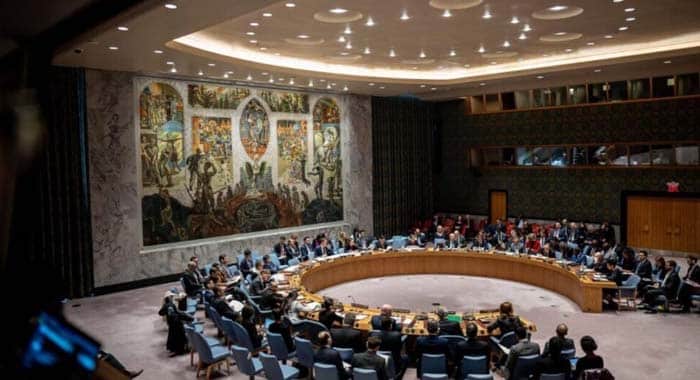
Deep divisions have emerged within the United Nations Security Council over how to formally describe Afghanistan’s ruling authorities, as concerns intensify over governance, human rights restrictions, and security conditions in the country ahead of the renewal of the UN Assistance Mission in Afghanistan (UNAMA).
According to a report by Security Council Report, member states remain split over the continued use of the term “de facto authorities” to describe the Taliban-led administration in Afghanistan since their takeover in August 2021.
Several Council members, including the United States, have expressed concern that such terminology may imply political legitimacy or normalization of the Taliban administration. In contrast, China and Russia argue the term is a factual description of the current situation on the ground.
The debate comes as the Security Council prepares to vote on renewing UNAMA’s mandate, which expires on June 17, following a rare three-month extension in March under Resolution 2818. The short-term renewal reflected unresolved disagreements among member states over the mission’s future direction and scope.
The report highlights widening international concern over the Taliban’s governance approach, particularly restrictions affecting human rights, women’s rights, and political freedoms. The United States has emphasized that its priorities include counterterrorism, protection of its citizens, and the release of detained Americans. It has also called for a reassessment of UNAMA’s mandate, arguing that the mission must remain focused, results-driven, and aligned with core peace and security objectives.
Washington has further suggested that parts of the UN mission’s work may need restructuring to reflect the current realities in Afghanistan.
In contrast, China and Russia have urged greater engagement with the Taliban authorities, advocating continued humanitarian and development assistance without linking it to governance conditions such as women’s rights or political reforms. Both countries have also supported the unfreezing of Afghanistan’s central bank assets and easing of restrictions on Taliban officials.
The report also notes continued instability in Afghanistan’s security environment, including recent tensions between Pakistan and the Taliban that escalated into cross-border clashes earlier this year. While large-scale violence has decreased in recent weeks, intermittent exchanges of fire and border disruptions continue to affect trade and civilian movement. Security Council Report further highlights ongoing concerns about governance capacity and internal security challenges under the current authorities, contributing to regional instability and uncertainty.
Serious concerns remain over human rights conditions, particularly restrictions affecting women and girls. The report cites UNAMA’s criticism of a recent decree on marriage laws, warning that certain provisions could increase the risk of child marriage by allowing a girl’s silence to be interpreted as consent.
Afghanistan continues to face a severe humanitarian crisis, with nearly 21.9 million people almost half the population expected to require assistance this year. Millions remain affected by acute food insecurity, malnutrition, and limited access to basic services. Humanitarian agencies have also warned of additional pressure from the return of an estimated 2.7 million people from neighboring countries, further straining already fragile systems.
As China leads negotiations on the renewal of the UNAMA mandate in its role as Security Council penholder on Afghanistan, the outcome is expected to reflect broader geopolitical divisions over engagement strategy, accountability, and the long-term role of the United Nations in the country. The upcoming decision is widely viewed as a key test of international consensus on how to address Afghanistan’s governance challenges, humanitarian needs, and regional security risks.



