
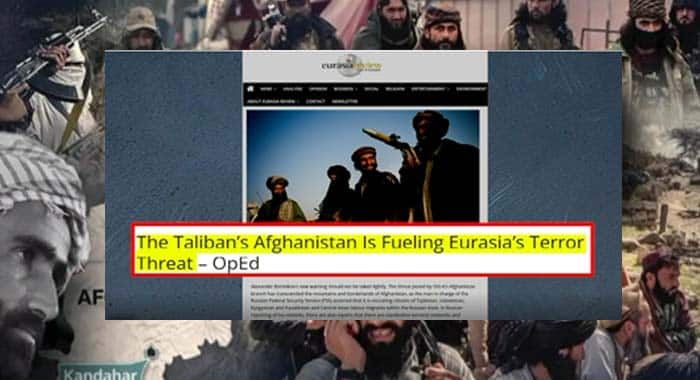
A recent analysis published by an international affairs journal has renewed concerns regarding the presence and activities of terrorist organizations operating from Afghanistan, highlighting what experts describe as the Taliban regime’s failure to dismantle militant infrastructure and address growing regional security threats.
According to a report published by Eurasia Review, Afghanistan continues to serve as a hub for multiple extremist and terrorist organizations, with concerns mounting over the presence of Tehreek-e-Taliban Pakistan (TTP), Al-Qaeda, and other transnational militant groups allegedly operating from Afghan territory.
The publication argues that the Taliban authorities have not taken sufficient action to eliminate terrorist networks, training facilities, logistical structures, and support systems established by various militant organizations. Analysts cited in the report contend that this reluctance has contributed to Afghanistan increasingly being perceived as a safe haven for extremist elements, raising serious concerns among regional and international stakeholders.
The report references assessments attributed to both Russian and American intelligence agencies, which indicate that thousands of foreign fighters linked to various terrorist organizations remain present in Afghanistan. According to these assessments, a number of militant groups continue to maintain operational capabilities within Afghan territory despite repeated international calls for decisive counterterrorism measures.
Security experts quoted in the analysis warn that the persistence of such networks poses a significant challenge to regional peace and stability. They argue that the continued existence of militant infrastructure allows extremist organizations to recruit, train, coordinate, and plan operations beyond Afghanistan’s borders.
Particular attention was drawn to allegations concerning cooperation between Al-Qaeda and TTP elements. According to the report, Al-Qaeda is believed to be providing training, strategic guidance, operational advice, and battlefield support to TTP operatives, thereby enhancing the group’s capabilities and increasing the threat posed to regional security.
Analysts note that such collaboration between established transnational terrorist networks and regional militant organizations represents a complex and evolving security challenge. They caution that these linkages could enable terrorist groups to strengthen operational coordination, expand recruitment networks, and increase their ability to conduct attacks across the region.
Experts further argue that the Taliban administration’s failure to dismantle militant infrastructure serves as an indicator of its lack of commitment to comprehensively addressing terrorism within Afghanistan. According to their assessment, the absence of sustained and verifiable action against terrorist groups continues to undermine confidence in the Taliban’s assurances regarding counterterrorism cooperation.
“The continued presence of terrorist infrastructure, combined with reported cooperation between extremist organizations, remains a matter of serious concern for regional security,” one analyst noted. “Without decisive action against these networks, the risk of instability extending beyond Afghanistan’s borders will persist.”
The report also highlights growing international concerns that Afghanistan could once again emerge as a focal point for extremist activity if terrorist organizations are allowed to operate without meaningful restrictions. Security observers have repeatedly emphasized that lasting regional peace depends upon preventing Afghanistan from becoming a sanctuary for groups engaged in terrorism and violent extremism.
Regional governments, international partners, and security experts continue to stress the importance of coordinated counterterrorism efforts, intelligence sharing, and sustained pressure on militant organizations operating throughout the region. They maintain that the dismantling of terrorist infrastructure and the denial of safe havens remain essential prerequisites for long-term stability and security.
As concerns over cross-border terrorism continue to shape regional security discussions, calls are growing for concrete and verifiable measures to address the presence of terrorist groups in Afghanistan and to prevent their activities from threatening neighboring countries and the broader international community.



