
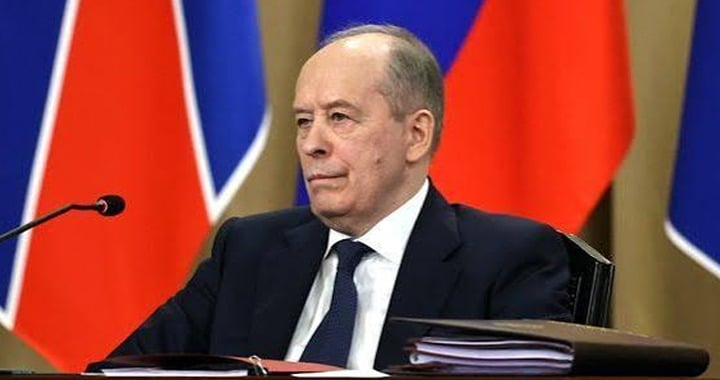
The Director of Russia’s Federal Security Service (FSB), Alexander Bortnikov, has claimed that foreign intelligence services are allegedly seeking to expand areas outside Taliban control in northern Afghanistan, a development he described as part of broader regional strategic competition.
According to statements attributed to Bortnikov, jihadist groups linked to ISIS-Khorasan (Vilayat Khorasan), along with anti-Taliban armed factions, are reportedly continuing efforts to undermine the Taliban administration in Kabul. He further alleged that these activities are being supported, directly or indirectly, by British intelligence services.
Bortnikov claimed that such efforts are aimed at expanding zones of influence beyond Taliban control, particularly in northern Afghanistan, which he described as a strategically significant region due to its proximity to Central Asian states and key regional transit corridors.
He further suggested that Western powers may seek to leverage instability in northern Afghanistan to shape political and security developments in neighboring Central Asian republics, framing the region as an emerging arena for long-term geopolitical competition.
The Russian security chief also emphasized the importance of strengthening counterterrorism cooperation with the Taliban authorities, stating that coordinated efforts are necessary to address the presence and operational capacity of transnational militant networks in Afghanistan.
According to the remarks, groups such as ISIS-K continue to pose a regional security challenge, with overlapping linkages between extremist factions and anti-government armed elements contributing to a complex and evolving threat landscape.
The allegations have not been independently verified, and no supporting evidence was presented publicly in the statement. The government of the United Kingdom has not yet issued any official response regarding the claims made by the FSB director.
Security analysts note that such statements reflect the growing geopolitical competition surrounding Afghanistan’s security environment, where multiple regional and global actors continue to express competing narratives regarding influence, counterterrorism priorities, and strategic stability.
Observers further highlight that Afghanistan remains a focal point of overlapping security concerns involving extremist groups, regional intelligence competition, and shifting alliances, making it a sensitive arena for international diplomatic and security discourse.
The situation underscores ongoing tensions in how different global powers interpret the evolving security architecture of Afghanistan, particularly in relation to northern provinces considered strategically significant due to their geographic and economic linkages.



