
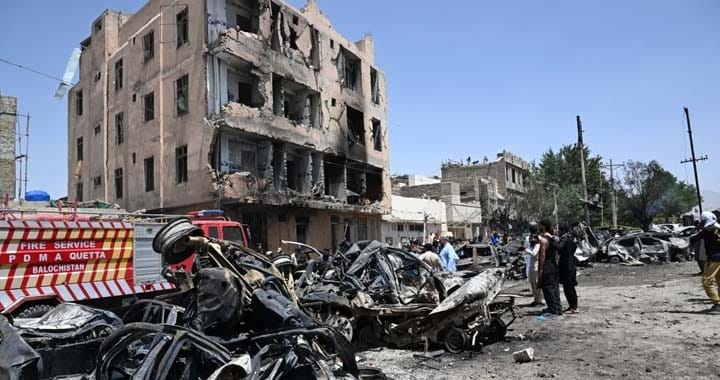
Pakistan is once again confronting a disturbing resurgence of terrorism, particularly in the provinces of Khyber Pakhtunkhwa and Balochistan, where militant activity has intensified in recent months, underscoring what security analysts describe as an evolving and more complex “hybrid threat” environment.
The renewed wave of violence has reignited national debate over the effectiveness of Pakistan’s long-running counterterrorism strategy, with experts warning that despite significant military successes and decades of sacrifice, the threat has not been fully eliminated but has instead transformed in nature and scope.
A Long and Evolving Security Challenge
Pakistan’s struggle against terrorism predates the post-9/11 era, historically shaped by sectarian violence, ethno-political unrest in Karachi, and insurgent movements in Balochistan. However, the aftermath of the 9/11 attacks fundamentally reshaped the country’s security landscape, introducing a far more organised, transnational, and ideologically driven wave of militancy.
During the peak of violence in 2010, Pakistan recorded more than 2,000 terrorist incidents nationwide. The country suffered immense human and economic losses, with over 80,000 lives lost and financial damages exceeding $150 billion, according to official and independent estimates.
Through major military operations such as Zarb-e-Azb, Radd-ul-Fasaad, and sustained intelligence-based operations, Pakistan’s armed forces and law enforcement agencies significantly degraded militant networks, resulting in a sharp decline in terrorist incidents by 2020.
However, security officials note that the relative stability was short-lived.
Post-Afghanistan Withdrawal Security Shift
The security environment deteriorated following the withdrawal of international forces from Afghanistan, which analysts say created operational space for several militant groups to reorganize and expand influence across the region.
Groups including the Tehreek-e-Taliban Pakistan (TTP), Al-Qaeda affiliates, Islamic State Khorasan Province (ISKP), the Haqqani network, and Baloch separatist outfits such as the BLA have reportedly regained operational capacity. Security sources also allege that some groups have gained access to advanced weaponry left behind in Afghanistan, alongside external facilitation networks.
Officials further point to a shift in tactics, with militant activity evolving from traditional attacks to a “hybrid warfare” model combining armed assaults with cyber operations, propaganda campaigns, disinformation efforts, and psychological warfare aimed at undermining public trust in state institutions.
Rising Incidents and Emerging Concerns
Recent reports indicate a renewed surge in coordinated attacks across multiple regions, with both civilians and security personnel increasingly targeted. Some assessments suggest that casualties and incidents in the past year have approached or even exceeded levels seen during the peak violence period of 2010.
Security analysts warn that the evolving nature of militancy presents a more complex challenge than in previous years, requiring responses beyond conventional military operations.
Gaps in Counterterrorism Strategy
Experts argue that Pakistan’s counterterrorism framework, while robust in its military dimension, lacks coherence in broader policy implementation.
Despite the existence of the National Action Plan (NAP) and related security frameworks, implementation remains inconsistent. The National Counter Terrorism Authority (NACTA) has been identified by analysts as under-resourced and institutionally constrained, limiting its ability to coordinate national counter-extremism efforts effectively.
Critics also note that counter-narrative strategies have largely focused on ideological messaging, while insufficient attention has been given to underlying drivers such as governance gaps, unemployment, political alienation, and perceptions of injustice.
Socioeconomic Drivers and Regional Grievances
In regions such as Balochistan and newly merged districts of Khyber Pakhtunkhwa, persistent socioeconomic disparities continue to fuel grievances. High poverty levels, unemployment, limited access to education and healthcare, and perceptions of exclusion from resource distribution have contributed to local discontent.
The issue of missing persons in Balochistan remains a particularly sensitive and politically charged concern, frequently cited as a barrier to reconciliation and trust-building between local communities and state institutions.
Analysts stress that without addressing these structural grievances, military measures alone are unlikely to deliver long-term stability.
Call for Integrated National Response
Security experts and policy observers are increasingly calling for a transition from a predominantly security-centric approach to a comprehensive national resilience strategy incorporating political, economic, institutional, and ideological dimensions.
Such an approach, they argue, must include strengthened civilian oversight, improved inter-agency coordination, and enhanced institutional capacity under a clearly defined national framework.
Development investment in underprivileged regions, particularly in infrastructure, education, and employment generation, is being increasingly framed as a national security imperative rather than purely a welfare initiative.
Need for Political Engagement and Institutional Reform
Experts also emphasise the importance of political engagement with non-violent actors in conflict-affected regions to reduce alienation and strengthen democratic inclusion. Over-securitisation of political dissent, they warn, risks deepening mistrust between the federation and marginalised communities.
At the same time, there is a growing consensus that Pakistan’s internal security institutions, particularly provincial police forces in high-risk areas, require urgent modernization, including advanced surveillance systems, cyber capabilities, and improved operational equipment.
Conclusion: From Reaction to Strategy
Pakistan’s long fight against terrorism has demonstrated extraordinary national resilience, with significant sacrifices made by civilians, law enforcement personnel, and the armed forces.
However, analysts caution that resilience alone is insufficient in the face of an evolving and adaptive threat landscape. The current phase of militancy demands strategic clarity, institutional coordination, and sustained political commitment to address both symptoms and root causes.
Experts conclude that lasting peace will depend on a balanced approach combining security operations with justice, inclusion, governance reform, and socioeconomic development—shifting Pakistan’s counterterrorism posture from reactive crisis management to a long-term national stability framework.



