
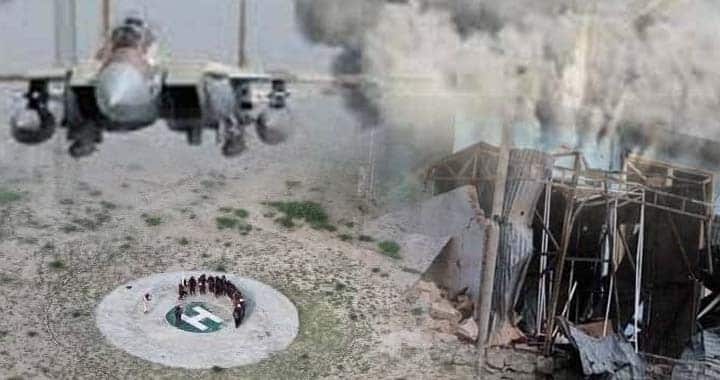
Recent propaganda narratives emerging from North Waziristan have once again highlighted a broader regional pattern involving multiple terrorist and militant ecosystems, where information warfare increasingly runs parallel to ground realities.
The latest case involves Fitna al-Khwarij operatives circulating misleading claims about the capture of a security post in the Shewa area of North Waziristan. Security sources rejected the narrative, stating the site had been vacated earlier as part of operational adjustments, and that the footage was being used to project a false impression of battlefield success.
This pattern, however, is not isolated.
Across the western border region, the Afghan Taliban information ecosystem has also been repeatedly associated with contested or contradictory narratives surrounding security incidents. In multiple instances reported in regional discourse, including false claims of airstrikes and civilian-targeted incidents in areas such as Kunar, competing narratives have circulated rapidly on social platforms before verification or clarification could be established.
Security analysts argue that while these actors differ in structure, geography, and operational scope, they increasingly converge in one domain: strategic narrative construction in contested information spaces.
In Pakistan’s case, Fitna al-Khwarij and Fitna al-Hindustan networks have been observed amplifying localized incidents, often through edited visuals or incomplete context, particularly during periods of intensified counterterrorism operations in Khyber Pakhtunkhwa and Balochistan.
On the Afghan side, the Taliban information environment operates within a parallel ecosystem where claims, counterclaims, and competing narratives frequently shape early perceptions of events, especially in remote or conflict-affected provinces.
Information as a Force Multiplier in a Fragmented Security Space
Experts describe this regional dynamic as an evolving “information-first battlefield,” where terrorist and armed networks attempt to influence perception faster than verification mechanisms can respond.
The objective is not always consistency, but impact:
to assert presence during operational pressure
to shape external perception of control
to counterbalance territorial or tactical setbacks
and to maintain relevance in digitally connected audiences
In this environment, North Waziristan’s viral claims, Balochistan’s contested narratives, and Afghanistan’s disputed incident reporting patterns reflect not isolated propaganda events but overlapping components of a wider regional information struggle.
Operational Reality vs Narrative Projection
Despite the volume of such claims, security officials in Pakistan maintain that sustained intelligence-based operations continue across multiple districts, targeting terrorist infrastructure, leadership nodes, and logistical networks.
Observers note that the increasing frequency of propaganda outputs often correlates with periods of operational pressure on these groups, suggesting that narrative escalation frequently functions as a compensatory tool when ground mobility is restricted.
At the regional level, the challenge is no longer limited to physical containment of terrorist networks, but extends into managing an increasingly complex digital environment where competing claims can spread rapidly and shape early perceptions of security events.



