
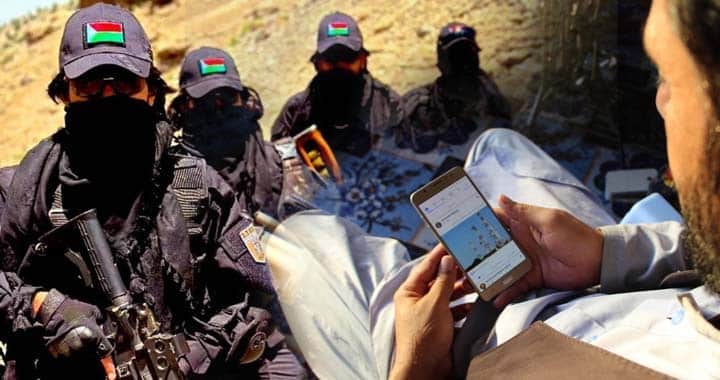
Serious concerns are being raised over the alleged use of Afghan territory, particularly the Nimroz province bordering Pakistan, for the facilitation of online propaganda, recruitment campaigns, and operational support linked to banned Baloch terrorist organizations.
According to regional observers and security analysts, emerging indicators suggest that social media campaigns promoting separatist violence and anti-state narratives associated with organizations such as the banned Balochistan Liberation Army (BLA) and United Baloch Army (UBA) may be operating from areas inside Afghanistan, particularly the Chahar Burjak district of Nimroz province.
Security observers note that Nimroz shares deep ethnic and tribal linkages with Baloch communities across the border and has, over time, become increasingly significant in discussions surrounding cross-border militancy, information warfare, and extremist propaganda targeting Pakistan.
Analysts claim that several online accounts actively promoting terrorist narratives in the Balochi language display patterns suggesting coordination from outside Pakistan. These accounts are allegedly involved in amplifying anti-state propaganda, glorifying acts of violence, spreading disinformation, and attempting to influence perceptions regarding security conditions in Balochistan.
Experts further allege that certain areas of Chahar Burjak district a remote region near the Pakistan-Afghanistan border — may be serving as logistical and operational hubs for extremist elements linked to banned Baloch insurgent organizations. Claims have also surfaced regarding the presence of alleged training facilities and support networks operating in difficult-to-monitor border regions.
While these allegations require continued investigation and independent verification, security analysts emphasize that the growing use of digital platforms by extremist organizations represents a major challenge for regional stability and counterterrorism efforts.
Officials and analysts argue that online propaganda has become a critical component of modern insurgencies, enabling terrorist groups to recruit sympathizers, spread misinformation, manipulate narratives, and maintain psychological pressure despite operational setbacks on the ground.
Counterterrorism experts also stress that the overwhelming majority of Pakistani Baloch citizens reject violence, extremism, and separatist agendas. They note that local populations in Balochistan have repeatedly suffered due to terrorism, instability, and externally driven propaganda campaigns aimed at creating mistrust and unrest within the province.
Security observers warn that cross-border safe havens, combined with coordinated online influence operations, could further complicate regional peace efforts unless addressed through stronger intelligence-sharing, border management, and international cooperation.
Authorities continue to reiterate Pakistan’s commitment to combating terrorism in all forms, including digital extremism, information warfare, and networks that facilitate violence against civilians and state institutions.
Analysts believe that regional stakeholders must work collectively to prevent militant organizations from exploiting ungoverned spaces, ethnic grievances, and social media ecosystems to destabilize the region.
Pakistan’s security institutions remain engaged in ongoing counterterrorism operations aimed at dismantling terrorist infrastructure, disrupting propaganda channels, and ensuring long-term peace and stability in Balochistan and adjoining areas.



