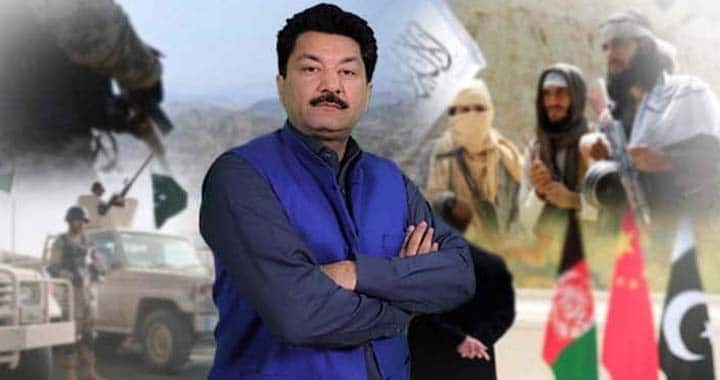
(Fida Adeel)
Pakistan once again stands at a defining crossroads. The growing wave of terrorism in Bannu, recurring militant violence in Khyber Pakhtunkhwa and Balochistan, the emergence of public anger against extremist networks, and the state’s renewed resolve against terror have collectively created a moment of reckoning for the country. Recent developments from the emotional reaction in Bannu after deadly militant attacks to the strong message delivered in Quetta by Prime Minister Shehbaz Sharif and Field Marshal Asim Munir reflect one undeniable truth: terrorism is no longer merely a security issue; it is now a national test of unity, governance, public confidence, and strategic clarity.
The security landscape in Pakistan is evolving rapidly. While the state insists that operations against militant sanctuaries and facilitators will continue with full force, the people living on the frontline of this conflict are increasingly demanding visible results. The anger in Bannu is not only directed at terrorists; it also reflects frustration with institutional gaps, prolonged insecurity, road closures, fear, and the perception that militants continue to exploit weaknesses in governance and coordination.
At the same time, reports claiming that militant infrastructure worth nearly two billion dollars has been destroyed in strikes inside Afghanistan have sparked an important debate. Has the operational capability of militant groups truly been weakened? Or are these organizations too decentralized, too financially resilient, and too deeply entrenched to be dismantled through tactical strikes alone?
These are difficult but necessary questions.
The reality is that militant networks operating against Pakistan are no longer simplistic organizations functioning from isolated mountain hideouts. They are fragmented, adaptive, and interconnected. Different groups operate under different banners, maintain separate chains of command, and often compete with one another over territory, funding, and influence. The Tehreek-e-Taliban Pakistan (TTP), Daesh-Khorasan, Al-Qaeda-linked factions, and various regional militant alliances represent a highly complex ecosystem of violence.
This complexity was once again exposed in Kurram, where rival militant factions reportedly turned their guns on each other, resulting in the deaths of multiple fighters, including senior commanders. Such clashes are not unusual in insurgent ecosystems. Militants compete over territory, extortion networks, smuggling routes, recruitment zones, ideological supremacy, and external funding. In many ways, these internal conflicts reveal both the fragmentation and instability within militant structures.
Yet Pakistan cannot afford to misread such developments as signs of imminent collapse. Militant infighting may weaken certain factions temporarily, but history shows that these groups often regroup, reorganize, and evolve. The danger lies not only in their military capability but also in their ability to exploit governance failures, political polarization, local grievances, and information warfare.
This is precisely why the situation in Bannu deserves national attention.
The recent public outrage in Bannu did not emerge in isolation. It came after repeated attacks on security personnel, including the devastating assault in Fateh Khel where numerous police officers embraced martyrdom. Such incidents deeply affect not only security institutions but also ordinary citizens who live under constant fear. When people begin to believe that militants can move openly, establish road blockades, produce propaganda videos, and challenge the writ of the state, public anxiety inevitably transforms into anger.
What makes Bannu especially significant is the nature of the public response. The region has already witnessed massive peace mobilizations in recent years. One of the most remarkable examples was the enormous peace march organized not by political parties but by local traders and civil society members. Hundreds of thousands participated, demonstrating that the people of the region overwhelmingly reject militancy and violence.
This distinction is important.
For years, hostile narratives attempted to portray conflict-hit areas as sympathetic to extremist ideologies. However, the repeated mobilization of ordinary citizens against terrorism tells a very different story. The people of Bannu, Lakki Marwat, Kurram, Bajaur, Swat, and other affected regions have suffered the most from terrorism. They have buried loved ones, lost businesses, witnessed displacement, and endured economic devastation. Their patience is wearing thin.
However, public anger alone cannot become a substitute for institutional discipline.
One of the most alarming developments emerging from Bannu is the rise of emotionally charged retaliatory actions by some armed personnel and local committees. Reports of police-linked groups conducting independent operations, publicly displaying bodies of militants, or announcing unilateral anti-terror actions raise serious legal and institutional concerns. While the emotions behind such actions are understandable — especially after repeated sacrifices by police and security forces the state cannot allow counterterrorism to drift into irregular vengeance.
A disciplined state must always operate within the framework of law.
The danger of uncontrolled responses is enormous. Extrajudicial actions can create new grievances, deepen mistrust, trigger cycles of revenge, and provide propaganda material to extremist organizations. Militants thrive in environments where law loses credibility. Therefore, while the courage and frustration of frontline police officers deserve recognition, the state must ensure that counterterrorism operations remain coordinated, lawful, intelligence-driven, and strategically managed.
This is where political and institutional unity becomes critical.
The meeting in Bannu involving public representatives, administrative officials, military leadership, and local stakeholders offered an important example of constructive engagement. Such coordination is essential because terrorism cannot be defeated through isolated actions by one institution alone. It requires synchronized governance, intelligence-sharing, public trust, development policies, and strategic communication.
The challenge facing Pakistan today is not merely operational; it is structural.
Militant groups exploit every vacuum. They capitalize on weak governance, exploit delayed justice systems, manipulate economic deprivation, and weaponize social media narratives. In several areas, even temporary militant visibility creates exaggerated perceptions of collapse through coordinated propaganda campaigns online. A small militant presence can be digitally amplified to create the impression that entire regions are out of state control, even when the reality on the ground is different.
This information war is now a central battlefield.
Pakistan’s enemies understand that psychological destabilization can sometimes be more damaging than physical attacks. Viral videos of militants patrolling roads, exaggerated claims about territorial control, and coordinated disinformation campaigns are designed to erode public confidence in state institutions. Countering this requires more than military operations. It demands transparent communication, rapid information response systems, and visible governance.
The state must also recognize that economic security and national security are now inseparable.
Balochistan provides the clearest example of this reality. The province occupies a central position in Pakistan’s future economic ambitions, particularly within the framework of regional connectivity and projects linked to Gwadar and the China-Pakistan Economic Corridor (CPEC). Militant groups targeting Balochistan are not merely attacking security forces; they are attempting to sabotage Pakistan’s economic future.
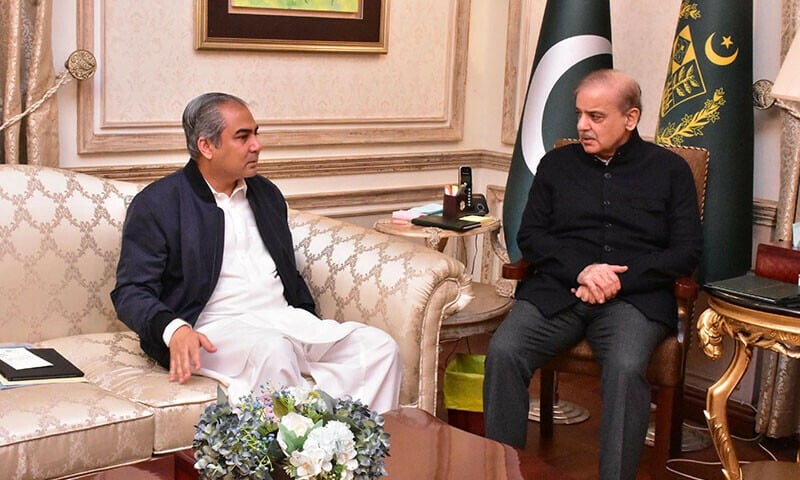
This explains why Prime Minister Shehbaz Sharif and Field Marshal Asim Munir’s joint appearance in Quetta carried such symbolic importance. Their message was not simply about military operations; it was about national continuity, strategic resolve, and institutional unity. The repeated emphasis on Operation Ghazab-ul-Haq reflects Pakistan’s determination to pursue militant networks and their facilitators wherever necessary.
Yet long-term stability cannot emerge solely through kinetic operations.
Pakistan has conducted major military campaigns before including Zarb-e-Azb, Radd-ul-Fasaad, Rah-e-Rast, and Rah-e-Nijat. These operations achieved significant successes, dismantled major militant infrastructure, and restored state control in several areas. However, the persistence of militancy demonstrates that military success alone is insufficient without sustained political, administrative, and socioeconomic follow-through.
This is the lesson Pakistan must now fully absorb.
Counterterrorism requires continuity. Cleared areas must not be abandoned to weak governance. Local policing must be strengthened. Border management must become technologically sophisticated. Intelligence coordination must improve further. Most importantly, citizens in affected regions must feel that the state protects not only territory but also dignity, justice, mobility, and opportunity.
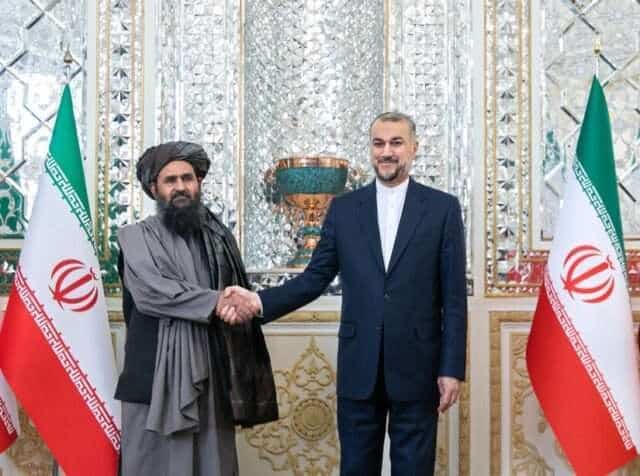
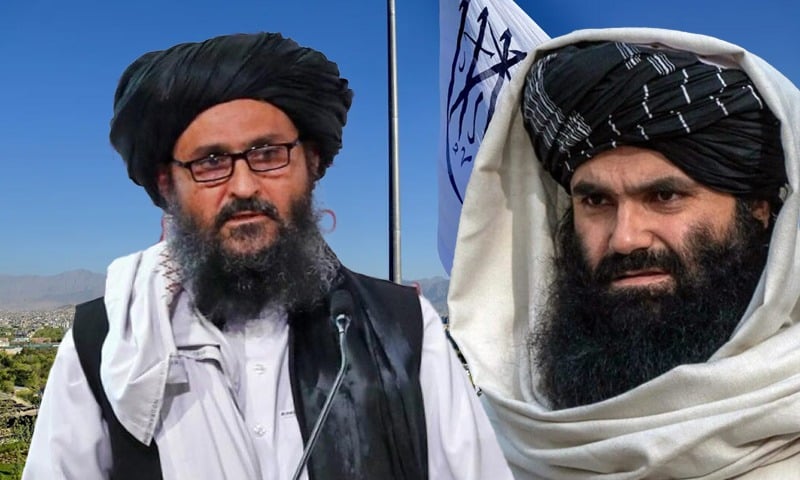
The issue of militant sanctuaries inside Afghanistan remains another major challenge. Pakistan has consistently argued that anti-Pakistan militant groups operate from Afghan soil with varying levels of facilitation or permissive space. Islamabad has generally avoided directly accusing the Afghan Taliban of officially conducting attacks against Pakistan, but concerns regarding safe havens, logistical support, and operational planning continue to dominate security discussions.
At the same time, the sheer volume of weapons circulating after decades of conflict in Afghanistan has transformed the regional security environment. Advanced weaponry, sophisticated communication equipment, night-vision devices, and modern combat gear have significantly enhanced the tactical capabilities of militant groups. Reports suggesting that individual attackers carry equipment worth millions of rupees reveal the scale of external funding and logistical sophistication involved.
Destroying some depots may create disruption, but it does not automatically neutralize deeply embedded insurgent ecosystems spread across thousands of kilometers.
This is why simplistic narratives are dangerous.
Pakistan’s fight against terrorism is neither close to over nor beyond recovery. It is entering a more complicated phase one defined by hybrid threats, decentralized militancy, digital propaganda, cross-border complexities, and internal polarization. Success in this environment requires strategic patience, national cohesion, and institutional maturity.
Most importantly, Pakistan must avoid the trap of fragmentation.
The tendency to blame a single institution, political party, province, or security agency for every failure only weakens the collective national response. Terrorism is a national crisis demanding national ownership. Political divisions, governance disputes, and institutional rivalries create openings that militants are eager to exploit.
The people of Bannu have already delivered the clearest message: they want peace, dignity, and security. They do not want their cities transformed into battlegrounds. They do not want road blockades, fear, funerals, or endless uncertainty. They want the state to function effectively, responsibly, and unitedly.
That demand is legitimate.
Pakistan’s future stability will depend not only on how effectively it eliminates militants, but also on how successfully it rebuilds public confidence. The true victory against terrorism will not be measured merely by body counts or destroyed hideouts. It will be measured by whether citizens can live without fear, whether institutions can function without panic, and whether the state can maintain both strength and legality simultaneously.
The road ahead will not be easy. But history has repeatedly shown that Pakistan possesses both the resilience and the capacity to confront existential threats when national unity prevails over division.
The challenge now is to ensure that this unity becomes permanent policy rather than temporary reaction.