(Zahir Shah Sherazi)
For nearly two decades, the mountains, valleys and bazaars of Khyber Pakhtunkhwa have carried the smoke of war, the grief of funerals and the unanswered cries of a population trapped between militancy, political confusion and state failures. From the ruins of schools in Swat to the shattered checkpoints of North Waziristan, from targeted killings in Wana to attacks on police personnel in Bannu and Bajaur, the story of this province has become a recurring chronicle of bloodshed and uncertainty. Yet, despite the immense sacrifices made by its people, one question still haunts the province more than any other: why is terrorism resurging in Khyber Pakhtunkhwa despite years of military operations, intelligence-based actions and national security campaigns?
The answer lies not merely in the mountains across the border, nor solely in the hideouts of militant commanders. The deeper crisis is the absence of a united political narrative, the confusion of governance and the dangerous politicisation of terrorism itself.
Terrorism cannot be defeated by bullets alone. History has already delivered this lesson to Pakistan in the harshest possible way. Military operations may dismantle networks, eliminate commanders and temporarily restore territorial control, but they cannot erase an ideology that survives through confusion, political division and societal silence. Extremism feeds on ambiguity. It grows when the state speaks in different voices and when political actors fail to stand on one page against violence.
Today, Khyber Pakhtunkhwa appears trapped in precisely such a situation.
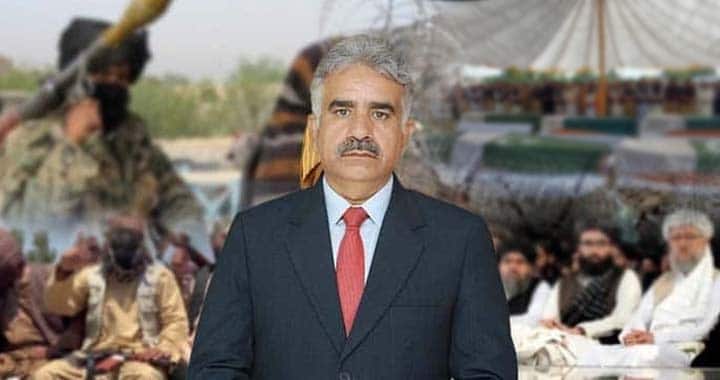
The province has become the epicentre of renewed militant activity. Groups such as the banned TTP, Daesh-Khorasan and other extremist factions are openly claiming attacks, targeting police officials, religious scholars, minorities, polio workers and civilians. The recent incidents in Wana, Bajaur and Bannu are not isolated acts of violence; they are warning signs of a broader security deterioration. Militants are no longer operating quietly in remote mountainous regions alone. Their propaganda, ideological messaging and operational reach have expanded again.
Yet, at the political level, there remains an alarming lack of clarity.
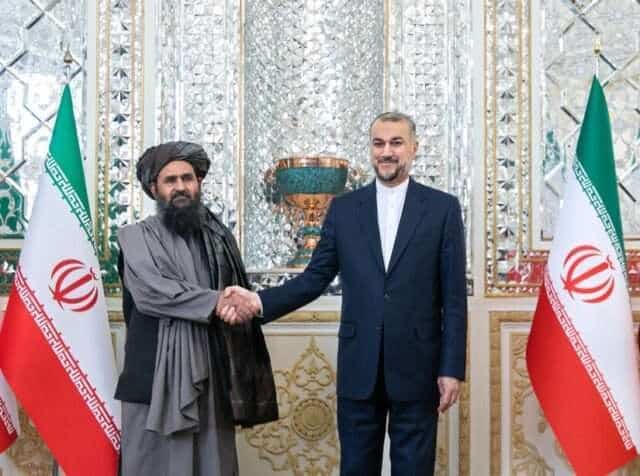
One narrative coming from the federation insists that terrorism is being orchestrated from sanctuaries inside Afghanistan and backed by hostile foreign interests seeking to destabilise Pakistan. Another narrative emerging from segments of provincial politics argues that terrorism is merely the consequence of flawed federal policies and past strategic mistakes. Between these competing positions, the ordinary citizen of Khyber Pakhtunkhwa is left confused, frightened and abandoned.
This confusion is perhaps the militants’ greatest victory.
When political leadership hesitates to clearly condemn terrorism without attaching political conditions, it weakens the state’s moral position. When every attack is instantly converted into a debate over “whose policy failed,” the focus shifts away from the terrorists themselves. Militants exploit such divisions expertly. They thrive when political forces accuse each other instead of presenting a united front.
The tragedy is that Khyber Pakhtunkhwa has already paid the highest possible price for this conflict. Tens of thousands of civilians, soldiers, police officers, tribal elders and religious scholars have lost their lives over the years. Entire communities were displaced during military operations. Markets were destroyed. Tourism collapsed. Investment vanished. Children grew up hearing explosions more frequently than school bells.
And yet, despite this painful history, Pakistan still appears unable to develop a consistent national narrative against extremism.
The challenge is not merely security-related; it is ideological and political. Militancy in the region did not emerge overnight. For more than four decades, radical ideologies spread across the Afghan borderlands under different banners jihad, sectarianism, resistance and political Islam. Generations in the tribal belt and merged districts were exposed to narratives glorifying violence, martyrdom and armed struggle. The Soviet-Afghan war, the post-9/11 conflict and the return of the Afghan Taliban all contributed to this ideological ecosystem.
Now, the consequences are returning to haunt Pakistan itself.
Groups operating under different names may appear fragmented, but their strategic objective remains remarkably similar: weakening the Pakistani state through continuous instability. Whether it is the TTP, Daesh-Khorasan or separatist militant organisations, the ultimate goal is to create fear, chaos and political fragmentation. No militant group possesses the capacity to militarily defeat Pakistan’s armed forces. They know this reality well. Their objective is not conventional victory; it is psychological exhaustion and institutional paralysis.
This is why attacks are increasingly symbolic.
Targeting a religious scholar creates sectarian fear. Attacking a polio team damages Pakistan’s international image. Killing police personnel weakens public confidence. Destroying bridges, schools and communication infrastructure paralyses local economies. Militancy is no longer merely about territorial control; it is about destroying governance itself.
And governance, unfortunately, appears deeply fragile in Khyber Pakhtunkhwa today.
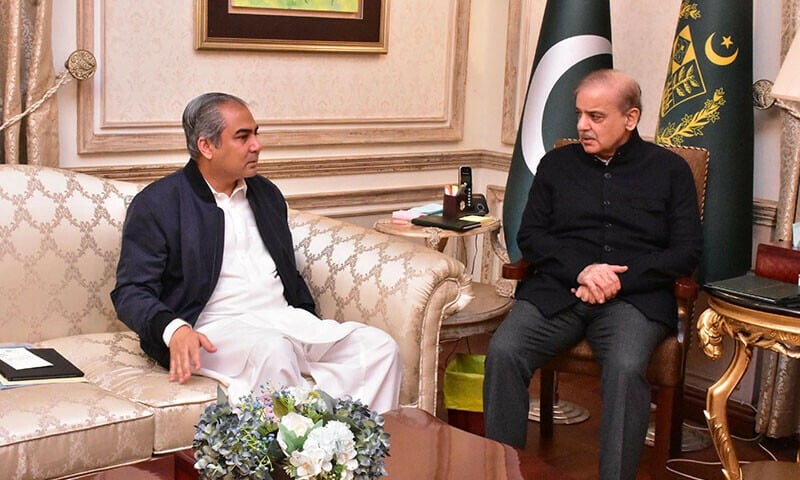
The province’s political leadership remains consumed by confrontational national politics while law and order deteriorates steadily. Public discourse often revolves around political rivalries, court battles, protest movements and centre-versus-province disputes, while terrorism becomes secondary in official priorities. Even crucial meetings between key political stakeholders frequently produce statements about political grievances instead of comprehensive security frameworks.
This disconnect is dangerous.
When a province facing daily security threats appears politically distracted, militants interpret it as weakness. Governance is not only about roads, budgets and speeches; it is about demonstrating state authority and public confidence. Citizens expect their leaders to stand beside grieving families after attacks, to offer clarity during crises and to reassure society that terrorism will never be tolerated or justified under any circumstances.
Unfortunately, that moral clarity often appears missing.
This does not mean that the federation is free of responsibility. Pakistan’s Afghan policy, border management failures and past strategic decisions are legitimate areas for criticism and debate. Questions regarding negotiations with militant factions, refugee management and regional diplomacy deserve serious discussion. However, there is a difference between policy debate and political ambiguity on terrorism itself.
No democratic government can afford to send mixed signals regarding militancy.
If terrorism is condemned by the military leadership, intelligence institutions, police commanders and the federal government, then provincial authorities must also demonstrate equal firmness. A fragmented state narrative only empowers extremist propaganda. Militants use social media, online networks and local sympathisers to amplify every political contradiction within Pakistan. Every disagreement becomes evidence, in their eyes, that the state lacks unity and resolve.
This is precisely why a collective national strategy is urgently needed.
The fight against terrorism cannot remain solely a military responsibility. Police reforms, intelligence coordination, judicial efficiency, border management, educational reforms and political consensus are equally essential. More importantly, there must be a clear ideological rejection of extremist violence across the political spectrum. No party, institution or leader should appear hesitant in identifying militant groups as enemies of the state.
Equally important is the restoration of governance in merged tribal districts and conflict-hit regions. For many communities in former FATA areas, promises of development, justice and economic integration remain unfulfilled. Militants exploit these governance gaps. Poverty, unemployment and institutional neglect create fertile ground for radicalisation. A young man without education, opportunity or trust in state institutions becomes vulnerable to extremist recruitment far more easily than policymakers sitting in Islamabad realise.
The 18th Constitutional Amendment also enters this debate in significant ways. Provincial autonomy granted greater administrative authority to provinces, particularly in areas such as policing, health and governance. But with authority comes responsibility. If provinces demand greater control over resources and governance structures, they must also demonstrate administrative capacity in maintaining law and order. Blaming the federation alone cannot become a permanent political strategy.
At the same time, the federation cannot escape accountability either. Provinces like Khyber Pakhtunkhwa and Balochistan border volatile international territories. Border security, foreign policy and national counterterrorism frameworks remain federal responsibilities. Without strong coordination between Islamabad and provincial capitals, security gaps will continue widening.
The reality is painfully simple: neither the federation nor the province can fight this war alone.
Pakistan has already witnessed the consequences of delayed decisions and confused strategies. The Swat peace deal collapsed disastrously. Earlier negotiations with militant commanders produced temporary calm but long-term instability. Every time the state appeared divided or indecisive, extremist factions regrouped and returned stronger.
That historical lesson must not be ignored again.
The people of Khyber Pakhtunkhwa deserve more than condolences after every attack. They deserve a coherent policy, honest leadership and visible state unity. They deserve schools instead of bunkers, economic opportunity instead of displacement and political clarity instead of endless blame games.
Most importantly, they deserve protection.
Terrorism is not merely a security issue anymore; it is a test of Pakistan’s political maturity. Nations defeat extremism not only through force but through collective conviction. When political leaders, institutions and society stand united, militant ideologies lose oxygen. But when divisions deepen and narratives clash, extremism quietly finds space to survive.
Khyber Pakhtunkhwa today stands at a dangerous crossroads. One path leads towards renewed instability, polarisation and endless cycles of violence. The other requires difficult but necessary choices: political consensus, governance reforms, ideological clarity and uncompromising opposition to terrorism.
The question is no longer whether Pakistan can militarily confront terrorism. It already has the capability. The real question is whether the country possesses the political will and national unity required to finish this war intellectually, socially and institutionally.
Until that happens, the smoke rising from the valleys of Khyber Pakhtunkhwa will continue carrying the same haunting message: a state divided in narrative can never fully defeat an enemy united in purpose.