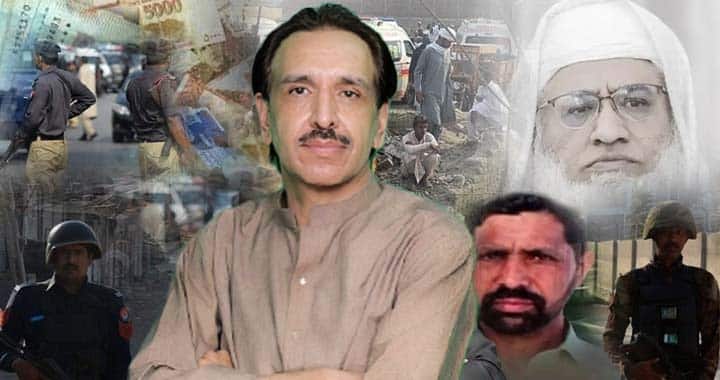
(Aqeel Yousafzai)
Khyber Pakhtunkhwa (KP), once again, finds itself at a dangerous inflection point. The districts of Lakki Marwat, Bannu, and the southern belt of the province areas already scarred by decades of conflict, displacement, and military operations are witnessing a renewed wave of violence that is reshaping public fear, political discourse, and institutional credibility.
The resurgence of militant activity in these areas is not merely a security story. It is a governance story, a political story, and most importantly, a story about the gradual erosion of the state’s writ in spaces where it was once restored with immense sacrifice. The situation today raises an uncomfortable question: has the fragile equilibrium achieved after years of counterinsurgency begun to unravel again?
Reports of repeated attacks on police posts, security convoys, and targeted killings of law enforcement personnel have revived memories of KP’s darkest years. Particularly alarming is the targeting of police stations and remote checkpoints, often under-resourced and structurally vulnerable.
Local security officials and journalists have repeatedly pointed out that the police force despite its frontline role is operating under severe constraints: outdated equipment, limited armor protection, insufficient surveillance infrastructure, and stretched manpower in geographically difficult terrain.
The human cost has been significant. In recent months, multiple police officers and civilians have reportedly lost their lives in various incidents across southern KP. Each incident does not just represent a tactical breach; it reflects a deeper systemic vulnerability.
At the heart of the debate is a recurring question in Pakistani politics: is the crisis in KP primarily one of capacity, coordination, or political will? Critics argue that governance in the province has become fragmented between political narratives, administrative weaknesses, and competing institutional priorities. They point to gaps in policing reforms, delayed modernization of counterterrorism infrastructure, and inconsistent policy implementation at the district level.
Supporters of the provincial administration, however, argue that KP’s security challenges are deeply interconnected with cross-border militancy dynamics, particularly developments in Afghanistan and the presence of armed non-state actors operating across porous terrain. According to this view, no provincial government alone can fully stabilize the region without sustained federal coordination and regional diplomatic alignment. The truth likely lies somewhere in between. KP’s challenges are neither purely internal nor entirely external they are the product of both structural governance limitations and evolving militant ecosystems.
One of the most concerning aspects of the current situation is not just the operational activity of militant groups, but also the accompanying information war. Different political and security narratives are competing in public discourse: some attribute the resurgence of violence to militant regrouping across the border; others blame governance failures and internal policy contradictions; while still others highlight alleged political interference in policing and security appointments.
What is undeniable is that the province is witnessing an intense contest of narratives. In such an environment, facts often become secondary to perception. Every attack is immediately absorbed into a polarized political debate, reducing space for neutral security analysis and long-term planning.
The KP Police has historically borne disproportionate responsibility in counterinsurgency operations. Unlike the military, the police remain permanently embedded in local communities and are often the first responders during attacks. However, repeated concerns have been raised regarding their preparedness. Reports from several districts suggest that many police stations remain vulnerable to high-impact attacks due to structural limitations, lack of fortified infrastructure, and inadequate defensive equipment.
The symbolic image of police personnel defending poorly fortified posts against heavily armed attackers has become emblematic of a larger issue: the mismatch between threat level and institutional readiness. This is not a critique of individual bravery. On the contrary, KP police have repeatedly demonstrated extraordinary courage. The issue is systemic not personal.
Another dimension shaping the crisis is political polarization. Security policy in KP, like much of Pakistan, is often debated through partisan lenses rather than institutional consensus. Accusations and counter-accusations between political actors particularly in relation to militancy, governance failures, and administrative appointments have created a fragmented policy environment. In such conditions, continuity of strategy becomes difficult, and long-term counterterrorism planning suffers. Security experts often emphasize that insurgencies thrive not only on physical space but also on political fragmentation. When governance signals become inconsistent, enforcement becomes uneven and gaps inevitably emerge.
No discussion of KP’s security situation is complete without addressing the regional dimension. The situation along the Pakistan-Afghanistan border remains fluid, shaped by complex relationships between state actors, militant groups, and local power structures. The presence of armed groups operating in border regions, and allegations of cross-border movement, have added another layer of complexity. Diplomatic engagement between Pakistan and Afghanistan continues, but trust deficits remain significant.
Observers note that while both countries have strategic incentives to stabilize the border, tactical mistrust and security incidents continue to undermine progress. The result is a persistent cycle of blame, denial, and limited cooperation. One of the less discussed aspects of KP’s security landscape is institutional coordination. Effective counterterrorism requires synchronization between provincial police, federal intelligence agencies, paramilitary forces, and civil administration. However, field-level reporting often suggests gaps in real-time intelligence sharing, delayed operational responses, and overlapping jurisdictions. These inefficiencies do not always make headlines, but they significantly affect ground realities.
When coordination weakens, even small militant groups can exploit operational blind spots. This is particularly true in geographically complex districts where terrain itself offers strategic advantage to non-state actors. Beyond the physical and political dimensions, there is also a psychological cost. Communities in southern KP are once again experiencing uncertainty, fear, and disruption of daily life. Schools, markets, and routine mobility patterns are often affected by security incidents. For populations that have already lived through cycles of displacement and return, this renewed instability carries deep emotional and economic consequences.
A society cannot remain resilient indefinitely without institutional reassurance. Over time, repeated exposure to violence erodes public confidence not just in security forces, but in the state’s ability to guarantee normalcy.
Perhaps the most critical gap in the current discourse is the absence of a clearly articulated long-term security vision for KP. Short-term responses dominate policy cycles: reactive operations after attacks, temporary deployments, and crisis-driven announcements. What is missing is a sustained framework that integrates policing reform, border management, intelligence modernization, local governance strengthening, and socio-economic stabilization. Without such a framework, the province risks remaining trapped in a reactive loop where violence triggers response, but response does not prevent recurrence.
Khyber Pakhtunkhwa stands at a defining moment. The resurgence of militancy in its southern districts is not just a security challenge it is a test of institutional maturity, political cohesion, and governance resilience. If the current trajectory continues without strategic correction, the province risks slipping into a cycle of recurring instability. But if lessons are absorbed if coordination improves, if policing is strengthened, and if political consensus replaces fragmentation then there remains a path toward stabilization. History has already shown that KP is capable of recovery. But recovery is never automatic; it is built through deliberate choices, sustained investment, and above all, a shared recognition that security is not the responsibility of one institution alone, but of the entire state.
The question is no longer whether KP is facing a security challenge. The question is whether its institutions are prepared to confront it with clarity, unity, and long-term vision before the window of stability narrows further.