
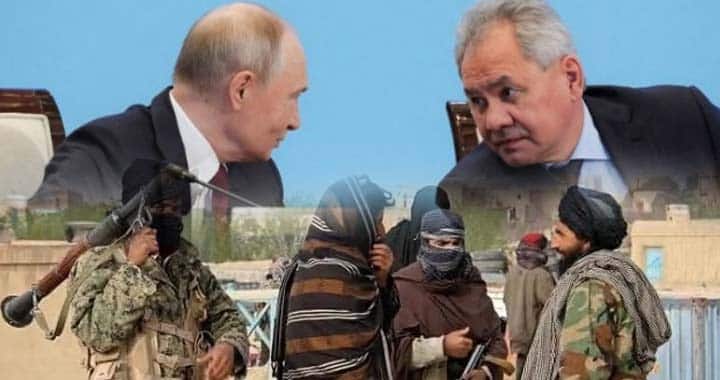
Russia’s Security Council Secretary Sergei Shoigu has issued a stark warning regarding the security situation in Afghanistan, stating that approximately 30,000 militants affiliated with more than 20 extremist organizations are currently active in the country, including ISIS-Khorasan (ISIS-K) and the Tehrik-e-Taliban Pakistan (TTP).
Speaking at a Shanghai Cooperation Organisation (SCO) security meeting held on Thursday, Shoigu described Afghanistan as a continuing source of regional instability, cautioning that militant groups operating from its territory pose persistent cross-border security threats to neighboring states, including Pakistan, Tajikistan, and Uzbekistan.
According to Shoigu, despite ongoing governance claims by the Taliban administration, multiple armed groups continue to operate with relative freedom in various parts of Afghanistan. He specifically highlighted ISIS-K, which Russian estimates place at around 3,000 active fighters, alleging that the group has been responsible for a series of significant attacks throughout 2025, resulting in both civilian and military casualties.
The Russian security chief further warned that Afghanistan is witnessing an increasing influx of foreign fighters, including militants of Uyghur, Tajik, and Uzbek origin, many of whom are reportedly arriving from conflict zones in Syria. He said this development is contributing to a further deterioration of the already fragile security environment in the country.
Shoigu also raised concerns over the expanding production and trafficking of narcotics within Afghanistan, particularly synthetic drugs such as methamphetamine, which he said continue to fuel organized crime networks and destabilize regional security dynamics.
In his remarks, the Russian official echoed recent assessments by United Nations monitoring bodies, which have also expressed concern over the sustained presence and operational capacity of multiple extremist organizations across Afghanistan.
He emphasized that the combination of militant activity, foreign fighter movement, and narcotics trafficking presents a long-term security challenge not only for Afghanistan but for the broader region, requiring coordinated international efforts to address emerging threats.
The statements underscore growing international concern over Afghanistan’s security landscape and the potential spillover effects of militancy into neighboring countries amid an already volatile regional environment.



